
Maritime ·
Orcas: Wolves of the Sea and Masters of Ocean Hunting
Why Orcas Are the Wolves of the Sea
By Rebecca "Madam Chronicler" Ryan
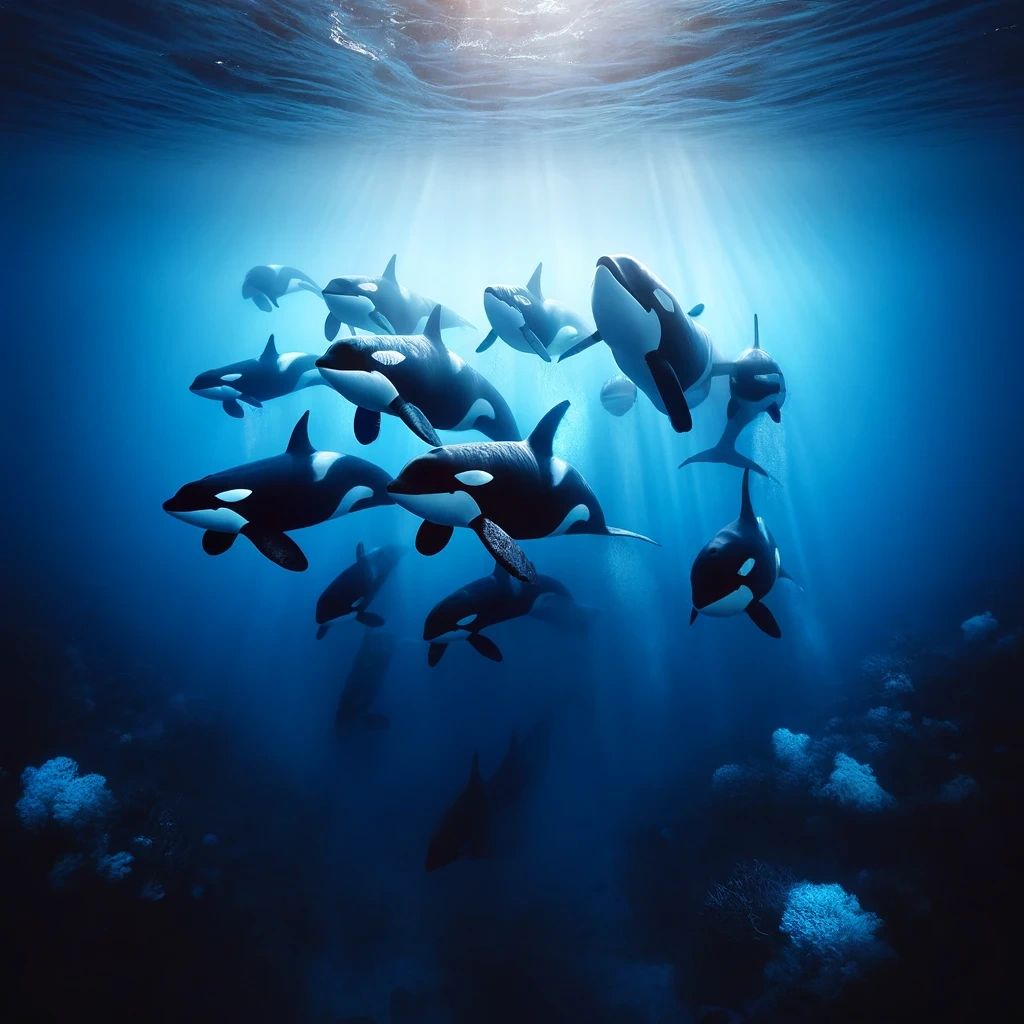
Orcas, also known as killer whales (Orcinus orca), are among the smartest and most powerful animals in the ocean. But their nickname—“wolves of the sea”—isn’t just a catchy phrase. It reflects real, deep similarities between these marine predators and their land-based counterparts.
From teamwork and family loyalty to hunting tactics and cultural behaviors, orcas show us how intelligent and adaptable top predators can be—on land or in the sea. Here are 10 amazing reasons why orcas have earned their reputation as the ocean’s wolves—and what we can learn from them.
1. Orca Pods Mirror Wolf Packs
Orcas live in pods, which are like tight-knit families. These groups are usually led by older females and include multiple generations. Everyone in the pod helps hunt, protect each other, and raise the young—just like a wolf pack.
📚 In fact, scientists have found that orca pods are among the most stable social structures ever recorded in mammals1.
2. Teamwork in the Hunt: Orca Hunting Techniques
Orcas don’t hunt alone—they work together using clever and well-planned strategies. Here are a few wild examples:
- Wave-washing: Several orcas create waves to knock seals off ice floes.
- Carousel feeding: They herd fish into a tight “bait ball” and take turns eating.
- Intentional stranding: Some orcas slide onto beaches to grab unsuspecting seals.
This level of cooperation is rare and rivals the best hunting techniques of wolves2.
3. Intelligence That Rivals Primates
Orcas are incredibly smart. Different pods use different vocal “dialects,” and mothers teach their young unique hunting skills. They’ve shown:
- Problem-solving
- Long-term memory
- Even tool use (like covering their heads with kelp to sneak up on stingrays)
Their intelligence matches that of chimpanzees—and yes, wolves too3.
4. Apex Predators of the Ocean
Like wolves control deer and elk, orcas sit at the top of the ocean’s food chain. They eat everything from fish to seals to great white sharks. Some even take down the largest animal on Earth: the blue whale.
Their presence creates a ripple effect called a trophic cascade—where the top predator helps keep the whole ecosystem balanced and healthy4.
5. Cultural Behavior & Communication
Each orca pod has its own way of doing things. Some specialize in eating salmon, others in hunting sharks or rays. These habits are passed down from generation to generation—just like culture in human or wolf families.
Scientists call this non-genetic inheritance—skills and behaviors learned, not born5.
6. Emotional Intelligence & Social Bonds
Orcas play together. They grieve the loss of calves. They show signs of stress, joy, and even empathy. These deep emotional bonds mirror what researchers have found in wolves, elephants, and primates.
One famous case involved an orca mother carrying her dead calf for 17 days in a heartbreaking act of mourning6.
7. From Myths to Misunderstood
Both orcas and wolves have been misunderstood for centuries:
- Orcas were once feared as mindless killers (hence the name “killer whale”)
- Wolves were hunted to near extinction in parts of Europe and the U.S.
But today, documentaries like Blackfish and studies of wolf reintroduction show how vital—and misunderstood—these animals truly are7.
8. Adaptability Across the Globe
Orcas live everywhere—from the icy Arctic to warm tropical waters. Each population has its own diet, migration route, and behaviors. This adaptability is similar to wolves, who once roamed almost the entire Northern Hemisphere.
They are survivors, perfectly built for different environments8.
9. Revered in Indigenous Cultures
Long before Western science caught on, Indigenous peoples already recognized orcas’ intelligence and strength. Many tribes along the Pacific Coast view orcas as ancestors or protectors.
Wolves also play a powerful spiritual role in Native American and other global cultures. These stories reflect deep respect for the animals’ roles in nature9.
10. Conservation Challenges Facing Orcas Today
Like wolves, orcas face serious threats from humans:
- Noise pollution from ships interferes with their sonar
- Overfishing reduces key prey like salmon
- Toxic chemicals like PCBs build up in their bodies
- Climate change shifts food sources and breeding grounds
Saving orcas means protecting the entire marine ecosystem they help lead10.
Conclusion: Learning from the Wolves of the Sea
Orcas aren’t just “killer whales.” They are smart, social, emotional, and essential to the health of the oceans.
Like wolves, they show us the power of family, the importance of balance in nature, and the dangers of misunderstanding wild animals. By learning about orcas, we learn how to be better stewards of the seas—and how to protect the natural systems that keep Earth alive.
📚 Bibliography
Would you like a version of this formatted for a blog CMS or as a downloadable PDF?
Sources
- Ford, J.K.B., Ellis, G.M., & Balcomb, K.C. (2000). Killer Whales: The Natural History and Genealogy of Orcinus orca in British Columbia and Washington State. UBC Press. Link ↩
- Pitman, R.L., & Durban, J.W. (2012). Cooperative hunting behavior, prey selectivity and prey handling by pack ice killer whales (Orcinus orca), Antarctic Peninsula. Marine Mammal Science, 28(1), 16-36. DOI ↩
- Marino, L., et al. (2007). Cetaceans Have Complex Brains for Complex Cognition. PLOS Biology, 5(5), e139. DOI ↩
- Estes, J.A., Terborgh, J., Brashares, J.S., et al. (2011). Trophic Downgrading of Planet Earth. Science, 333(6040), 301–306. DOI ↩
- Whitehead, H. (2010). Conserving and managing animals that learn socially and share cultures. Learning & Behavior, 38, 329–336. DOI ↩
- Giles, D.A., et al. (2020). Behavioral and physiological responses of Southern Resident killer whales to vessel traffic and noise. Frontiers in Marine Science, 7, 582182. DOI ↩
- Cowperthwaite, G. (Director). (2013). Blackfish [Film]. CNN Films. Link ↩
- Reeves, R.R., Stewart, B.S., Clapham, P.J., & Powell, J.A. (2002). National Audubon Society Guide to Marine Mammals of the World. Knopf. Link ↩
- National Museum of the American Indian. (2023). Orcas in Indigenous Pacific Northwest Cultures. Smithsonian Institution. Link ↩
- Center for Whale Research. (2024). The Southern Resident Killer Whale Population and Its Struggles. Link ↩
About the Author
Rebecca “Madam Chronicler” Ryan is a writer and researcher for The Chronicler Library. She is the co-creator of The Chronicle of Fear and The Waterline Chronicles, and a lead researcher and contributor for The Captain’s War Chronicles and The Captain’s Cellar. Her work blends myth, history, and the natural world with empathy, insight, and intellectual rigor.
Originally published at the live site .