
Maritime ·
The 1,000-Pound Tiger Shark in Pensacola: A Deep Dive Into a Gian
If you’ve ever walked the white sandy beaches of Pensacola, Florida, you know how beautiful and peaceful the Gulf Coast can be. But recently, something absolutely jaw-dropping happened that’s made waves far beyond the sh...
By Rebecca "Madam Chronicler" Ryan
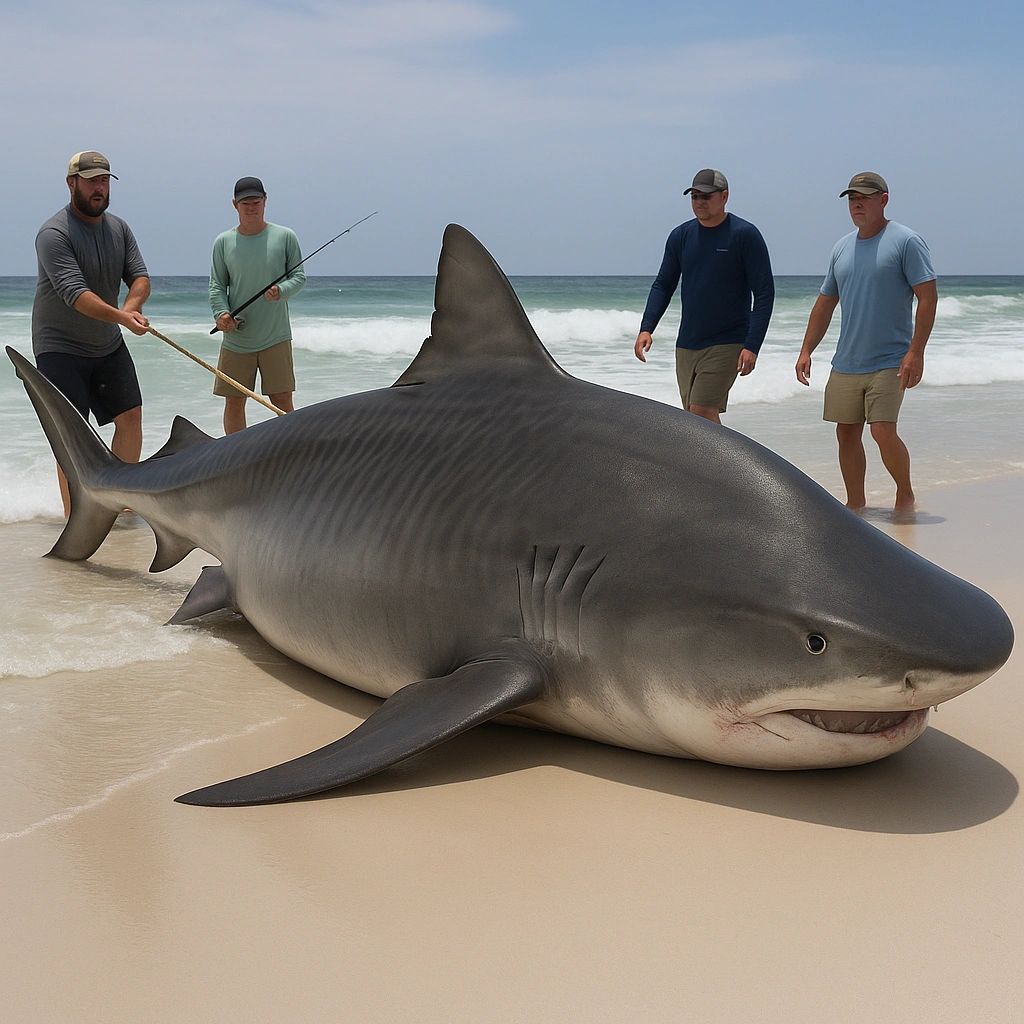
If you’ve ever walked the white sandy beaches of Pensacola, Florida, you know how beautiful and peaceful the Gulf Coast can be. But recently, something absolutely jaw-dropping happened that’s made waves far beyond the shore. A 1,000-pound tiger shark was caught off the coast of Pensacola, and it’s got everyone talking—from scientists and fishermen to beachgoers and conservationists. Let’s dive into this incredible story and learn everything we can about one of the ocean’s most powerful predators!
What Happened in Pensacola?
In early 2025, a group of experienced anglers set out for a routine deep-sea fishing trip off the coast of Pensacola, Florida. What they didn’t expect was to come face to face with one of the largest tiger sharks ever recorded in the Gulf of Mexico. Weighing in at an estimated 1,000 pounds and stretching over 12 feet long, this female tiger shark was a true behemoth of the sea.
Though massive tiger sharks have been caught in Florida before, this catch made headlines due to its size, location, and the rare opportunity it provided researchers to study such a mature animal. The anglers used heavy tackle, chum, and a lot of patience to reel in the giant. After securing it safely alongside the boat, scientists were invited to collect data before the shark was released or, in some reports, brought ashore for further study (depending on the condition of the animal).
What Is a Tiger Shark?
Tiger sharks (Galeocerdo cuvier) are one of the most well-known shark species in the world. They’re second only to the great white shark in terms of documented attacks on humans, but they’re also one of the least understood of the “big sharks.” Named for the dark, vertical stripes along their bodies (which fade as they get older), tiger sharks are apex predators that rule the oceans.
They can grow to be over 14 feet long and weigh more than 1,400 pounds. That means the 1,000-pound tiger shark in Pensacola wasn’t even the biggest out there—but she was close! Tiger sharks have wide, blunt heads and incredibly strong jaws filled with serrated teeth, perfect for crushing the shells of sea turtles or slicing through fish and marine mammals.
Why Was This Shark So Big?
Tiger sharks grow their entire lives. The older they get, the bigger they become. The giant female in Pensacola was likely quite old—possibly more than 20 years. Female tiger sharks also grow larger than males. This size difference is related to their reproductive role, as larger females can carry more pups during each pregnancy.
These sharks are opportunistic feeders, which means they eat just about anything. Their diet includes sea turtles, rays, bony fish, squid, birds, and even garbage like license plates and tires! Because the Gulf of Mexico is so rich in marine life, tiger sharks here have no trouble finding food, which helps them grow even larger.
According to research published in Marine and Freshwater Research, tiger sharks in the Gulf of Mexico exhibit seasonal migrations and tend to return to areas with high food abundance year after year (Wells et al., 2018). Pensacola happens to be one of those hotspots.
Where Do Tiger Sharks Live?
Tiger sharks are found in tropical and subtropical waters all over the world. They prefer warm, coastal waters, which is why they’re so common in places like Hawaii, the Caribbean, and of course—Florida.
The Gulf of Mexico, where Pensacola sits, is part of their prime habitat. The area offers warm temperatures, plenty of food, and open space to roam. While some tiger sharks live in deep water, many of them come close to shore, especially at night, when they do most of their hunting.
A satellite-tagging study published in Ecology and Evolution found that tiger sharks often travel thousands of miles across the ocean, but they always return to their favorite feeding grounds (Hammerschlag et al., 2022). That means the shark caught off Pensacola may have traveled from far away but returned to the Gulf for a good reason—food, safety, and maybe even to reproduce.
How Do Scientists Study Sharks This Big?
When a tiger shark this large is caught, scientists jump at the chance to study it. In this case, marine biologists were invited to collect samples and take measurements. This helps them learn more about the shark’s age, diet, health, and reproductive status.
Researchers can use non-invasive tools like ultrasound to check if a female shark is pregnant. They also take tissue samples to study genetics and toxicology. Shark fins and vertebrae can reveal age and growth patterns, much like tree rings.
When possible, scientists tag these sharks with satellite transmitters before releasing them. These tags provide real-time data about where the shark goes, how deep it dives, and what temperatures it prefers. This kind of information is critical for understanding the species and keeping both sharks and humans safe.
Are Tiger Sharks Dangerous?
Tiger sharks are large, curious, and powerful animals. Because they’ll eat just about anything, they sometimes come into contact with humans. According to the International Shark Attack File (ISAF), tiger sharks are responsible for the second-highest number of unprovoked shark bites on humans—behind only the great white shark (ISAF, 2024).
That said, shark attacks are extremely rare. You’re far more likely to be struck by lightning or bitten by your own dog than to be bitten by a tiger shark. Most of the time, these sharks are just passing through. They don’t hunt humans, and when they bite, it’s usually because they’re curious or confused.
Experts agree that sharks play a vital role in ocean ecosystems by keeping populations of prey species in balance. Without sharks like the tiger shark, the ocean’s food web could collapse.
Why Is This Catch So Important?
The catch of the 1,000-pound tiger shark is more than just a fishing tale—it’s an opportunity for science, conservation, and public education. Here’s why it matters:
- Scientific Discovery Large female sharks like this one are extremely valuable for research. Scientists can learn about her health, age, reproductive status, and even migration patterns. Every data point helps researchers protect these animals and understand how they interact with the marine environment.
- Public Awareness Stories like this bring attention to the presence of sharks in the Gulf of Mexico. They remind us that we share the water with powerful creatures, and they encourage respect for marine life.
- Conservation Tiger sharks are listed as Near Threatened by the International Union for Conservation of Nature (IUCN, 2021). Overfishing and accidental bycatch are major threats. By highlighting the importance of responsible fishing and catch-and-release practices, events like this help protect shark populations.
- Education The more people know about sharks, the less they fear them. Education leads to better decision-making by both the public and policymakers. When people understand the value of a healthy ocean, they’re more likely to support marine conservation efforts.
What Can We Do to Protect Sharks Like This One?
You might not be able to tag a shark or conduct scientific research, but there are still lots of ways you can help protect tiger sharks and other marine animals:
- Support sustainable seafood Choose seafood that’s caught in a way that doesn’t harm sharks or other marine life.
- Reduce plastic use Sharks sometimes swallow garbage like plastic bags and fishing gear. Less pollution means a healthier ocean.
- Be a responsible beachgoer Don’t leave trash behind, and always follow local guidelines for swimming and fishing.
- Learn and share Talk about sharks with your friends and family. The more people know, the more they care.
What’s Next for the Tiger Sharks of Pensacola?
Scientists are continuing to study shark behavior in the Gulf of Mexico. Ongoing research includes satellite tagging, population studies, and DNA analysis. With more data, we can better understand how tiger sharks live, where they go, and how to keep both people and sharks safe in shared waters.
Thanks to this incredible 1,000-pound tiger shark, Pensacola has earned a place on the map of important shark habitats. It’s a reminder that the Gulf isn’t just a great place to swim and fish—it’s also home to some of the most powerful predators on Earth.
And who knows? The next time you gaze out at the deep blue water, you might be looking at the home of the next ocean giant.
Final Thoughts
The story of the 1,000-pound tiger shark in Pensacola, Florida, is more than just an exciting news story—it’s a symbol of the wild, untamed beauty of our oceans. It reminds us how little we know about the creatures beneath the waves and how important it is to protect them.
Tiger sharks have roamed the oceans for millions of years. They are survivors, hunters, and guardians of balance in the sea. As we continue to explore and learn, one thing is clear: the more we understand these magnificent animals, the better chance we have of sharing the ocean with them for generations to come.
So here’s to the queen of the Gulf—a 1,000-pound reminder that nature is still full of surprises.
Bibliography
Hammerschlag, N., Irschick, D. J., & Heithaus, M. R. (2022). Disentangling the ecological roles of large marine predators in ocean ecosystems. Ecology and Evolution, 12(7), e9063. https://doi.org/10.1002/ece3.9063
International Shark Attack File. (2024). Unprovoked shark attack data. Florida Museum of Natural History. https://www.floridamuseum.ufl.edu/shark-attacks/
IUCN. (2021). Galeocerdo cuvier: Tiger Shark. The IUCN Red List of Threatened Species 2021. https://www.iucnredlist.org/species/39378/2916092
Wells, R. J. D., Rooker, J. R., & Dance, M. A. (2018). Seasonal variability in the trophic ecology of pelagic sharks in the Gulf of Mexico. Marine and Freshwater Research, 69(1), 88–99. https://doi.org/10.1071/MF17172
Originally published at the live site .