
Rivers ·
The Fish of the Mississippi River
The Mississippi River is one of the most famous rivers in the world. Stretching about 2,350 miles, it flows from Minnesota all the way down to the Gulf of Mexico. Along its long journey, it passes through ten states, col...
By Rebecca "Madam Chronicler" Ryan
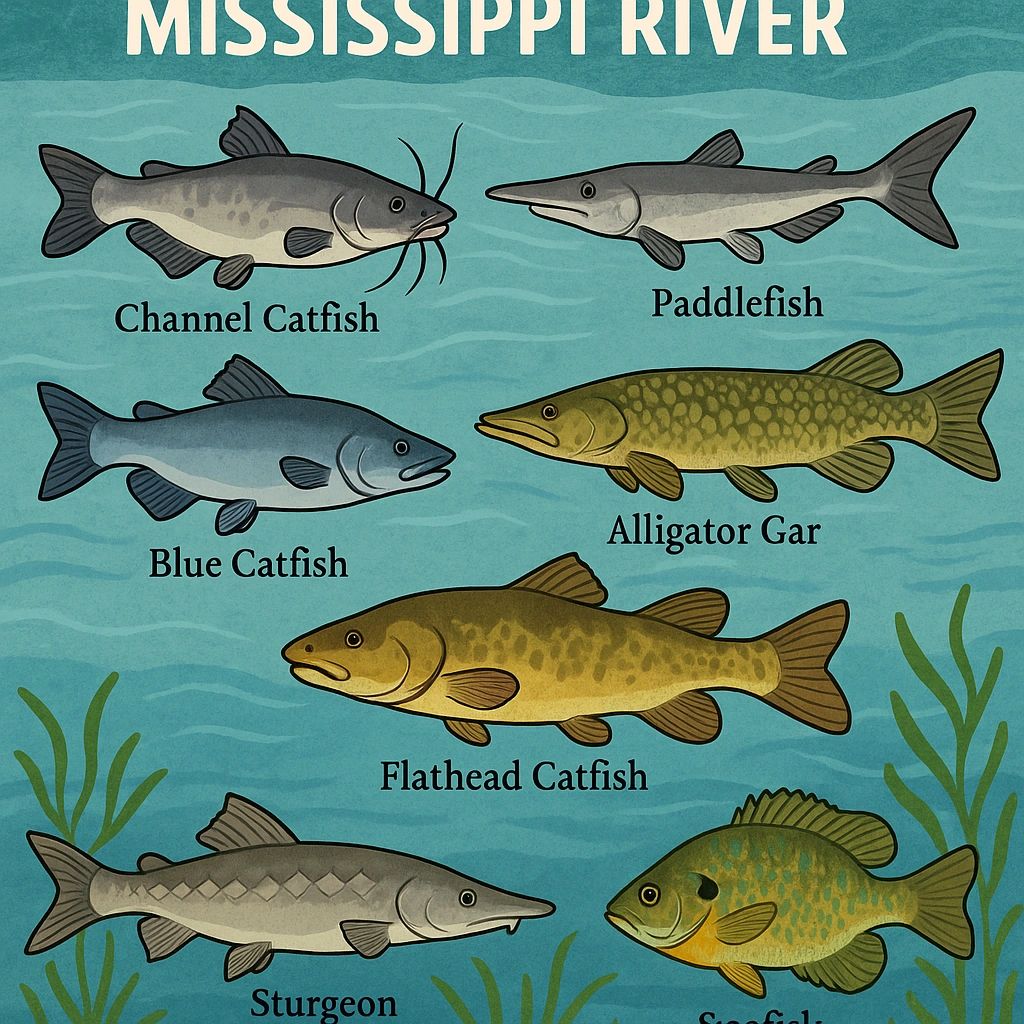
The Mississippi River is one of the most famous rivers in the world. Stretching about 2,350 miles, it flows from Minnesota all the way down to the Gulf of Mexico. Along its long journey, it passes through ten states, collects water from 31 different states, and creates one of the largest river systems on Earth.
But what makes the Mississippi River especially fascinating isn’t just its size. It’s the life inside it. The Mississippi is home to more than 260 species of fish, making it one of the most diverse freshwater systems in North America. From tiny minnows to giant catfish, the river is alive with creatures that play important roles in the ecosystem, as well as in the lives of the people who live along its banks.
In this blog, we’ll explore the fish of the Mississippi River—both the well-known giants and the hidden little swimmers. We’ll look at how they survive, what challenges they face, and why this mighty river is so important to them.
The Diversity of Mississippi River Fish
The Mississippi River has so many different types of fish because it flows through a variety of landscapes. Up north, the river is narrower, colder, and faster, supporting species that like clean, cool water. As it moves south, it becomes wider, slower, and warmer. This creates the perfect home for fish that thrive in murkier waters.
Scientists group fish into families based on their features. Some of the most common families in the Mississippi River are:
- Catfish (Family Ictaluridae): Known for their whisker-like barbels.
- Sunfish (Family Centrarchidae): Includes bass, crappies, and bluegills.
- Minnows (Family Cyprinidae): Small but very important for the food chain.
- Sturgeons (Family Acipenseridae): Ancient fish that have been around since the time of the dinosaurs.
- Gars (Family Lepisosteidae): Long, toothy predators that look prehistoric.
Each of these groups contains species that have adapted to life in this powerful river.
Famous Fish of the Mississippi River
1. Channel Catfish
The channel catfish (Ictalurus punctatus) is one of the most recognized fish in the river. It has smooth skin without scales, a wide flat head, and whiskers that it uses to feel around in the dark waters. Channel cats can grow to more than 40 pounds, but most caught by anglers are smaller.
Catfish are bottom-dwellers, feeding on insects, smaller fish, and anything they can find. Because of their popularity, channel catfish are not only important to the ecosystem but also to local economies through fishing and aquaculture.
2. Blue Catfish
If the channel catfish is popular, the blue catfish (Ictalurus furcatus) is legendary. It is the largest species of catfish in North America and can grow to over 100 pounds. Some individuals have even been recorded at nearly 150 pounds! These giants live in the deeper, southern portions of the river where the current is strong.
Blue catfish are powerful predators, eating fish, mussels, and even small turtles. They are a prized catch for sport anglers who dream of reeling in one of these monsters.
3. Flathead Catfish
Another heavyweight is the flathead catfish (Pylodictis olivaris). Unlike channel and blue catfish, flatheads prefer to eat live fish. They have large mouths and powerful jaws, making them one of the top predators of the river. Flatheads often grow over 50 pounds and can live for decades.
4. Paddlefish
The paddlefish (Polyodon spathula) is one of the strangest-looking fish in the river. It has a long, paddle-shaped snout that can be nearly one-third the length of its body. Scientists believe the paddle acts like an antenna, helping the fish sense tiny plankton in the water.
Paddlefish are filter feeders. They swim with their mouths wide open, straining small organisms from the water. Once common, their numbers have dropped due to overfishing and dam construction, but conservation efforts are helping them recover.
5. Alligator Gar
Few fish look more intimidating than the alligator gar (Atractosteus spatula). This ancient predator has a long snout filled with sharp teeth and can grow over 8 feet long. It looks almost like a cross between an alligator and a fish.
Alligator gar once had a bad reputation, with people believing they were dangerous to humans. In truth, they mostly feed on other fish and are vital to keeping populations of rough fish in check. Today, scientists and anglers alike are working to protect them.
6. Sturgeon
The Mississippi River is home to several species of sturgeon, including the shovelnose sturgeon (Scaphirhynchus platorynchus). Sturgeons are ancient fish that have changed little since the days of the dinosaurs. They are bottom-feeders, using their long snouts to stir up the riverbed and vacuum up insects and crustaceans.
Unfortunately, sturgeons face many threats, including habitat loss and overfishing for their eggs, which are used for caviar. Some species, like the pallid sturgeon (Scaphirhynchus albus), are endangered and protected by law.
7. Sunfish and Bass
Not all Mississippi River fish are giants. Many smaller species play equally important roles. Sunfish, crappies, largemouth bass, and smallmouth bass are favorites for recreational fishing. They live in backwaters, oxbow lakes, and slower-moving channels where aquatic plants grow.
These fish are vital for local communities, bringing in millions of dollars through fishing tourism.
Tiny Fish with Big Roles
While big fish like catfish and gar grab most of the attention, small fish are the true engines of the river’s ecosystem. Minnows, shiners, and darters may be small, but they provide food for larger fish, birds, and mammals. Without them, the entire food web would collapse.
Some, like the emerald shiner (Notropis atherinoides), form massive schools that shimmer in the sunlight. Others, like darters, live among rocks and sand at the river’s edge. These small fish recycle nutrients, keep insect populations in check, and provide balance to the ecosystem.
Invasive Species in the Mississippi River
Not all fish in the Mississippi belong there. Invasive species are animals brought—sometimes by accident—into a habitat where they don’t naturally occur. Unfortunately, the Mississippi River has several invasive fish that cause serious problems.
- Asian Carp (Bighead and Silver Carp): Originally brought to the U.S. to clean fish farms, they escaped into rivers and spread quickly. Asian carp outcompete native fish for food and space. Silver carp are especially notorious because they leap high out of the water when boats pass, sometimes injuring people.
- Common Carp: Brought from Europe in the 1800s, they stir up the river bottom, muddying the water and harming plants and native fish.
Controlling invasive species is one of the biggest challenges scientists and wildlife managers face today.
Threats to Fish in the Mississippi River
Life in the Mississippi River isn’t easy. Fish face many threats:
- Pollution: Runoff from farms, factories, and cities carries chemicals and waste into the water. This can harm fish and reduce the oxygen they need to survive.
- Dams and Levees: While these structures help control flooding and support shipping, they also block fish migrations and change the river’s natural flow. Species like paddlefish and sturgeon struggle because they cannot reach their spawning grounds.
- Overfishing: While fishing is part of the culture along the river, too much harvesting—especially of large fish like sturgeon—has caused population declines.
- Climate Change: Warming waters and changing rainfall patterns affect the river’s ecosystem. Some fish may struggle to survive if conditions change too quickly.
Conservation Efforts
Thankfully, many people are working to protect the fish of the Mississippi River. Scientists, conservation groups, and government agencies are restoring habitats, regulating fishing, and researching ways to control invasive species.
For example:
- The U.S. Fish and Wildlife Service is leading efforts to protect endangered sturgeon.
- States along the river have created fish hatcheries to raise paddlefish and release them back into the wild.
- Conservation groups are raising awareness about the dangers of invasive carp and working on barriers to keep them out of sensitive areas like the Great Lakes.
Every small effort makes a difference. By protecting the fish, people also protect the health of the river itself.
Why Mississippi River Fish Matter
Fish are more than just animals in the water. They are part of the culture, economy, and environment of the Mississippi River. For centuries, Native American tribes, early explorers, and modern communities have relied on fish for food, trade, and recreation.
Today, millions of people enjoy fishing in the Mississippi River. The river’s fish support a massive recreation industry, provide food for families, and contribute to scientific research. But even beyond human use, these fish are important because they are part of a living, breathing system that stretches across the heart of the continent.
Conclusion
The Mississippi River is a treasure chest of fish life. From the giant blue catfish to the tiny shiners, each species plays an important role in keeping the ecosystem balanced. While challenges like pollution and invasive species threaten the river, conservation efforts are giving hope for the future.
When we look at the fish of the Mississippi River, we’re not just looking at animals. We’re looking at history, culture, and the heartbeat of America’s greatest river. Protecting them means protecting a way of life that has endured for centuries—and will, hopefully, continue for centuries to come.
Bibliography
Calkins, H. A., & Hamel, M. J. (2022). Conservation genetics of the shovelnose sturgeon Scaphirhynchus platorynchus in the Mississippi River Basin. Conservation Genetics, 23(1), 89–103. https://doi.org/10.1007/s10592-021-01415-y
Irons, K. S., Sass, G. G., McClelland, M. A., & Stafford, J. D. (2007). Reduced condition factor of two native fish species coincident with invasion of non-native Asian carps in the Illinois River, USA. Islands in the River, 28(2), 229–238. https://doi.org/10.1890/06-0614
Kolar, C. S., Chapman, D. C., Courtenay, W. R., Housel, C. M., Williams, J. D., & Jennings, D. D. (2007). Bigheaded carps: A biological synopsis and environmental risk assessment. American Fisheries Society, Special Publication 33.
Phelps, Q. E., Tripp, S. J., Garvey, J. E., & Herzog, D. P. (2015). Temporary connectivity: The relative benefits of large river floodplain inundation in the lower Mississippi River. Restoration Ecology, 23(1), 53–61. https://doi.org/10.1111/rec.12161
Sheehan, R. J., Campton, D. E., & Hudson, P. L. (1999). Catfish populations and their management in the Mississippi River. North American Journal of Fisheries Management, 19(2), 278–290. https://doi.org/10.1577/1548-8675
Solomon, L. E., Pendleton, R. M., Chick, J. H., & Casper, A. F. (2016). Long-term changes in fish community structure in the middle Mississippi River. Ecology of Freshwater Fish, 25(2), 218–229. https://doi.org/10.1111/eff.12198
Originally published at the live site .