
Rivers ·
The St. Johns River: A Spiritual Highway
Florida is famous for its sunlit beaches, palm-lined coasts, and bustling tourist spots. But winding quietly through the state is something just as powerful and much older: the St. Johns River. Stretching 310 miles from ...
By Rebecca "Madam Chronicler" Ryan
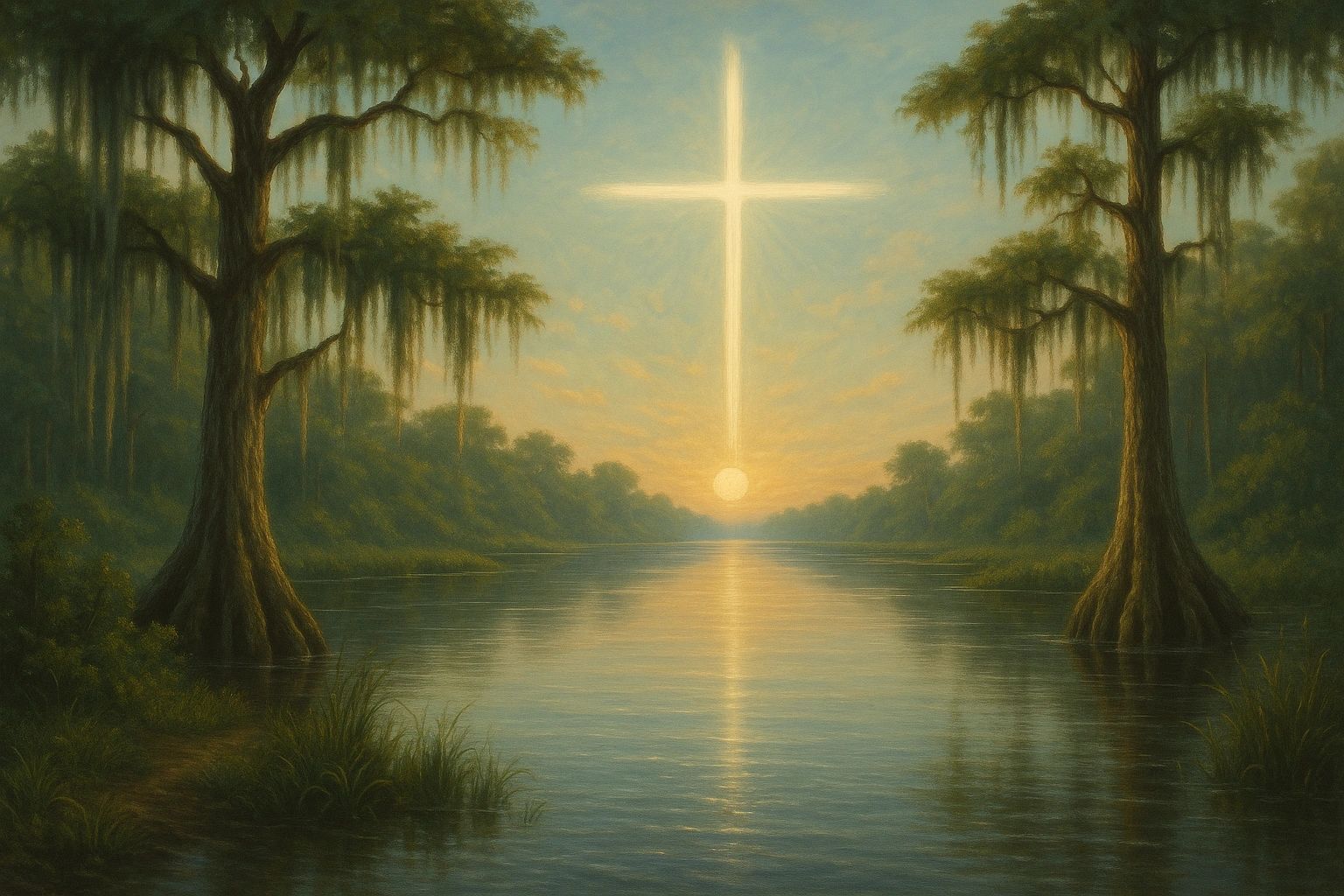
Florida is famous for its sunlit beaches, palm-lined coasts, and bustling tourist spots. But winding quietly through the state is something just as powerful and much older: the St. Johns River. Stretching 310 miles from the marshes near Vero Beach all the way to the Atlantic Ocean at Jacksonville, it is the longest river in Florida. What makes the St. Johns so unique is not just its geography but also its role as a “spiritual highway.” For thousands of years, this river has carried people, stories, and traditions—becoming a place of passage, reflection, and transformation.
In this blog, we’ll journey through the history, culture, ecology, and spiritual resonance of the St. Johns River, uncovering why it remains one of the most sacred waterways in North America.
A River That Flows Backwards
One of the most unusual features of the St. Johns River is its direction. Unlike most rivers in North America that flow southward, the St. Johns moves north. Beginning in the marshes of Indian River County, it snakes its way northward at a slow pace before widening and emptying into the Atlantic Ocean.
This reversal of expectation—flowing “the wrong way”—has given the river a mystical quality in many traditions. For the Indigenous peoples of Florida, such as the Timucua, this northward journey symbolized renewal and connection. A river that defies normal flow became a natural metaphor for spiritual resistance, endurance, and returning to life’s origins (Hann, 1996).
The river’s slow current also added to its aura. In some places, the St. Johns drifts along at less than a mile per hour. This unhurried rhythm allowed Native peoples, settlers, and later spiritual seekers to see the river not only as a waterway but as a place to linger, dream, and listen.
The Timucua and Ancient Sacred Sites
Long before Spanish explorers arrived, the Timucua people lived along the St. Johns. Archaeological evidence shows that their culture flourished along its banks for thousands of years. The Timucua considered the river sacred, not just as a source of fish, clams, and fertile soil, but also as a spiritual lifeline (Milanich, 1999).
Shell mounds, or middens, still rise along the river today. These ancient structures were built from discarded shells, pottery, and tools, but they were not just trash piles. Many were ceremonial, serving as burial sites or gathering places for rituals (Ashley & Rolland, 1997). Standing on one of these mounds, you can imagine how the Timucua saw the river as a bridge between the living and the ancestors.
The St. Johns was also home to some of the earliest known rock art in Florida. Painted and carved into limestone outcroppings near springs, these images may have been spiritual markings tied to water’s role as a life-giver and purifier. Just as the river connected villages, it connected worlds—human, natural, and divine.
Spanish Missions and Colonial Spiritual Paths
When the Spanish arrived in the 16th century, they saw the St. Johns River as a gateway inland. But beyond its strategic value, missionaries saw it as a spiritual route. Jesuit and Franciscan missions sprang up along its banks, where priests sought to convert the Timucua to Christianity.
These missions often blended Catholic traditions with Indigenous spiritual practices. For example, water rituals—already central to Timucua life—were paired with Christian baptism. While colonial expansion disrupted Indigenous life, the river remained a sacred stage where two worlds of belief collided and intertwined (Worth, 1998).
For Spanish explorers, the St. Johns also symbolized divine order. They viewed its slow flow and vast wetlands as signs of God’s mysterious creation, testing their endurance and faith in unfamiliar lands. The river was both an obstacle and a pathway toward salvation.
The River as a Refuge and Frontier
As European settlement expanded, the St. Johns River became a refuge. During the Seminole Wars of the 19th century, the river served as a hiding place and sanctuary for Indigenous groups resisting removal (Mahon, 1985). Its thick cypress swamps and winding backwaters shielded families and fighters.
Later, enslaved African Americans fleeing plantations also used the river as part of their journey to freedom. Just as the Mississippi River became symbolic in African American spirituals, the St. Johns carried similar meaning in Florida. It was both a literal and symbolic route out of bondage.
The river was even viewed as a healing place during the 19th century tourism boom. Wealthy northerners traveled south to “take the waters,” believing that the mineral springs feeding the St. Johns had restorative powers. Steamboats carried them upriver, turning the waterway into a pilgrimage route for health and renewal (Tebeau, 1971).
Cassadaga and the Spiritualist Connection
One of the most fascinating chapters in the river’s spiritual story comes from Cassadaga, Florida, known as the “Psychic Capital of the World.” Founded in 1894 by Spiritualist George Colby, Cassadaga sits just west of the St. Johns River near Lake Helen.
The proximity of the St. Johns was not an accident. Spiritualists believed water acted as a conductor between the physical and spiritual realms. The river’s slow, reflective surface symbolized the thin veil between this world and the next (Eller, 2012). Mediums and healers often described the river as a source of energy that amplified psychic work.
Even today, visitors to Cassadaga often take side trips to the St. Johns to meditate along its banks. The stillness of the water, combined with the sound of wind in the cypress trees, creates an atmosphere that many describe as mystical.
Ecology and Sacred Nature
The St. Johns is not just spiritually important because of people’s beliefs—it is also sacred in its ecological abundance. The river supports manatees, alligators, bald eagles, and countless fish species. For many Indigenous and modern spiritual traditions, this biodiversity itself is divine.
Springs bubbling into the river were seen as sacred wells, with crystal-clear water symbolizing purity and rebirth (Scott et al., 2004). Today, people continue to gather at springs like Blue Spring and Silver Glen not only for recreation but also for reflection. Many describe floating in these waters as a spiritual cleansing.
The cypress trees that line the river also carry symbolic weight. With roots anchored deep in the water, they represent stability, endurance, and the balance between earth and water. To stand among them is to feel both small and deeply connected.
The River in Literature and Art
The St. Johns has long inspired writers and artists. In the 19th century, naturalist William Bartram wrote vividly about the river’s beauty, describing it as “a paradise” where water, plants, and animals danced together in harmony (Bartram, 1791/1996). His descriptions influenced both science and the Romantic imagination of nature as sacred.
Harriet Beecher Stowe, author of Uncle Tom’s Cabin, also spent winters along the St. Johns. She wrote about the river as a place of peace and reflection, contrasting its quiet spirituality with the industrial rush of northern cities (Stowe, 1873).
Artists, too, found inspiration in its shimmering waters and moss-draped oaks. Paintings of the river often highlight its dreamlike quality—mist rising at dawn, or sunsets glowing across still waters—echoing the sense of divine presence.
Modern Spiritual Practices
Today, the St. Johns continues to serve as a spiritual highway in modern ways. From yoga retreats on its banks to sunrise paddleboard meditations, people seek out the river as a place to reconnect with themselves and the natural world.
Christian baptisms still occur in its waters, echoing both Indigenous and missionary traditions. At the same time, Native American groups hold ceremonies to honor the river’s enduring spirit, reminding us of its ancient significance.
Environmentalists, too, describe their work in spiritual terms. Protecting the river is often framed not just as conservation but as stewardship of something sacred (Derr, 2011). Each cleanup, each restoration project, is a modern ritual affirming the river’s deeper meaning.
Challenges to the River’s Spirit
Yet, like all sacred places, the St. Johns faces threats. Pollution, development, and climate change endanger its health. Rising seas push saltwater further inland, threatening freshwater ecosystems. Nutrient runoff fuels algal blooms, suffocating fish and manatees.
For those who see the river as sacred, these threats are not just environmental—they are spiritual wounds. To poison the river is to dishonor the generations who relied on it, the creatures who live in it, and the future generations who will need it.
Many spiritual leaders have spoken out about the moral duty to protect the river. Faith-based environmental movements in Florida often invoke the St. Johns as a symbol of creation care—a reminder that to love God or the Earth means to safeguard its rivers (Taylor, 2010).
Conclusion: The Eternal Flow
The St. Johns River is more than water winding through Florida. It is a spiritual highway that has carried Indigenous prayers, colonial missions, songs of freedom, artistic inspiration, and modern quests for healing. Its northward flow defies expectation, reminding us that the sacred often moves against the current of ordinary life.
To sit on its banks at sunrise, watching mist rise from the water, is to feel part of something timeless. The St. Johns teaches us that rivers are not just natural features but living pathways—connecting past to present, body to spirit, and people to one another.
As long as the river flows, it will remain a spiritual highway for all who seek its wisdom.
Bibliography
- Ashley, K., & Rolland, V. (1997). Archaeological investigation of shell middens along the St. Johns River. The Florida Anthropologist, 50(4), 227–249.
- Bartram, W. (1996). Travels and other writings (T. Slaughter, Ed.). New York: Library of America. (Original work published 1791).
- Derr, T. (2011). Environmental ethics and Christian theology. Journal of the Society of Christian Ethics, 31(1), 145–165.
- Eller, C. (2012). Gentle spirits: Spiritualism in America. Religion and American Culture, 22(1), 1–32.
- Hann, J. H. (1996). A history of the Timucua Indians and missions. Gainesville: University Press of Florida.
- Mahon, J. K. (1985). History of the Second Seminole War, 1835–1842. Gainesville: University Press of Florida.
- Milanich, J. T. (1999). Laboring in the fields of the Lord: Spanish missions and Southeastern Indians. Gainesville: University Press of Florida.
- Scott, T. M., Means, G. H., Means, R. C., & Meegan, R. P. (2004). First magnitude springs of Florida. Tallahassee: Florida Geological Survey.
- Stowe, H. B. (1873). Palmetto leaves. Boston: J.R. Osgood.
- Taylor, B. (2010). Dark green religion: Nature spirituality and the planetary future. Berkeley: University of California Press.
- Tebeau, C. W. (1971). A history of Florida. Coral Gables: University of Miami Press.
- Worth, J. E. (1998). Timucuan chiefdoms of Spanish Florida: Volume 1, Assimilation. Gainesville: University Press of Florida.
Originally published at the live site .