
Maritime ·
What Apex Predator Eats Sharks? The Ocean’s Top Shark Hunters Rev
When you hear the word shark, what comes to mind? A fierce predator with rows of sharp teeth and a reputation as the ultimate sea monster? You’re not alone! Sharks have long ruled the oceans as apex predators—creatures a...
By Rebecca "Madam Chronicler" Ryan
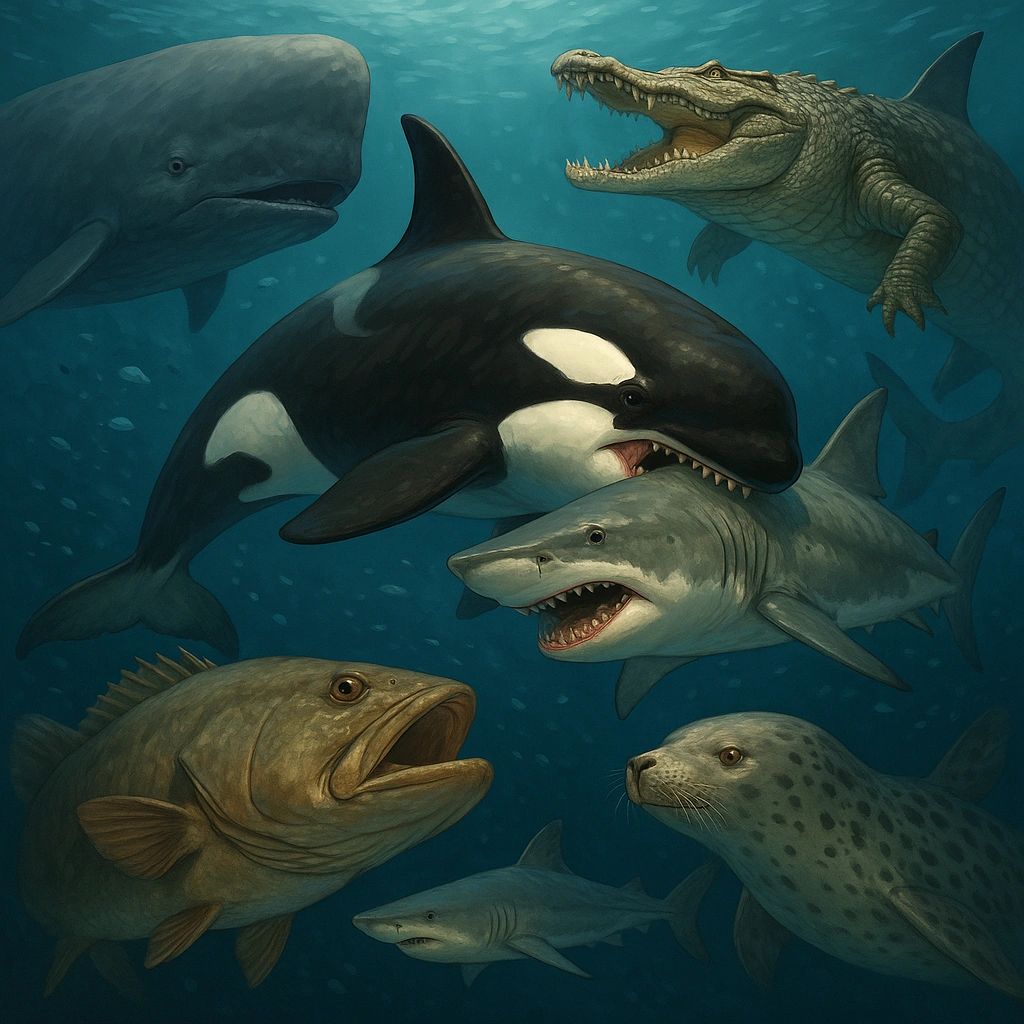
When you hear the word shark, what comes to mind? A fierce predator with rows of sharp teeth and a reputation as the ultimate sea monster? You’re not alone! Sharks have long ruled the oceans as apex predators—creatures at the very top of the food chain with few natural enemies. But even the mighty shark has something to fear. That’s right—some apex predators are bold (and hungry) enough to hunt and eat sharks!
So, who dares take a bite out of these kings of the sea? Let’s explore the remarkable animals that have what it takes to challenge and chow down on sharks.
1. The Orca (Killer Whale): The Ultimate Shark Slayer
When it comes to eating sharks, orcas, or killer whales (Orcinus orca), are the ocean’s most famous and feared shark predators. Despite their nickname, these black-and-white marine mammals are not whales at all. They’re actually the largest members of the dolphin family—and they’re incredibly smart.
Why Orcas Can Beat Sharks
Orcas don’t just attack sharks by brute force. They use teamwork, strategy, and problem-solving to take them down. In South Africa, researchers have seen orcas flipping great white sharks upside down to put them into a sleep-like state called tonic immobility. Then, with almost surgical precision, the orcas remove and eat only the shark’s liver, which is full of energy-rich fats. The rest of the shark is left behind.
Famous Shark-Eating Orcas
A pair of orcas named Port and Starboard have made headlines for preying on great white sharks off the coast of South Africa. Scientists noticed that after these two showed up, the local shark population vanished—literally swam away to escape them!
Scientific Support
“Orcas are capable of targeting the liver of white sharks, and their hunting behavior has had a measurable impact on shark distribution in affected areas.” – Jorgensen et al., 2019, Nature Scientific Reports
2. Other Sharks: Cannibalism in the Shark World
Believe it or not, some sharks eat other sharks! It’s a tough world under the sea, and not even your own kind is safe from becoming a snack.
Big Sharks Eat Little Sharks
Large species like the great white shark, tiger shark, and bull shark have been known to prey on smaller shark species—or even members of their own kind. This behavior usually happens when food is scarce, or when smaller sharks are seen as easy targets.
Shark Cannibalism Before Birth?
Yes, you read that right. Some shark species start eating each other before they’re even born. In the case of sand tiger sharks (Carcharias taurus), the first embryo to hatch inside the mother’s womb will eat its siblings. It’s a wild example of nature’s survival of the fittest.
3. Sperm Whales: Deep Sea Giants With a Taste for Sharks?
The sperm whale (Physeter macrocephalus) is the largest toothed predator in the ocean, known for diving deep into the ocean to hunt giant squid. But there’s some evidence that they might eat deep-sea sharks too.
Shark Bits in Whale Bellies
Scientists have found shark remains in the stomachs of sperm whales, including species like the sleeper shark and cookiecutter shark. These sharks live deep in the ocean, right where sperm whales love to dive.
“While squid are the primary prey, sperm whales have been known to consume sharks, especially deep-dwelling species.” – Whitehead, 2003, Marine Mammal Science
Still, shark-hunting doesn’t seem to be the sperm whale’s main gig—it’s more of an occasional snack than a regular item on the menu.
4. Saltwater Crocodiles: Shark Snackers in Estuaries
Saltwater crocodiles (Crocodylus porosus), the largest living reptiles on Earth, don’t live in the open ocean—but in the rivers, estuaries, and coastal waters of Australia and Southeast Asia. That’s exactly where smaller shark species like bull sharks tend to hang out, especially when they’re young.
Ambush at the Water’s Edge
Saltwater crocs are ambush predators. They wait patiently and strike with lightning speed. If a young or medium-sized shark gets too close to the river’s edge—snap! It could become croc chow.
In northern Australia, there have been several recorded incidents of crocodiles eating sharks, especially during seasonal migrations when both animals share brackish waters.
5. Humans: The Most Dangerous Shark Predator of All
Surprise! The deadliest predator to sharks is us—humans.
The Fishing Threat
Humans kill an estimated 100 million sharks every year through commercial fishing, bycatch, and shark finning. Many of these sharks aren’t even eaten—their fins are removed for soup, and the bodies are tossed back into the sea.
“Humans kill more sharks each year than all natural predators combined.” – Worm et al., 2013, Marine Policy
Impact on Shark Populations
This massive toll is pushing many shark species toward extinction. Unlike other predators, we don’t just eat sharks—we wipe them out with industrial efficiency. In the food chain, that makes us the ultimate apex predator.
6. Giant Groupers: Chunky Reef Predators That Take on Sharks
Giant groupers (Epinephelus lanceolatus) might look slow, but these massive fish are reef-dwelling powerhouses. They’ve been caught on camera gobbling up small reef sharks whole.
Reef vs. Reef
These encounters usually happen when a young shark ventures too close to a grouper’s lair. In the blink of an eye, the grouper opens its huge mouth and vacuum-sucks the shark in. Gone in a gulp!
“Large groupers have been observed preying upon juvenile sharks in reef environments.” – Randall, 1995, Coastal Fish of the Western Indian Ocean
7. Leopard Seals: Arctic Hunters With a Sharky Diet
In the icy waters of the Southern Ocean, leopard seals (Hydrurga leptonyx) are fierce and flexible predators. While they mainly eat penguins, squid, and fish, they’ve also been known to take down small sharks like the elephant shark.
Cold Waters, Cold Meals
These shark meals are rare but real. As leopard seals move through different habitats and seasons, they adapt their diets, proving once again that sharks aren’t always the top predator.
Why Are Sharks Vulnerable to These Apex Predators?
Despite being known as scary hunters, many sharks have a few weaknesses that other predators can exploit.
1. Tonic Immobility
Many sharks go into a trance-like state when flipped upside down. Orcas have learned to use this against them.
2. Size and Age
Not all sharks are huge. Young sharks, small reef species, or old and injured individuals make easier targets.
3. Habitat Overlap
When sharks share space with other apex predators—like crocodiles in estuaries or orcas along coastlines—they run the risk of being hunted.
How Predators Shape Shark Behavior
When sharks know there’s danger around, they change how they act.
Sharks That Flee Orcas
After orca attacks in South Africa, great white sharks vanished from the area for months. Scientists believe this shows how powerful fear is—even for sharks.
“Sharks abandoned historical aggregation sites, indicating avoidance behavior after orca predation.” – Engelbrecht et al., 2021, Ecology
Shy Sharks?
Some sharks have become more cautious in places where large predators are common. They stay deeper, swim less, or shift their hunting times to avoid getting eaten.
Are Sharks Still Apex Predators?
Absolutely. Most sharks are still top predators in their environment. But being “apex” doesn’t mean you’re unbeatable—it just means you’re rarely beaten.
Every now and then, nature reminds us that even the fiercest creatures aren’t completely invincible.
Why This Matters: Predator Balance in the Ocean
Sharks, orcas, crocodiles, whales, humans—each plays a part in keeping the ocean’s food web balanced. When one group becomes too powerful, or another disappears, the whole system can wobble.
Protecting predators, even those that eat sharks, is key to healthy oceans.
Final Thoughts: Who Eats the Shark?
So, what apex predator eats sharks? The answer: orcas, other sharks, sperm whales, saltwater crocodiles, humans, giant groupers, and sometimes even leopard seals.
Nature is full of surprises, and the ocean is no exception. While sharks may rule the seas in many places, there’s always someone bigger, smarter, sneakier—or just hungrier—waiting in the wings.
The next time you think of sharks as unbeatable, just remember: even apex predators have predators.
Bibliography (APA Format)
- Engelbrecht, T. M., Towner, A. V., Kock, A. A., O’Riain, M. J., & Jorgensen, S. J. (2021). Orca predation drives white shark absence at South Africa’s largest aggregation site. Ecology, 102(5), e03341. https://doi.org/10.1002/ecy.3341
- Jorgensen, S. J., Arnoldi, N. S., Estess, E. E., Chapple, T. K., Rückert, M., Towner, A. V., & Block, B. A. (2019). Killer whales distribute white sharks away from popular aggregation site. Scientific Reports, 9, 11061. https://doi.org/10.1038/s41598-019-47481-9
- Randall, J. E. (1995). Coastal Fishes of Oman. University of Hawaii Press.
- Whitehead, H. (2003). Sperm Whales: Social Evolution in the Ocean. University of Chicago Press.
- Worm, B., Davis, B., Kettemer, L., Ward-Paige, C. A., Chapman, D., Heithaus, M. R., … & Gruber, S. H. (2013). Global catches, exploitation rates, and rebuilding options for sharks. Marine Policy, 40, 194-204. https://doi.org/10.1016/j.marpol.2012.12.034
Originally published at the live site .