
Stories ·
What Are the Most Common Snakes in Florida?
Florida is famous for its sunshine, sandy beaches, and beautiful wildlife. But if you spend time in the wild areas of the state — like forests, wetlands, or even your backyard — you might run into one of Florida’s most m...
By Rebecca "Madam Chronicler" Ryan
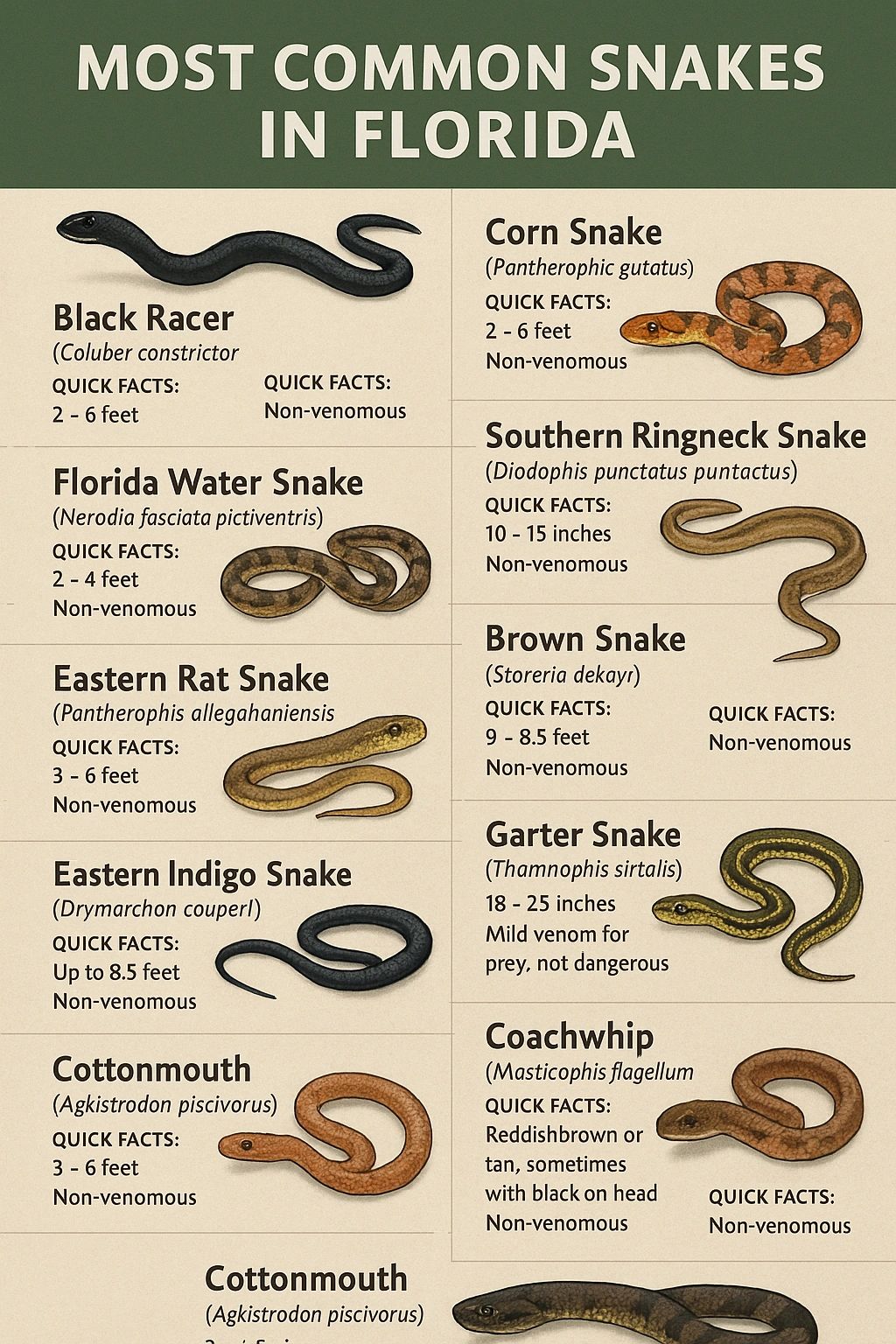
Florida is famous for its sunshine, sandy beaches, and beautiful wildlife. But if you spend time in the wild areas of the state — like forests, wetlands, or even your backyard — you might run into one of Florida’s most misunderstood creatures: the snake.
Before you scream or run, take a breath! Most of Florida’s snakes are harmless and actually help the environment by controlling pests like rats and insects. In this post, we’ll explore the most common snakes you’re likely to see in Florida, how to identify them, and why they’re so important to the ecosystem.
Why Are There So Many Snakes in Florida?
Florida has a warm, humid climate with plenty of wetlands, forests, and fields. This makes it the perfect home for many kinds of reptiles, including snakes. In fact, there are over 40 different species of snakes in Florida. Some are tiny, some are big, and only a few are venomous.
Let’s get to know the most common ones you might come across.
1. Black Racer (Coluber constrictor)
Quick Facts:
- Length: 2 to 6 feet
- Color: Shiny black with a white chin
- Venomous: No
Black racers are one of the most frequently seen snakes in Florida. They’re long, skinny, and super fast—hence the name “racer.” These snakes are not aggressive, but if cornered, they may shake their tail or strike. Luckily, they are not venomous and usually just want to get away.
They are often seen slithering through backyards, gardens, and fields during the day. Black racers eat insects, frogs, lizards, and rodents, making them great neighbors!
2. Corn Snake (Pantherophis guttatus)
Quick Facts:
- Length: 2 to 6 feet
- Color: Orange with black-edged red blotches
- Venomous: No
Corn snakes are beautiful and colorful, often mistaken for the venomous copperhead (which isn’t found in most of Florida). But don’t worry—corn snakes are non-venomous and very gentle. In fact, they’re one of the most popular pet snakes because they’re easy to handle.
They get their name from the corn-like pattern on their bellies. Corn snakes are helpful around farms and homes because they eat mice and rats.
3. Florida Water Snake (Nerodia fasciata pictiventris)
Quick Facts:
- Length: 2 to 4 feet
- Color: Brown or gray with darker bands
- Venomous: No
Florida water snakes love swamps, ponds, lakes, and rivers. They can swim well and spend a lot of time in or near water. People often mistake them for cottonmouths (also called water moccasins), but Florida water snakes are harmless.
These snakes can be grumpy when picked up and may bite, but they’re not dangerous. They help control fish and amphibian populations, keeping the water ecosystems balanced.
4. Southern Ringneck Snake (Diadophis punctatus punctatus)
Quick Facts:
- Length: 10 to 15 inches
- Color: Dark gray or black with a bright yellow or orange ring around the neck
- Venomous: No
These tiny snakes are adorable and shy. You might find them hiding under logs, rocks, or mulch piles. Their colorful belly is often bright orange or red, which they show off when they feel threatened.
Ringneck snakes mostly eat small prey like insects, worms, and salamanders. They’re completely harmless to humans and are rarely seen during the day.
5. Eastern Rat Snake (Pantherophis alleghaniensis)
Quick Facts:
- Length: 3 to 6 feet
- Color: Yellowish with dark stripes or gray with blotches (depending on region)
- Venomous: No
Also known as the yellow rat snake or the Everglades rat snake, this species is great at climbing trees and slithering along fences. They’re often found near barns, wooded areas, or even attics—anywhere they might find mice or birds to eat.
Eastern rat snakes can be a bit intimidating due to their size, but they’re not venomous and don’t pose any threat to humans. They play a big role in controlling rodent populations.
6. Brown Snake (Storeria dekayi)
Quick Facts:
- Length: 9 to 13 inches
- Color: Brown or gray with a lighter stripe down the back
- Venomous: No
Brown snakes are small, secretive, and usually found under leaf litter or rocks in yards and gardens. They’re often seen after rain and love damp environments. These little guys eat snails, slugs, and worms.
Even though they’re tiny, they’re an important part of Florida’s food web.
7. Eastern Indigo Snake (Drymarchon couperi)
Quick Facts:
- Length: Up to 8.5 feet
- Color: Glossy blue-black
- Venomous: No
The Eastern indigo snake is one of the largest native snakes in the U.S. and is completely non-venomous. It’s a protected species in Florida because its population has declined due to habitat loss.
Indigo snakes are powerful predators that eat other snakes, including venomous ones like rattlesnakes. They’re usually found in pine forests and near gopher tortoise burrows. Spotting one is a rare treat!
8. Garter Snake (Thamnophis sirtalis)
Quick Facts:
- Length: 18 to 26 inches
- Color: Brown or green with yellow stripes
- Venomous: Mild venom for prey, not dangerous to humans
Garter snakes are common across the U.S., including Florida. They’re one of the few snakes with a mild venom used to subdue prey, but it’s not dangerous to people. These snakes are active during the day and are often seen near water or grassy areas.
They eat frogs, earthworms, and even small fish. Garter snakes are friendly and curious, and they’re often the first snake kids encounter in the wild.
9. Coachwhip (Masticophis flagellum)
Quick Facts:
- Length: 3 to 6 feet
- Color: Reddish-brown or tan, sometimes with black on the head
- Venomous: No
Coachwhips are fast, alert snakes that like open sandy areas and scrublands. They get their name because their scales look braided, like a whip. These snakes are active during the day and hunt lizards, birds, and small mammals.
There’s a myth that coachwhips chase and whip people, but that’s not true. They’re more scared of you than you are of them!
10. Cottonmouth (Agkistrodon piscivorus)
Quick Facts:
- Length: 2 to 4 feet
- Color: Dark brown to black with faint bands
- Venomous: Yes
Now let’s talk about one of the few venomous snakes in Florida. The cottonmouth, or water moccasin, lives near water and is often confused with harmless water snakes.
When threatened, cottonmouths open their mouths wide to show the white inside, which looks like cotton—hence the name. While they are venomous, they usually avoid people and only bite if stepped on or harassed.
What Should You Do If You See a Snake?
If you come across a snake, stay calm! Most snakes just want to be left alone. Here’s what you should do:
- Don’t try to pick it up. Even non-venomous snakes might bite if they feel threatened.
- Give it space. Slowly back away and let the snake slither off.
- Take a picture (from a distance). This can help you identify the snake later.
- Don’t kill it. Snakes are protected in many parts of Florida, and they help control pests.
How to Tell If a Snake Is Venomous
While most snakes in Florida are harmless, it’s good to know how to spot the few venomous ones. Here are some tips:
- Head shape: Venomous snakes often have a triangular or arrow-shaped head.
- Pupil shape: Venomous snakes usually have vertical (cat-like) pupils, while non-venomous snakes have round ones.
- Color patterns: Some venomous snakes have specific markings, like the hourglass-shaped bands on copperheads or the rattle on a rattlesnake.
Still, the best rule is: If you’re not sure, don’t get close!
Final Thoughts: Snakes Are Florida’s Secret Helpers
Snakes may not be everyone’s favorite animal, but they’re a vital part of Florida’s wild world. They help keep rodent and insect populations in check and are an important food source for birds and larger predators.
So next time you see a snake, remember: It’s just doing its job, and it’s probably more scared of you than you are of it.
By learning more about Florida’s most common snakes, we can learn to respect these awesome reptiles and the role they play in our environment.
Bibliography
- Florida Fish and Wildlife Conservation Commission. (n.d.). Living with Snakes. Retrieved from https://myfwc.com
- Gibbons, W. T., & Dorcas, M. E. (2005). Snakes of the Southeast. University of Georgia Press.
- National Park Service. (n.d.). Snakes of the Everglades. Retrieved from https://www.nps.gov
- University of Florida IFAS Extension. (2020). Dealing with Snakes in Florida’s Residential Areas. Retrieved from https://edis.ifas.ufl.edu
- Whitaker, J. O., & Hamilton, W. J. (1998). Mammals of the Eastern United States. Cornell University Press.
Originally published at the live site .