
Maritime ·
What Heron and Egret Rookeries Reveal About Coastal Wetlands
Along quiet coastlines, the health of a wetland isn't always obvious. The water may appear calm, the vegetation green, and fish may swim below the surface. However, a different story unfolds above the water, in the trees...
By Rebecca "Madam Chronicler" Ryan
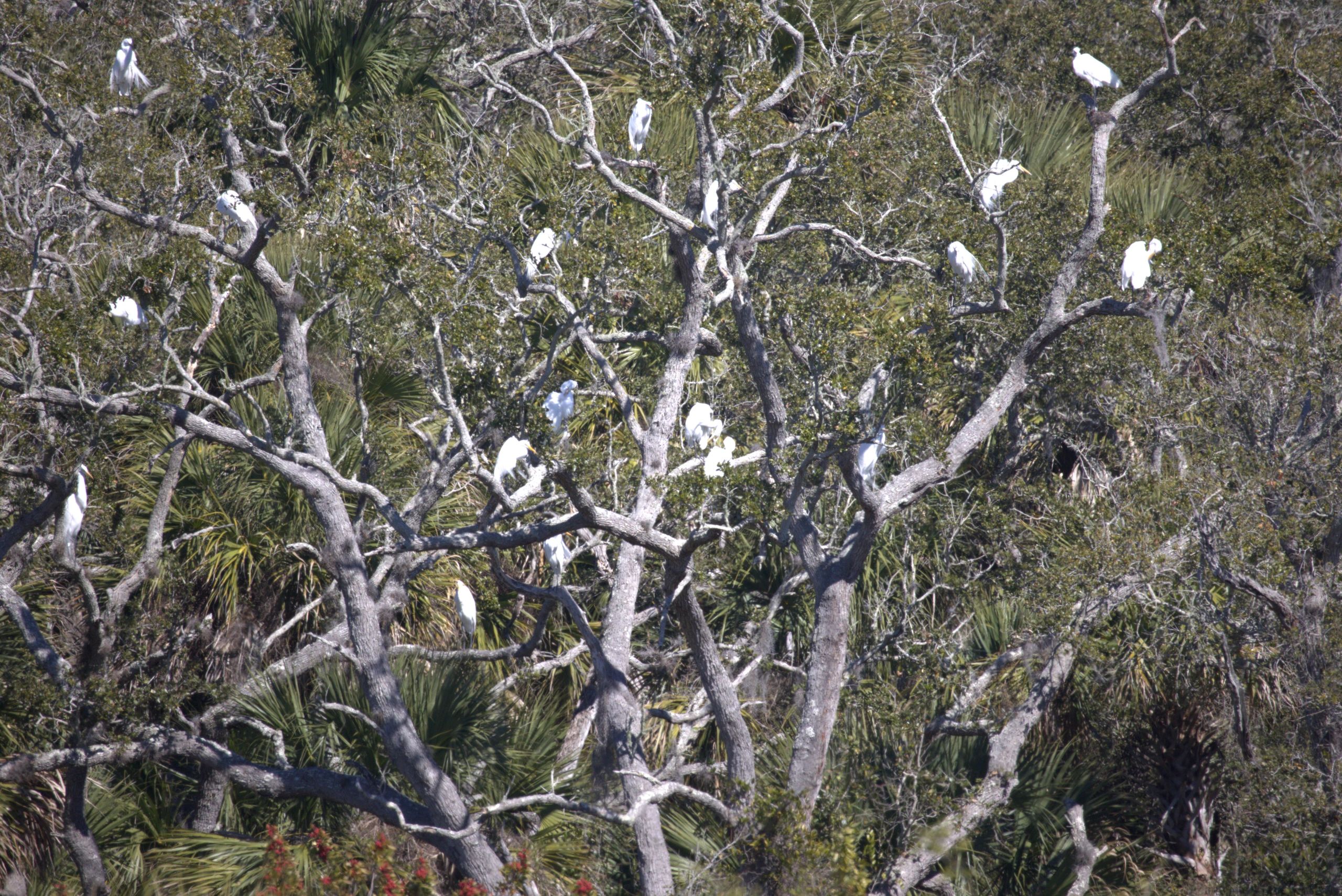
Along quiet coastlines, the health of a wetland isn’t always obvious. The water may appear calm, the vegetation green, and fish may swim below the surface. However, a different story unfolds above the water, in the trees.
Herons and egrets have long been observed by scientists as living indicators of ecosystem health. Their nesting colonies, known as rookeries, are particularly insightful. When these birds gather to breed, they reflect the balance of water, food, and habitat below them. When they leave, it often serves as a warning.
Rookeries don’t fail by chance; they collapse when wetlands can no longer support the complex needs of top predators. Consequently, herons and egrets have become some of the most important biological indicators of coastal ecosystem health.
Why Scientists Watch Wading Birds
Herons and egrets occupy a high position in the coastal food web. They rely on healthy fish populations, consistent water levels, and secure nesting sites. Any disruption to these essential elements can quickly impact their breeding success.
Unlike many animals, wading birds exhibit rapid responses to environmental changes. They may abandon nests, skip breeding seasons, or leave entire regions when conditions worsen. These behaviors make them valuable early warning systems.
Ecologists have observed that changes in wading bird nesting success often occur years before wetlands show obvious signs of collapse. By the time vegetation dies back or fish populations crash, the birds have usually already left (Frederick & Ogden, 2001).
Rookeries as Biological Sensors
A rookery is more than just a collection of nests; it’s a biological sensor, integrating multiple environmental signals simultaneously. For a colony to thrive, water needs to arrive at the right time, prey must be concentrated and easily accessible, and the nesting habitat must remain secure for weeks, if not months.
If any of these factors fail, the colony suffers.
Scientists monitor rookery health by tracking nest numbers, breeding timing, chick survival rates, and colony locations. These metrics offer insights into water management, prey dynamics, and habitat stability across entire coastal ecosystems (Frederick et al., 2009).
Water Timing Is Everything
In coastal wetlands, water timing is just as crucial as water presence. Herons and egrets rely on seasonal flooding followed by gradual drying. This pattern concentrates fish and invertebrates in shallow areas, making them easy to catch.
Rapid water drainage results in prey disappearing before chicks can be fed, while prolonged deep water prevents prey access. Both scenarios lead to nesting failure.
Long-term Everglades studies demonstrate that successful wading bird nesting is contingent upon water levels adhering to precise seasonal patterns. Even minor timing alterations can lead to entire colonies abandoning their breeding efforts (Frederick & Ogden, 2001).
Prey Concentration and Chick Survival
Heron and egret chicks grow rapidly and need constant feeding. Adults can make dozens of foraging trips daily. If prey is scarce or difficult to catch, the chicks will weaken or starve.
Therefore, rookery success mirrors prey density in the surrounding wetlands. Healthy, well-distributed fish populations lead to thriving colonies, whereas prey decline, whether due to pollution, altered water flow, or overfishing, causes nesting success to plummet almost instantly.
This strong connection between prey and reproduction makes wading birds exceptionally sensitive indicators of aquatic food web health (Kushlan, 1976).
Sensitivity to Pollution
Herons and egrets also reveal the hidden impacts of pollution. As top predators, they accumulate contaminants from the animals they eat. These contaminants, including heavy metals, pesticides, and industrial chemicals, can build up in their tissues and eggs.
Studies have documented reduced hatching success, deformities, and behavioral changes in wading birds exposed to contaminated environments. In some cases, chemical impacts were detected in bird populations even before they were recognized in water samples or fish surveys (Frederick et al., 2009).
Consequently, scientists frequently analyze feathers and eggs from rookeries to assess contaminant levels throughout wetlands.
Nest Abandonment as a Warning Signal
One of the clearest signs of ecosystem stress is nest abandonment. When adults leave nests unattended, eggs can overheat, cool, or become prey to predators. This behavior is rarely random.
Nest abandonment is linked to sudden prey scarcity, extreme water fluctuations, human disturbance, and toxic exposure. When abandonment occurs across multiple species in a colony, it usually indicates a system-wide problem rather than a localized issue (Ogden, 2005).
Shifting Colony Locations
Another important indicator is colony movement. Herons and egrets often reuse successful nesting sites year after year. When colonies suddenly relocate or disappear, it suggests that conditions have changed.
Across numerous coastal areas, research consistently demonstrates long-term shifts in rookery locations as wetlands degrade or undergo development. These movements reflect changes in hydrology, vegetation, and food sources across extensive areas (Parsons & Master, 2000).
Climate Change and Rising Stress
Climate change is increasing the value of wading birds as indicators. Rising sea levels, stronger storms, and unpredictable rainfall are rapidly altering coastal wetlands.
Saltwater intrusion can kill nesting trees. Storm surges can flood colonies during critical breeding periods. Altered rainfall patterns can disrupt prey timing.
Herons and egrets react swiftly to these changes, frequently abandoning established rookeries. Monitoring these reactions assists scientists in understanding how climate stress is altering coastal ecosystems in real-time.
Nutrient Signals From Rookeries
Rookeries have an impact on the wetlands they represent. As birds feed in aquatic systems and nest in trees, they transport nutrients from the water to the land. Over time, this nutrient input alters the soil chemistry and plant growth beneath the colonies.
Healthy rookeries often create localized nutrient hotspots, supporting diverse plant and insect communities. When colonies disappear, these nutrient pathways break down, further altering ecosystem structure (Mizutani et al., 1992).
The Everglades as a Living Case Study
The Florida Everglades stand as a powerful example of how wading birds reflect wetland health. Once home to massive colonies, the Everglades experienced dramatic bird declines following water diversion projects in the 20th century.
By the 1970s, wading bird populations had plummeted by over 90%. Rookeries collapsed due to disrupted prey timing. Subsequent restoration efforts shifted focus to restoring natural water flow, rather than directly targeting the birds.
As water timing improved, prey returned, and nesting colonies slowly reappeared. The birds confirmed what models predicted: restore the ecosystem, and the indicators recover (Ogden, 2005).
Why Rookeries Matter for Conservation
Protecting heron and egret rookeries benefits more than just the birds; it safeguards water flow timing, food web structure, and the integrity of coastal wetlands.
Because these birds integrate so many environmental signals, they are often used to measure the success of restoration projects. The return of rookeries is one of the strongest indicators that a wetland is healing.
What Happens When the Birds Go Silent
The absence of herons and egrets is rarely subtle. Trees fall silent. Nesting seasons pass without activity, and, over time, other species decline as well.
By the time wetlands show obvious signs of failure, the birds have often already departed, leaving behind years of warning. Heeding these early signals provides conservationists with a critical edge.
Final Thoughts
Herons and egrets don’t use instruments or spreadsheets; they respond through survival. Their nesting colonies mirror the health of coastal ecosystems.
When rookeries thrive, wetlands are usually balanced and productive. Conversely, their collapse often signals a deeper underlying issue.
Watching these birds is not just birdwatching; it is ecosystem monitoring—written in wings, nests, and silence.
References
Frederick, P. C., & Ogden, J. C. (2001). Pulsed breeding of long-legged wading birds and the importance of drought in the Everglades. Wetlands, 21(4), 484–491. Frederick, P. C., Gawlik, D. E., Ogden, J. C., Cook, M. I., & Lusk, M. (2009). Wading birds as indicators of restoration success. Ecological Indicators, 9(6), S83–S95. Kushlan, J. A. (1976). Feeding behavior of North American herons. The Auk, 93(1), 86–94. Mizutani, H., Kabaya, Y., & Wada, E. (1992). Bird-mediated nutrient transfer. Isotopes in Environmental and Health Studies, 28(3–4), 173–178. Ogden, J. C. (2005). Everglades ridge and slough conceptual ecological model. Wetlands, 25(4), 810–820. Parsons, K. C., & Master, T. L. (2000). Nest-site selection by wading birds. Waterbirds, 23(2), 246–255. Wittenberger, J. F., & Hunt, G. L. (1985). The adaptive significance of coloniality in birds. Avian Biology, 8, 1–78.
Originally published at the live site .