
Maritime ·
Why Sharks Freeze When You Flip Them Upside Down
When most people think of sharks, they imagine fast, powerful hunters with razor-sharp teeth. Sharks are apex predators, meaning they sit at the very top of the food chain. But despite their strength and ferocity, sharks...
By Rebecca "Madam Chronicler" Ryan
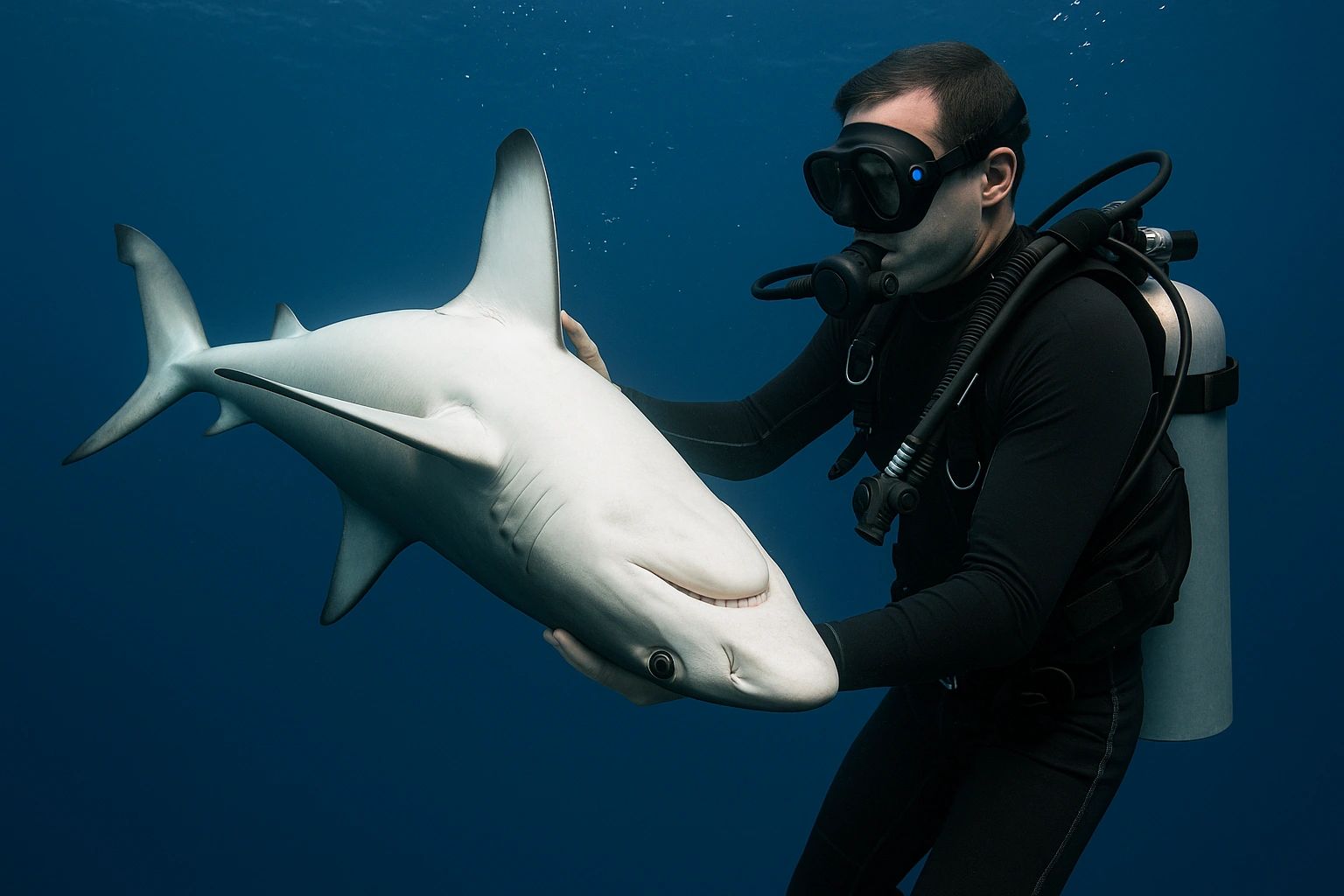
When most people think of sharks, they imagine fast, powerful hunters with razor-sharp teeth. Sharks are apex predators, meaning they sit at the very top of the food chain. But despite their strength and ferocity, sharks also have some fascinating quirks that may surprise you. One of the strangest behaviors scientists have discovered is that many shark species “freeze” or go into a trance-like state when flipped upside down. This odd reaction is known as tonic immobility, and it is one of the most mysterious features of shark biology.
In this blog, we’ll explore what tonic immobility is, how it works, why sharks experience it, how scientists study it, and why this phenomenon matters for both shark research and conservation. By the end, you’ll see that even the ocean’s most feared predators can be vulnerable in the most unexpected ways.
What Is Tonic Immobility?
Tonic immobility is a natural state of temporary paralysis or trance that some animals enter when they are restrained, turned upside down, or placed in certain positions. Scientists have documented tonic immobility in reptiles, birds, fish, and even mammals like rabbits. It is sometimes called “animal hypnosis” because the creature appears frozen or asleep, even though it is still awake.
In sharks, tonic immobility is triggered most often when the animal is flipped upside down on its back. The shark’s body becomes still, its breathing slows, and it remains motionless until it is flipped right side up again. Depending on the species, this state can last for a few seconds to as long as 15 minutes.
While it may look like the shark has fainted, it is not unconscious. Scientists believe tonic immobility is a reflex—a built-in survival mechanism in the nervous system.
How Scientists First Discovered It
Reports of sharks going limp when turned over date back centuries, but serious scientific study began in the 20th century. Fishermen often noticed that when they pulled sharks aboard and turned them on their backs, the animals stopped struggling. Later, marine biologists used this behavior to safely handle sharks during experiments.
In the 1970s and 1980s, researchers such as Eugenie Clark—nicknamed the “Shark Lady”—and Samuel Gruber conducted studies on tonic immobility. They flipped lemon sharks, nurse sharks, and other species onto their backs and observed how long they stayed still. Their studies confirmed that tonic immobility is a reliable and repeatable response across many species of sharks.
Today, this method is still used in scientific research, rescue operations, and sometimes even in aquariums when sharks need medical care.
Why Does It Happen?
This is where things get interesting—and a little mysterious. Scientists don’t fully agree on why sharks enter tonic immobility, but there are a few leading theories.
1. A Defense Mechanism
One theory suggests that tonic immobility is a kind of defense strategy. In the wild, many predators stop attacking when their prey goes still, since movement often triggers the hunting instinct. By “playing dead,” a shark might confuse or discourage a larger predator.
2. Neurological Reflex
Another explanation is that tonic immobility is a built-in reflex of the shark’s nervous system. The vestibular system in the inner ear, which controls balance, may send unusual signals to the brain when the shark is flipped upside down. This could trick the shark’s nervous system into entering a frozen state until the balance is restored.
3. A Reproductive Link
Some scientists believe tonic immobility may play a role in shark mating. In many species, males grasp females during courtship, sometimes rolling them onto their backs. The female’s tonic immobility might reduce resistance, making mating easier.
4. A Stress Response
There is also evidence that tonic immobility is related to stress. When restrained or inverted, sharks may go into a trance as a way to conserve energy and avoid injury. It could be similar to a “freeze” response in humans when faced with fear.
Which Sharks Experience It?
Not all sharks respond to inversion with tonic immobility, but many do. Some of the species known to show this behavior include:
- Lemon sharks (Negaprion brevirostris)
- Nurse sharks (Ginglymostoma cirratum)
- Great white sharks (Carcharodon carcharias)
- Tiger sharks (Galeocerdo cuvier)
- Hammerhead sharks (Sphyrna spp.)
- Blacktip reef sharks (Carcharhinus melanopterus)
Great whites are particularly famous for freezing when flipped, which is sometimes shown in documentaries. Orcas (killer whales) are even known to exploit this trick in the wild, flipping sharks to induce tonic immobility before eating them.
How Long Do Sharks Stay Frozen?
The duration of tonic immobility depends on the species and the conditions. Smaller species like reef sharks may stay still for only 30 seconds to a couple of minutes. Larger species such as great whites have been observed in tonic immobility for up to 15 minutes.
Once the shark is flipped upright, it usually snaps out of the trance quickly and swims away normally.
What Happens Inside the Shark’s Body?
During tonic immobility, several physiological changes take place:
- Reduced muscle activity – The shark’s muscles go slack, making it easier to handle.
- Slowed breathing – Sharks breathe by pumping water over their gills. In tonic immobility, this slows down noticeably.
- Decreased heart rate – Some studies show that heart rate decreases, similar to a calm or resting state.
- Lower stress hormones – Blood tests have revealed lower levels of stress hormones, suggesting tonic immobility might reduce anxiety.
These changes suggest that tonic immobility is not harmful in the short term, though keeping a shark inverted for too long could be dangerous.
Orcas and the Shark-Flip Trick
Perhaps the most dramatic example of tonic immobility in the wild comes from the behavior of killer whales. Orcas have been observed flipping over great white sharks, tiger sharks, and even stingrays to immobilize them. Once the shark is frozen, the orca can safely eat it without resistance.
One famous case occurred in 1997 off the coast of California, when a group of orcas flipped a great white shark upside down. The shark became motionless, and the orcas consumed its liver—a favorite food because it is rich in oils and nutrients. Since then, multiple studies have confirmed that orcas intentionally use tonic immobility to hunt sharks.
How Humans Use Tonic Immobility in Sharks
Shark researchers often rely on tonic immobility to safely tag, measure, and take samples from sharks. By flipping the animal on its back, they can reduce its movement and stress, making it safer for both the scientists and the shark.
Aquariums also use this technique when sharks need medical care, such as removing hooks or treating injuries. Divers and conservationists have used tonic immobility during shark rescues, for example, when untangling sharks caught in nets.
However, experts warn against attempting this outside of professional settings. Inducing tonic immobility can be dangerous for both humans and sharks if not done correctly.
Does It Hurt the Shark?
Short-term tonic immobility does not appear to harm sharks, and some studies even suggest it may calm them. But holding a shark upside down for too long can interfere with breathing and circulation. For this reason, scientists try to keep handling times brief and always return the shark to the water quickly.
Why This Matters for Conservation
Understanding tonic immobility is more than just a cool scientific fact—it has real-world importance for shark conservation. Sharks are threatened worldwide by overfishing, habitat loss, and climate change. Researchers studying their behavior, genetics, and physiology rely on tonic immobility as a safe way to handle these large predators.
It also helps in public education. When people see that sharks can be gentle and even vulnerable, it challenges the stereotype of sharks as mindless killers. Instead, it highlights their complex biology and importance to ocean ecosystems.
Myths and Misunderstandings
Because tonic immobility looks like hypnosis, it has inspired myths and tall tales. Some people once believed sharks could be “mesmerized” by rubbing their snouts or stroking their bellies. While touching the sensitive ampullae of Lorenzini (electroreceptors near the snout) may play a role, it is mainly the inversion that causes tonic immobility.
Another myth is that tonic immobility makes sharks unconscious. In reality, they are still awake, but their bodies are temporarily locked in place.
A Window Into Shark Brains
Studying tonic immobility also gives scientists a window into how shark brains and nervous systems work. It shows that these animals have complex reflexes, balance systems, and stress responses similar to other vertebrates. By comparing sharks with other animals that experience tonic immobility, scientists can learn more about evolution and neurobiology.
Conclusion
Sharks may be the rulers of the ocean, but they also have surprising vulnerabilities. The fact that flipping a shark upside down can trigger tonic immobility shows just how unique and complex their biology is. Whether it’s used by orcas as a hunting strategy, by scientists for research, or by conservationists for rescue, tonic immobility is one of nature’s strangest quirks.
The next time you think of sharks as unstoppable predators, remember: even the fiercest hunters can be frozen by a simple flip. That little piece of mystery is part of what makes sharks so endlessly fascinating.
Bibliography
Aidan Martin, R. (2007). A review of tonic immobility in elasmobranchs. Marine and Freshwater Behaviour and Physiology, 40(1), 3–14. https://doi.org/10.1080/10236240601154872
Clua, E., & Reid, D. (2013). Tonic immobility as an antipredator defense strategy in elasmobranchs: Is there evidence? Marine and Freshwater Behaviour and Physiology, 46(4), 329–337. https://doi.org/10.1080/10236244.2013.835552
Henningsen, A. D. (1994). Tonic immobility in 12 elasmobranchs: Use as an aid in captive husbandry. Zoo Biology, 13(4), 325–332. https://doi.org/10.1002/zoo.1430130403
Kraft, B., & Gruber, S. H. (1992). Function of tonic immobility in the lemon shark (Negaprion brevirostris). Copeia, 1992(3), 796–800. https://doi.org/10.2307/1446221
Weng, K. C., Boustany, A. M., Pyle, P., Anderson, S. D., Brown, A., & Block, B. A. (2007). Migration and habitat of white sharks (Carcharodon carcharias) in the eastern Pacific Ocean. Marine Biology, 152(4), 877–894. https://doi.org/10.1007/s00227-007-0739-4
Originally published at the live site .