
Maritime ·
Ancient Survivors: How Sharks Have Thrived for 400 Million Years
When you picture a shark, what comes to mind? A scary fin slicing through the water? Maybe the movie Jaws? Sharks have captured our imaginations for years, but they’ve actually ruled the seas for over 400 million years—l...
By Rebecca "Madam Chronicler" Ryan
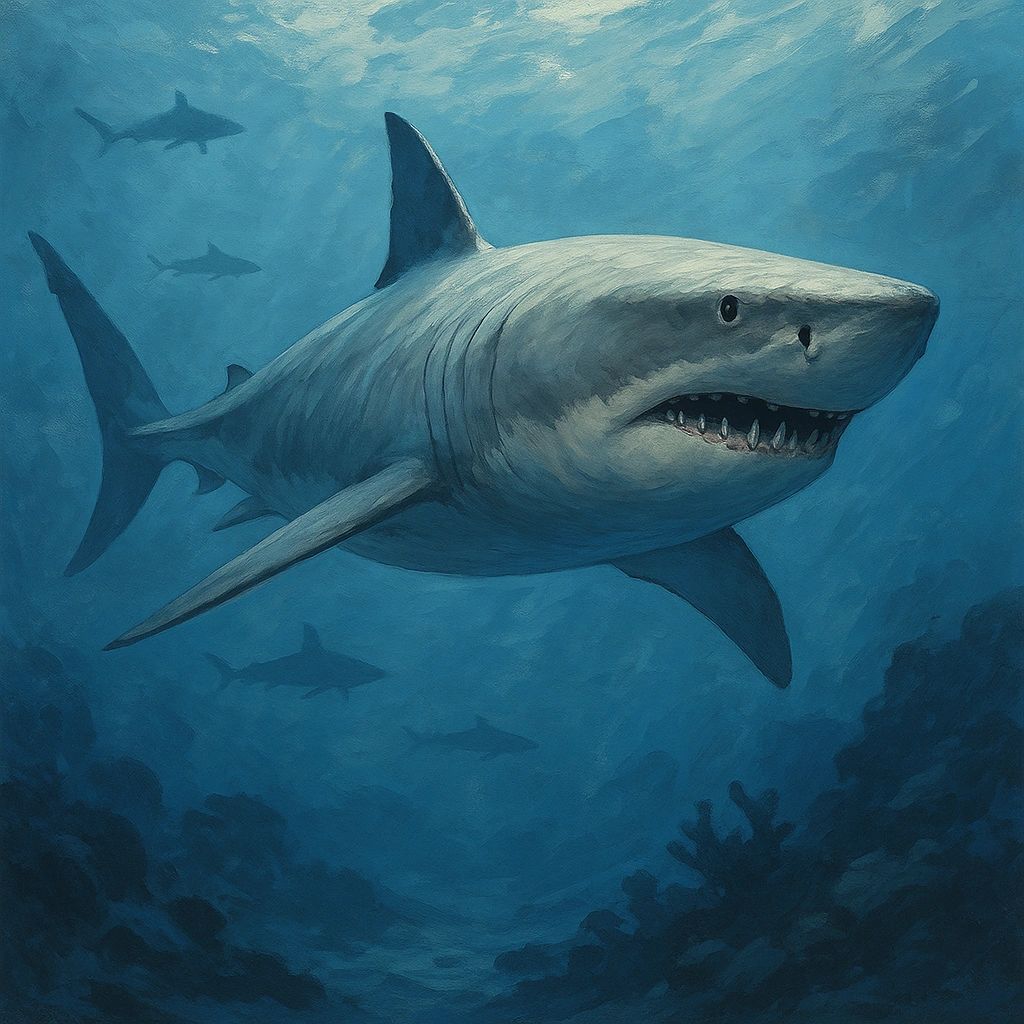
When you picture a shark, what comes to mind? A scary fin slicing through the water? Maybe the movie Jaws? Sharks have captured our imaginations for years, but they’ve actually ruled the seas for over 400 million years—long before dinosaurs ever roamed the Earth!
That’s right—sharks are ancient survivors. These incredible fish have seen mass extinctions, shifting continents, and rising and falling oceans. Yet, they’ve adapted again and again. This post dives deep into how sharks have managed to survive, evolve, and thrive across hundreds of millions of years—and why they’re still so important to our oceans today.
Chapter 1: The Beginning of Sharks
Sharks first appeared about 450 to 420 million years ago during the Silurian Period, a time when most life still lived in the ocean. The oldest known shark fossil is called Elegestolepis, and it was discovered in what is now Siberia (Andreev et al., 2015). It wasn’t a huge, scary predator—it was small, scaly, and didn’t even have jaws like modern sharks.
By the Devonian Period (about 419 to 359 million years ago), sharks had become more recognizable. This era is often called the “Age of Fishes,” and sharks were already fierce predators. Some of these early sharks, like Cladoselache, had smooth bodies, large fins, and were built for speed.
These early sharks had cartilage skeletons, just like modern sharks. Cartilage is lighter than bone, which helped them swim faster and be more agile hunters.
Fun Fact: Sharks were around 200 million years before dinosaurs and even survived the mass extinction that wiped dinosaurs out!
Chapter 2: How Sharks Survived Mass Extinctions
Over the past 500 million years, Earth has had five major mass extinctions. These were times when huge numbers of species disappeared. But sharks made it through every single one.
One big extinction event happened about 252 million years ago, at the end of the Permian Period. It wiped out about 90% of all marine species. But some sharks survived, possibly because they could live in different environments and eat a wide range of food (Sallan & Coates, 2010).
Another massive extinction—the one that killed the dinosaurs—happened about 66 million years ago. That event, known as the Cretaceous-Paleogene extinction, destroyed many large marine reptiles and ancient fish. But again, sharks pulled through. They adapted by moving to new habitats and changing what they hunted.
Their secret to survival? Adaptability. Sharks have evolved new body shapes, hunting skills, and senses to keep up with a changing world.
Chapter 3: What Makes Sharks So Successful?
So, how did sharks manage to survive for hundreds of millions of years? It’s all thanks to some amazing biological superpowers.
1. Super Senses
Sharks have incredible senses. Their sense of smell is so powerful they can detect a drop of blood in an Olympic-sized pool. They also have electroreception, which allows them to sense the tiny electrical signals given off by muscles and nerves of other animals (Kempster et al., 2013). That helps them find prey even when it’s hiding in the sand!
2. Regenerating Teeth
Sharks can lose thousands of teeth in their lifetimes. That might sound like a problem, but not for them! Sharks have multiple rows of teeth, and new ones constantly grow in to replace the old ones.
3. Streamlined Bodies
Their torpedo-like bodies and flexible cartilage skeletons make them excellent swimmers. Some sharks, like the shortfin mako, can reach speeds of up to 45 miles per hour (Watanabe et al., 2015)!
4. Diverse Diets
Sharks aren’t picky eaters. Some eat fish, others eat crabs, and some even eat plankton! This flexibility helps them survive in all kinds of environments.
5. Slow and Steady Reproduction
Most sharks grow slowly and have fewer babies compared to other fish. This may sound like a weakness, but it means shark mothers often invest more energy in each baby. Some even carry their young for over a year! While this makes sharks vulnerable to overfishing, it helped them survive natural disasters by keeping populations healthy over long periods (Dulvy et al., 2014).
Chapter 4: The Evolution of Shark Species
Over time, sharks have evolved into over 500 different species, and scientists are still discovering more! Some sharks are tiny, like the dwarf lanternshark, which is smaller than your hand. Others are huge, like the whale shark, which can grow over 40 feet long!
Some extinct sharks were even more terrifying. Take Megalodon, for example. This prehistoric giant lived about 23 to 3.6 million years ago and could grow over 50 feet long. That’s longer than a school bus! Its teeth were as big as a human hand and were used to bite through whale bones.
Today’s sharks range from deep-sea dwellers like the goblin shark to coastal hunters like the bull shark. Their diversity shows how well they’ve adapted to different environments—from coral reefs to open oceans and even rivers.
Chapter 5: Sharks Keep Oceans Healthy
Sharks play a big role in ocean ecosystems. As apex predators, they keep other fish populations in balance. If there are too many of one type of fish, sharks help reduce that number, which keeps coral reefs and seagrass beds healthy (Ferretti et al., 2010).
In places where shark numbers have dropped, scientists have seen big changes. For example, in the Atlantic Ocean, the number of large sharks has declined by over 90%, and that caused some prey species, like rays, to overpopulate (Myers et al., 2007). This can damage habitats and hurt other marine life.
So, keeping sharks around doesn’t just help sharks—it helps the entire ocean!
Chapter 6: Threats in the Modern World
Even though sharks have survived asteroids and ice ages, they now face their biggest threat: humans.
Overfishing
Each year, humans kill an estimated 100 million sharks (Worm et al., 2013). Many are caught just for their fins, which are used in shark fin soup. This practice, called finning, is wasteful and cruel. The rest of the shark is often tossed back into the ocean, still alive but unable to swim.
Habitat Loss and Pollution
Sharks are losing their habitats due to pollution, overdevelopment, and warming oceans. Oil spills, plastic waste, and chemicals all hurt sharks, especially their young.
Climate Change
As ocean temperatures rise, some shark species are moving into new areas. That might sound like adaptability, but it can cause problems for the animals and ecosystems already living there.
Chapter 7: Sharks Need Our Help
The good news is that we can help sharks. Scientists, conservation groups, and even kids are making a difference.
Tracking and Research
Groups like OCEARCH tag and track sharks to learn where they go, what they eat, and how we can protect them. This data helps create marine protected areas and smarter fishing rules.
Laws and Bans
Many countries are banning shark finning and protecting endangered species. International agreements like CITES (the Convention on International Trade in Endangered Species) help control the trade of shark products.
Education and Awareness
Programs in schools and aquariums teach people why sharks matter. Social media campaigns like #SaveSharks help spread the message worldwide.
And believe it or not—you can help too! Support sustainable seafood, avoid shark products, and share what you’ve learned. Every voice counts!
Chapter 8: Why Sharks Deserve Our Respect
Sharks aren’t mindless monsters. They’re intelligent, ancient animals that help keep the oceans alive. And even after 400 million years, they’re still adapting to survive.
Next time you hear the word “shark,” don’t just think about scary movies. Think about nature’s ultimate survivor—an animal that’s outlived dinosaurs, conquered oceans, and now needs us to help protect its future.
Final Thoughts
Sharks have thrived for over 400 million years because of their adaptability, smart biology, and important role in nature. They’ve survived five mass extinctions, evolved into hundreds of species, and help keep our oceans balanced.
But today, human actions are putting these ancient survivors in danger. With education, conservation, and compassion, we can help ensure sharks stick around for another 400 million years.
So let’s be shark allies, not enemies. After all, the ocean wouldn’t be the same without them.
Bibliography
Andreev, P. S., Coates, M. I., Karatajūtė-Talimaa, V. N., Shelton, R. M., Cooper, P. R., Sansom, I. J., & Donoghue, P. C. (2015). The systematics of the Mongolepidida (Chondrichthyes) and the Ordovician origins of the clade. PeerJ, 3, e781. https://doi.org/10.7717/peerj.781
Dulvy, N. K., Fowler, S. L., Musick, J. A., Cavanagh, R. D., Kyne, P. M., Harrison, L. R., … & White, W. T. (2014). Extinction risk and conservation of the world’s sharks and rays. eLife, 3, e00590. https://doi.org/10.7554/eLife.00590
Ferretti, F., Worm, B., Britten, G. L., Heithaus, M. R., & Lotze, H. K. (2010). Patterns and ecosystem consequences of shark declines in the ocean. Ecology Letters, 13(8), 1055–1071. https://doi.org/10.1111/j.1461-0248.2010.01489.x
Kempster, R. M., Hart, N. S., & Collin, S. P. (2013). Survival of the stillest: Predator avoidance in shark embryos. PLOS ONE, 8(1), e52551. https://doi.org/10.1371/journal.pone.0052551
Myers, R. A., Baum, J. K., Shepherd, T. D., Powers, S. P., & Peterson, C. H. (2007). Cascading effects of the loss of apex predatory sharks from a coastal ocean. Science, 315(5820), 1846–1850. https://doi.org/10.1126/science.1138657
Sallan, L. C., & Coates, M. I. (2010). End-Devonian extinction and a bottleneck in the early evolution of modern jawed vertebrates. Proceedings of the National Academy of Sciences, 107(22), 10131–10135. https://doi.org/10.1073/pnas.0914000107
Watanabe, Y. Y., Payne, N. L., Semmens, J. M., Fox, A., Huveneers, C., & Sato, K. (2015). Swimming strategies and energetics of endothermic white sharks during foraging. Journal of Experimental Biology, 218(18), 2802–2811. https://doi.org/10.1242/jeb.120121
Worm, B., Davis, B., Kettemer, L., Ward-Paige, C. A., Chapman, D., Heithaus, M. R., … & Gruber, S. H. (2013). Global catches, exploitation rates, and rebuilding options for sharks. Marine Policy, 40, 194–204. https://doi.org/10.1016/j.marpol.2012.12.034
Originally published at the live site .