
Rivers ·
The Fish and Wildlife of the Suwannee River: A Journey Through FL
Flowing quietly from Georgia’s Okefenokee Swamp and winding its way 246 miles through Florida before emptying into the Gulf of Mexico, the Suwannee River is more than just a ribbon of water cutting across the land. It is...
By Rebecca "Madam Chronicler" Ryan
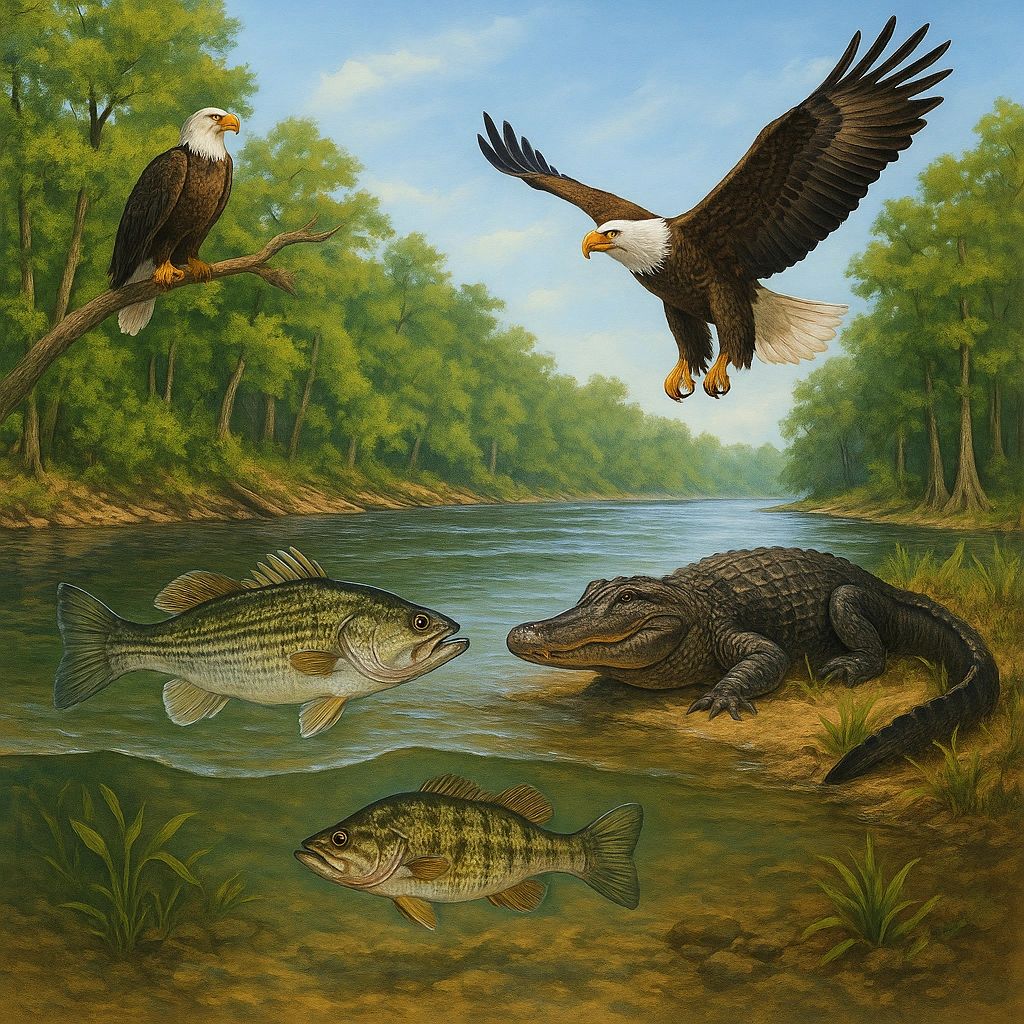
Flowing quietly from Georgia’s Okefenokee Swamp and winding its way 246 miles through Florida before emptying into the Gulf of Mexico, the Suwannee River is more than just a ribbon of water cutting across the land. It is one of the most unique and diverse waterways in the southeastern United States, rich in fish, wildlife, and cultural history. Unlike many other rivers in Florida, the Suwannee is one of the last large rivers in the region that remains largely un-dammed, giving it a wild and untamed spirit.
The Suwannee River basin supports hundreds of species, from tiny minnows darting among its sandy shoals to mighty Gulf sturgeons leaping from the water with thunderous splashes. Its floodplain forests shelter black bears, river otters, and countless birds. In many ways, the Suwannee is a living museum of Florida’s ecological past—a place where ancient fish swim, endangered species cling to survival, and people find themselves connected to nature’s rhythms.
In this blog, we’ll take a deep dive into the fish and wildlife of the Suwannee River, exploring its incredible biodiversity, the challenges it faces, and why this river is one of Florida’s greatest treasures.
The River’s Unique Ecology
The Suwannee River begins in the Okefenokee Swamp, a massive peat-filled wetland straddling the Georgia-Florida border. From there, it flows south and southwest through pine flatwoods, hardwood hammocks, cypress swamps, and limestone bedrock. Its waters are often tea-colored, stained by tannins from decaying vegetation. This gives the river its mysterious, dark beauty.
The Suwannee is also famous for its springs—more than 200 of them. These crystal-clear springs feed cool, fresh water into the river, creating habitats where fish and other aquatic animals can thrive. The mix of swamp-born dark waters with spring-fed clarity produces a variety of conditions that support remarkable biodiversity.
Fish of the Suwannee River
1. Gulf Sturgeon: The Ancient Leaper
One of the Suwannee’s most famous residents is the Gulf sturgeon (Acipenser oxyrinchus desotoi). These massive, prehistoric-looking fish can grow up to 9 feet long and weigh over 300 pounds. Each summer, sturgeons migrate upriver from the Gulf of Mexico to spawn. They are best known for their habit of leaping out of the water—sometimes several feet into the air. While scientists are still trying to understand exactly why they leap, many believe it may be a form of communication or a way to clear parasites.
Sturgeons are listed as a threatened species under the Endangered Species Act, making the Suwannee River one of the few strongholds left for their survival.
2. Suwannee Bass: A River Original
The Suwannee River has its very own native bass species: the Suwannee bass (Micropterus notius). Found only in the Suwannee and Ochlockonee river systems, this bass is smaller than largemouth bass but highly prized by anglers for its fight and rarity. Its limited range makes it a symbol of the river’s uniqueness.
3. Catfish: Bottom Dwellers and Giants
Channel catfish, flathead catfish, and blue catfish roam the river’s depths. While channel cats are native, flathead catfish were introduced and have become invasive, often preying on native sunfish and other smaller species. Still, catfish are a major part of the river’s ecology and a favorite catch for local fishers.
4. Sunfish and Panfish: Jewels of the River
The Suwannee is home to colorful sunfish like the redbreast sunfish, bluegill, and longear sunfish. These fish thrive in the sandy-bottomed shallows and are a favorite target for young anglers. They play an important role in the food web, serving as prey for larger fish, birds, and mammals.
5. Striped Bass and American Shad: Migratory Wonders
The Suwannee River also supports migratory fish. Striped bass move between the Gulf and the river, while American shad historically swam upstream to spawn. Although populations of some migratory species have declined, the Suwannee remains one of the few rivers in Florida where these ancient migrations continue.
Wildlife Along the Riverbanks
The Suwannee River is not just about fish. Its surrounding forests, wetlands, and floodplains are bursting with life.
Mammals of the Suwannee
- River otters dart through the water, chasing fish with playful agility.
- Florida black bears wander the floodplain forests, foraging for berries and acorns.
- White-tailed deer come to the riverbanks to drink at dusk.
- Bats swoop over the water at night, snapping up insects.
Each of these mammals plays an important role in keeping the ecosystem balanced.
Birds of the River
The Suwannee is a paradise for birdwatchers.
- Ospreys and bald eagles dive for fish.
- Great blue herons and egrets stalk the shallows.
- Swallow-tailed kites glide above the treetops in summer, snatching insects midair.
- Wood ducks paddle among cypress knees.
- In winter, migratory waterfowl fill the skies and marshes.
Birds rely on the river for food, nesting grounds, and resting places during migration.
Reptiles and Amphibians
No Florida river would be complete without reptiles and amphibians, and the Suwannee has plenty.
- American alligators bask on the banks or drift silently in the water.
- Turtles, including Suwannee cooters and snapping turtles, bask on logs and rocks.
- Snakes like water moccasins, banded water snakes, and corn snakes slither through the riverine forest.
- Frogs and toads chorus at night, while salamanders hide in the damp leaf litter.
Invertebrates and Hidden Creatures
Freshwater mussels, crayfish, and aquatic insects are easy to overlook but vital to the river’s health. Mussels filter the water, improving clarity, while crayfish form a key food source for fish and wading birds. Some mussel species found in the Suwannee are rare and found nowhere else.
Human Connections to the Suwannee
For thousands of years, people have depended on the Suwannee River. Native peoples fished its waters and built villages along its banks. Later, settlers used it as a route for steamboats and a source of timber. Today, it is cherished for recreation, from canoeing and swimming to fishing and wildlife watching.
The river has also inspired culture and music. The famous song “Old Folks at Home” (better known as “Way Down Upon the Suwannee River”) brought its name to the world stage, though the river itself is far richer and wilder than the simple melody suggests.
Conservation Challenges
Like many natural treasures, the Suwannee faces challenges.
- Pollution from agriculture and industry threatens water quality.
- Overuse of groundwater affects the springs that feed the river.
- Invasive species like flathead catfish disrupt native fish populations.
- Climate change and sea-level rise pose long-term risks to its habitats.
Protecting the Suwannee means balancing human needs with the health of the river’s ecosystems. Conservation groups, state agencies, and local communities are working together to safeguard this natural wonder.
Why the Suwannee Matters
The Suwannee River is more than just a body of water—it’s a lifeline for wildlife and people alike. Its fish and wildlife tell the story of ancient survival, adaptation, and balance. Its forests, swamps, and springs remind us of Florida’s wild heart, even as development continues around it.
By protecting the Suwannee, we are protecting a piece of living history—a river where sturgeons leap, bass fight on the line, otters play, and bald eagles soar.
Final Thoughts
The Suwannee River stands as one of Florida’s last great wild rivers, full of stories written in water and stone. Its fish and wildlife form an interconnected web that sustains life along its course, from its swampy origins to its Gulf mouth. Whether you paddle its waters, cast a line into its depths, or simply sit on its banks listening to the calls of birds, the Suwannee leaves an impression that lasts forever.
It is not just a river—it’s a living, breathing reminder of how beautiful and fragile our natural world truly is.
Bibliography
- Bass, D. G., & Cox, J. (1985). River and spring fisheries of the Suwannee River basin, Florida. Florida Game and Fresh Water Fish Commission.
- Bonvechio, K. I., & Allen, M. S. (2005). Relations between hydrological variables and year-class strength of sportfish in eight Florida waterbodies. Hydrobiologia, 532(1-3), 193–207. https://doi.org/10.1007/s10750-004-9526-5
- Edwards, R. E., & Mayden, R. L. (1997). Systematics of the Micropterus notius (Suwannee bass). Copeia, 1997(3), 661–673. https://doi.org/10.2307/1447583
- Hoyer, M. V., & Canfield, D. E. (1994). Fish and aquatic macroinvertebrate assemblages in Florida waters. Lake and Reservoir Management, 8(2), 133–141. https://doi.org/10.1080/07438149409354178
- Randall, M., Sulak, K. J., & Clugston, J. P. (1996). Reproductive biology and population structure of Gulf sturgeon in the Suwannee River. Transactions of the American Fisheries Society, 125(5), 545–558. https://doi.org/10.1577/1548-8659(1996)125<0545:RBAPSO>2.3.CO;2
- U.S. Fish & Wildlife Service. (2018). Suwannee River Basin native species status report. Department of the Interior.
- Walsh, S. J., & Williams, J. D. (2003). Inventory of fishes and mussels in springs and spring effluents of north-central Florida. Florida Scientist, 66(3), 177–200.
Originally published at the live site .