
Rivers ·
The Catfish of Bayou Lafourche: Secrets of a Southern Waterway
Bayou Lafourche is one of Louisiana’s most storied waterways. Winding for more than 100 miles through the heart of Cajun Country, this bayou is more than just a channel of water—it’s a lifeline. For generations, families...
By Rebecca "Madam Chronicler" Ryan
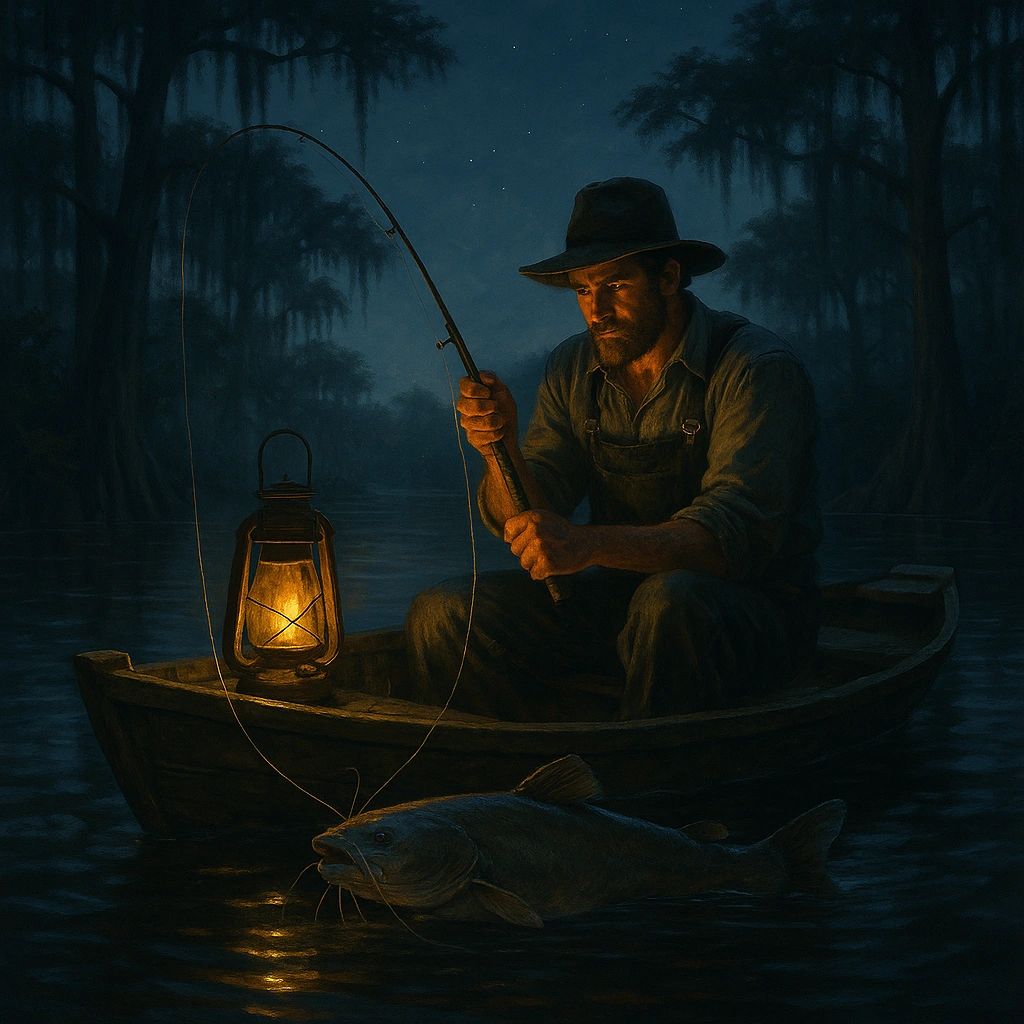
Bayou Lafourche is one of Louisiana’s most storied waterways. Winding for more than 100 miles through the heart of Cajun Country, this bayou is more than just a channel of water—it’s a lifeline. For generations, families along its banks have drawn food, culture, and identity from its muddy waters. And when it comes to fish, no creature better symbolizes the spirit of Bayou Lafourche than the catfish.
Catfish aren’t glamorous like trophy bass or redfish, but they hold a special place in Southern life. They are tough, adaptable, and abundant. They’re also delicious, making them a staple in Cajun and Creole kitchens. In Bayou Lafourche, catfish are both an everyday catch and a cultural symbol.
In this blog, we’ll dive deep into the catfish of Bayou Lafourche—exploring their biology, the species found in the bayou, their role in Cajun culture, and even their importance to the health of Louisiana’s wetlands. Along the way, we’ll uncover why these whiskered fish are more than just food—they’re a living part of the story of Louisiana itself.
The Bayou: Home to Catfish
Bayou Lafourche stretches from Donaldsonville, Louisiana, down to the Gulf of Mexico. It was once a main distributary of the Mississippi River, carrying freshwater and sediment into the wetlands. Today, it’s a slower, meandering bayou that provides both habitat for wildlife and drinking water for nearly 300,000 people.
Catfish thrive here because bayous offer exactly what they love—slow-moving water, muddy bottoms, submerged logs, and plenty of food. Unlike some fish that prefer crystal-clear lakes, catfish are perfectly designed for murky environments. Their whisker-like barbels act like sensory tools, helping them “taste” and “smell” their surroundings even when visibility is low.
Researchers studying bayou fish communities note that catfish play an important role in balancing ecosystems. By feeding on insects, crustaceans, and smaller fish, they help regulate populations, and as scavengers, they keep waterways clean by eating dead or decaying matter (Pérez et al., 2021). This makes catfish more than just residents of Bayou Lafourche—they’re essential caretakers.
The Catfish Species of Bayou Lafourche
Several species of catfish call Bayou Lafourche home. Let’s meet the most common ones:
1. Channel Catfish (Ictalurus punctatus)
The channel catfish is perhaps the most iconic. Recognizable by its forked tail and spotted sides, this species is highly sought after by anglers. Channel catfish grow up to 40 pounds, though most caught in Bayou Lafourche are in the 2–10 pound range.
Channel catfish are omnivores, eating everything from aquatic insects to small fish, algae, and even seeds. They’re especially active at night, which is why night fishing on the bayou often yields the best results.
2. Blue Catfish (Ictalurus furcatus)
The blue catfish is the heavyweight of Bayou Lafourche. These giants can grow over 100 pounds, making them the largest catfish in North America. They’re identified by their blue-gray coloration and deeply forked tails.
Blues are apex predators in the bayou. They consume fish, crustaceans, and even other catfish. Because of their size, they’re less common in shallow stretches of the bayou but thrive in deeper pools and areas connected to larger waterways.
3. Flathead Catfish (Pylodictis olivaris)
Flathead catfish, also known as “yellow cats,” are unique because they prefer live prey over scavenging. With broad, flat heads and mottled brown coloring, they’re well-camouflaged ambush predators.
Flatheads in Bayou Lafourche can grow large—often 40 to 60 pounds. They hide near submerged logs or undercut banks, waiting to strike unsuspecting fish.
4. White Catfish (Ameiurus catus)
Though smaller than their cousins, white catfish are still important in Bayou Lafourche. They rarely exceed 10 pounds and are often confused with channel catfish, though their tails are less deeply forked.
White catfish are bottom feeders and adapt well to brackish waters closer to the Gulf, making them versatile survivors.
Catfish and Cajun Culture
For the people of Bayou Lafourche, catfish aren’t just fish—they’re part of a way of life. Cajun families have fished these waters for centuries, passing down knowledge of trotlines, jug fishing, and night fishing techniques.
Catfish also occupy a central role in Cajun and Creole cuisine. Fried catfish, catfish courtbouillon (a rich Creole stew), and blackened catfish are staples on family tables and in local restaurants. The act of catching, cooking, and sharing catfish connects families and communities across generations.
Ethnographic studies of Cajun communities emphasize that fishing is about more than food—it’s about identity (Brasseaux, 2011). When a family gathers to fry catfish, they’re celebrating not only the catch but also their heritage.
The Night Fishermen of Bayou Lafourche
If you want to experience catfishing culture at its peak, spend a night on Bayou Lafourche. As the sun sets, fishermen set out with lanterns, nets, and lines. Catfish are nocturnal feeders, so nighttime offers the best chance to catch them.
Night fishing also carries a sense of mystery. The bayou comes alive with sounds—frogs croaking, insects buzzing, and the splash of fish surfacing. For many, fishing here isn’t just about the catch but about the experience of being part of the bayou’s rhythm.
Studies show that catfish respond strongly to lunar cycles and water temperatures, with feeding often peaking on warmer nights (Holley et al., 2020). This explains why seasoned anglers time their outings with moon phases and weather patterns.
The Role of Catfish in Wetland Health
Catfish are often overlooked in discussions about conservation, but they are key players in wetland ecosystems. As opportunistic feeders, they help keep populations of smaller species in balance. Their scavenging habits reduce waste, recycling nutrients back into the food web.
In Bayou Lafourche, where wetland health is tied directly to human communities, this ecological role is crucial. Louisiana’s wetlands are disappearing at alarming rates due to erosion, sea-level rise, and reduced sediment from the Mississippi River (Turner & Rabalais, 2019). Healthy fish populations like catfish help maintain ecological balance, which in turn supports biodiversity and resilience.
Conservation groups working to restore Bayou Lafourche recognize this. Projects to reconnect the bayou with the Mississippi River aim to bring more freshwater and nutrients, ensuring catfish and other native species continue to thrive.
Catfish Folklore and Legends
No discussion of catfish in Bayou Lafourche would be complete without a nod to folklore. Throughout the South, catfish have inspired myths and tall tales.
Stories of giant “river monsters” the size of cars lurking beneath bridges are common. While exaggerated, such stories often stem from real encounters with blue catfish, which can indeed reach enormous sizes.
Cajun folklore also includes tales of “catfish spirits,” creatures said to tug on fishermen’s lines and lead them astray. These stories reflect the deep cultural ties between people and the waters they depend on.
Challenges Facing Catfish Populations
Though catfish are hardy, they face challenges in Bayou Lafourche. Pollution, habitat loss, and invasive species all put pressure on their populations. Agricultural runoff can reduce water quality, while the spread of invasive carp competes with catfish for food.
Overfishing is less of a concern in Louisiana than in other regions, thanks to the resilience of catfish populations. However, researchers stress the need for careful monitoring. Large blue and flathead catfish, in particular, reproduce slowly, making them vulnerable to heavy harvest (Graham, 1999).
Climate change also poses new challenges. Warmer water temperatures affect spawning cycles and food availability. Increased hurricanes and flooding alter bayou habitats in unpredictable ways.
Catfish Farming in Louisiana
Interestingly, catfish aren’t only caught in the wild—they’re also farmed. Louisiana is part of the U.S. catfish aquaculture industry, which produces millions of pounds annually. While most farms are in Mississippi, Louisiana has a share in providing farm-raised catfish for restaurants and markets (Hanson & Sites, 2015).
This has benefits for wild populations. By providing a steady supply of catfish for food, farming reduces pressure on natural habitats like Bayou Lafourche. At the same time, it keeps catfish central to Southern cuisine.
A Day in the Life of a Bayou Catfish
So what’s life like for a catfish in Bayou Lafourche? Let’s imagine:
At dawn, a channel catfish lurks near a submerged log, hidden in murky water. As the day heats up, it stays deep, conserving energy. In the evening, it begins to forage, using its barbels to detect insect larvae, crayfish, and small minnows. By nightfall, it’s on the move, cruising the bayou’s bends in search of a meal.
Spawning season brings excitement. In late spring, catfish pair off, seeking cavities in hollow logs or under banks. The female lays eggs, which the male guards diligently until they hatch. Catfish parents are unusually attentive for fish, ensuring the survival of the next generation.
This daily rhythm, repeated by thousands of catfish across the bayou, sustains not only the species but also the human communities that depend on them.
Conclusion: Why Catfish Matter
The catfish of Bayou Lafourche are more than just fish. They’re food, folklore, and family tradition. They’re ecological caretakers of a fragile wetland system. They’re cultural icons of Cajun Country.
As Louisiana faces challenges of coastal erosion and climate change, protecting the health of Bayou Lafourche means protecting the catfish that call it home. By valuing both the cultural and ecological roles of catfish, we ensure that future generations can continue to fish, feast, and tell stories along this legendary waterway.
So next time you enjoy a plate of fried catfish or pass a fisherman on the banks of Bayou Lafourche, remember—you’re not just tasting a meal or witnessing a pastime. You’re experiencing a living piece of Louisiana’s history.
Bibliography
Brasseaux, C. A. (2011). French, Cajun, Creole, Houma: A primer on Francophone Louisiana. Louisiana State University Press.
Graham, K. (1999). A review of the biology and management of blue catfish. American Fisheries Society Symposium, 24, 37–49.
Hanson, T., & Sites, D. (2015). Economics of U.S. catfish farming. Aquaculture Economics & Management, 19(4), 327–356. https://doi.org/10.1080/13657305.2015.1082115
Holley, C. T., Peterson, B. C., & Freeman, D. W. (2020). Seasonal feeding patterns of channel catfish in warmwater systems. North American Journal of Aquaculture, 82(2), 111–122. https://doi.org/10.1002/naaq.10147
Pérez, M. E., Vargas, J., & McDonough, C. (2021). Role of benthic fishes in nutrient cycling in freshwater wetlands. Wetlands Ecology and Management, 29(3), 357–369. https://doi.org/10.1007/s11273-021-09785-4
Turner, R. E., & Rabalais, N. N. (2019). Linking landscape and water quality in the Mississippi River basin for 200 years. Proceedings of the National Academy of Sciences, 116(12), 5395–5404. https://doi.org/10.1073/pnas.1812104115
Originally published at the live site .