
Maritime ·
Where to See Sharks (Safely and Sustainably!) Around the World
Sharks are some of the most exciting animals on Earth! They're big, powerful, and mysterious. But did you know you can actually see them up close without getting hurt—or hurting them? Around the world, there are special ...
By Rebecca "Madam Chronicler" Ryan
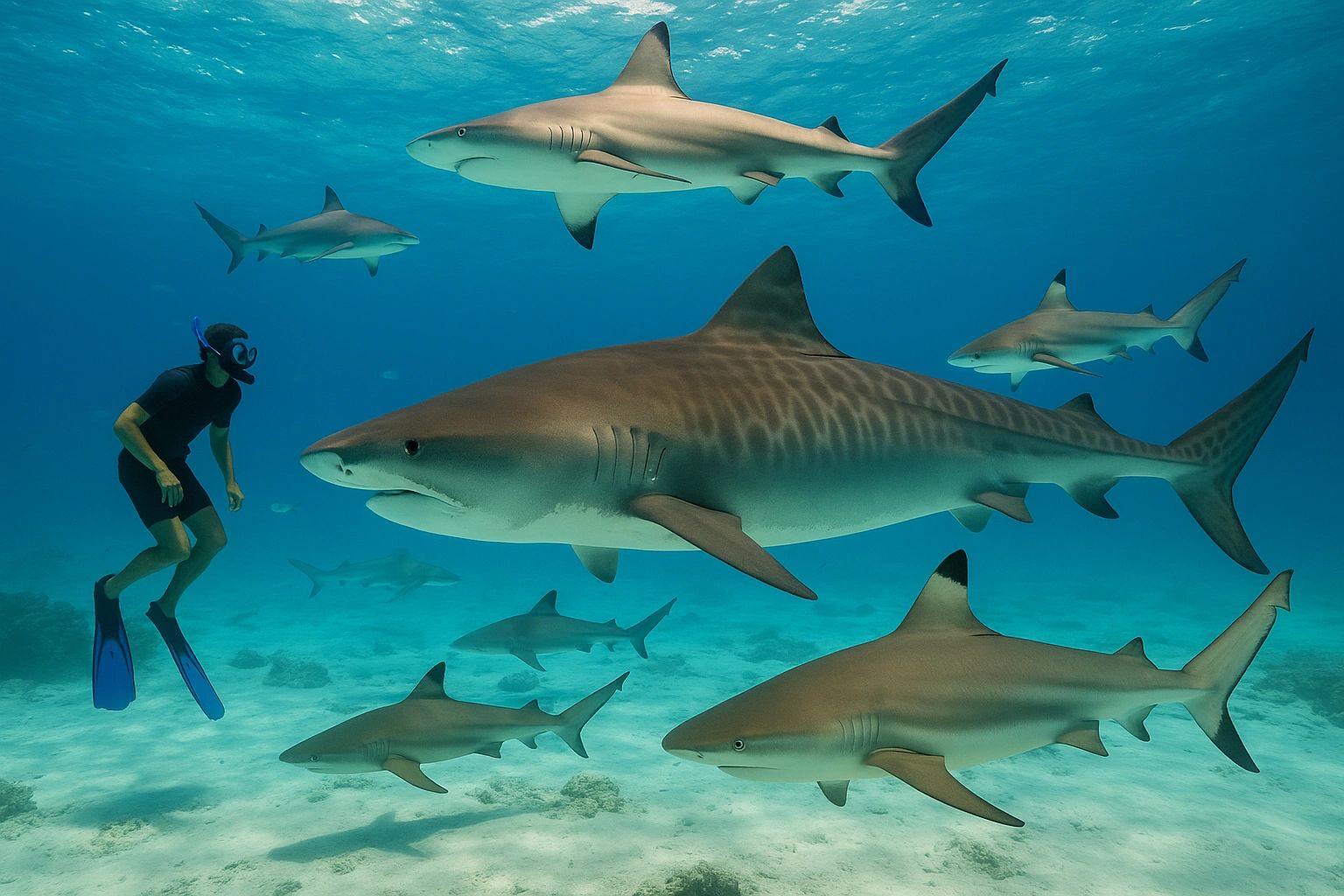
Sharks are some of the most exciting animals on Earth! They’re big, powerful, and mysterious. But did you know you can actually see them up close without getting hurt—or hurting them? Around the world, there are special places where people can watch sharks safely and responsibly. These places protect both people and sharks, making sure we don’t disturb the ocean or the animals that live there.
Let’s dive into the best spots across the globe to see sharks in action—without any danger to you or the sharks!
1. The Bahamas – Shark Paradise
The Bahamas is one of the top places on Earth to see sharks in the wild. The clear blue water makes it easy to spot them, and there are many different species here—like Caribbean reef sharks, tiger sharks, and even hammerheads!
At places like Tiger Beach, you can dive with tiger sharks under the guidance of trained experts. The area is protected, and operators follow strict safety rules to make sure both people and sharks are safe.
🦈 Shark to See: Tiger sharks ✅ Safe & Sustainable: Yes! Operators use non-invasive practices, and the country has banned shark fishing since 2011. 📍 Best Time to Go: October to May
2. Isla Guadalupe, Mexico – The Great White Show
Isla Guadalupe is a remote island off the west coast of Mexico. It’s famous for being one of the best places to see great white sharks in clear, blue water. But don’t worry—you don’t have to swim with them! Visitors watch from strong metal cages in the water while the sharks swim by.
This kind of “cage diving” is run by professional guides who follow strict rules. They don’t hurt the sharks or bait them aggressively. The goal is to watch—not scare or feed.
🦈 Shark to See: Great white shark ✅ Safe & Sustainable: Yes. Operators here follow best practices for eco-tourism. 📍 Best Time to Go: July to November
3. Maldives – Sharks and Coral Reefs
The Maldives is a group of tiny islands in the Indian Ocean. It’s a tropical paradise with coral reefs and lots of fish—including friendly reef sharks! Here, blacktip and whitetip reef sharks swim peacefully in the shallow water.
You don’t need to dive deep. Just put on a mask and snorkel, and you’ll see them swimming gracefully. These sharks don’t bother humans, and the local guides help make sure tourists treat the ocean with respect.
🦈 Sharks to See: Blacktip and whitetip reef sharks ✅ Safe & Sustainable: Yes! The Maldives has several protected marine parks. 📍 Best Time to Go: November to April
4. South Africa – Where the Sharks Are Kings
South Africa is famous for its great white sharks, especially in places like Gansbaai. This area is known for cage diving, just like in Mexico. But that’s not all—False Bay is where you can see great whites leap out of the water to hunt seals. It’s called a “breach,” and it’s one of the coolest things to see in the animal world!
Tour companies here follow special eco-guidelines and often work with scientists to protect sharks.
🦈 Shark to See: Great white shark ✅ Safe & Sustainable: Yes. Many tours support conservation research. 📍 Best Time to Go: May to September
5. Palau – A Shark Sanctuary
Palau is a small island country in the Pacific Ocean that made big waves in 2009 when it became the first nation to create a shark sanctuary. This means no shark fishing is allowed in its waters.
Visitors to Palau can dive or snorkel in healthy reefs and swim alongside grey reef sharks, whitetips, and hammerheads. Local guides teach tourists about the importance of protecting sharks and reefs.
🦈 Sharks to See: Grey reef sharks, hammerheads ✅ Safe & Sustainable: 100%! It’s the world’s first national shark sanctuary. 📍 Best Time to Go: November to April
6. Fiji – The Soft Coral Capital
Fiji is known for its colorful coral reefs and friendly people. It’s also one of the best places to see bull sharks! At the Shark Reef Marine Reserve, you can dive with bull sharks and other species, like nurse and lemon sharks.
The dive site is managed by the local community and a conservation group. They limit the number of divers and don’t let anyone touch or feed the sharks in harmful ways. Money from the dives goes back to protect the area and support local villages.
🦈 Shark to See: Bull sharks ✅ Safe & Sustainable: Yes. It’s a model for community-led shark tourism. 📍 Best Time to Go: May to October
7. Hawaii – Sharks in Sacred Waters
In Hawaii, sharks are more than just animals—they’re seen as sacred and respected. Native Hawaiian culture believes sharks are protectors and ancestors. You can see Galapagos sharks and sandbar sharks on shark snorkeling tours off the coast of Oahu.
Local companies like One Ocean Diving teach guests about shark behavior and how important they are to the ocean. They don’t use cages, but they never feed or chase the sharks either. It’s all about peaceful observation.
🦈 Sharks to See: Galapagos sharks, sandbar sharks ✅ Safe & Sustainable: Yes. Focused on education and conservation. 📍 Best Time to Go: Year-round
8. The Galápagos Islands – Nature’s Classroom
The Galápagos Islands are full of rare animals you won’t see anywhere else. This includes scalloped hammerheads and whale sharks! The islands are part of Ecuador and are heavily protected.
You can snorkel or dive with sharks, sea lions, turtles, and more—all in the same place. The Galápagos Marine Reserve has rules to limit how many people visit and how close you can get to animals. It’s like visiting a living science lab!
🦈 Sharks to See: Scalloped hammerheads, whale sharks ✅ Safe & Sustainable: Absolutely. One of the most protected places on Earth. 📍 Best Time to Go: June to November
9. Australia – The Big Shark Country
Australia has a lot of sharks—more than 170 species! At places like Neptune Islands in South Australia, you can go cage diving with great whites. The operators follow strict safety laws and don’t allow risky behavior.
But if you’d rather stay dry, you can visit aquariums like SEA LIFE Sydney where rescued sharks live in giant tanks that copy the ocean. It’s a great way to learn without ever getting wet.
🦈 Shark to See: Great white sharks ✅ Safe & Sustainable: Yes. Tours are regulated and many support shark research. 📍 Best Time to Go: May to October
10. Mozambique – A Secret Shark Haven
Mozambique, on Africa’s east coast, isn’t as well-known, but it’s one of the best spots to see rare sharks like the elusive thresher shark. In Tofo Beach, you can also swim with whale sharks—the largest fish in the sea!
Tourism here helps the local economy and supports marine research. The waters are warm, the reefs are colorful, and the experience is unforgettable.
🦈 Sharks to See: Whale sharks, thresher sharks ✅ Safe & Sustainable: Yes, with responsible eco-tour operators. 📍 Best Time to Go: October to March
Why Seeing Sharks Matters
Sharks are often misunderstood. People think they’re scary, but most sharks don’t hurt humans. In fact, humans hurt sharks way more than sharks hurt us. Every year, over 100 million sharks are killed, mostly for their fins.
Seeing sharks up close helps change how people think. When tourists visit shark hotspots safely, they help protect these amazing creatures. Their money supports local jobs and gives people a reason to keep sharks alive and healthy.
Many of the places listed above also collect data for science. They track the health of shark populations, how they move, and how climate change affects them. So every time you choose to see sharks the right way, you’re helping save them!
How to Be a Shark-Friendly Visitor
Want to see sharks and help the planet? Here are a few quick tips:
- Choose ethical tour operators. Look for companies that don’t feed or harass the sharks.
- Don’t touch the wildlife. Always follow the rules of the ocean.
- Learn before you go. Ask questions and support places that teach shark conservation.
- Say no to shark souvenirs. Never buy products made from sharks.
- Share what you learned. Tell friends how cool—and important—sharks really are!
Final Thoughts: Sharks Need You
Sharks have been around for over 400 million years. That’s way longer than dinosaurs! But now, many shark species are in danger. The good news is: people like you can make a difference.
By visiting these shark hotspots safely and sustainably, you’re not only getting the adventure of a lifetime—you’re helping protect the future of the ocean.
So whether you’re floating with whale sharks in the Maldives or watching great whites breach in South Africa, remember: it’s not just about seeing sharks—it’s about saving them too.
🦈💙
Bibliography
Bonfil, R., Meÿer, M., Scholl, M. C., Johnson, R., O’Brien, S., Oosthuizen, H., … & Paterson, M. (2005). Transoceanic migration, spatial dynamics, and population linkages of white sharks. Science, 310(5745), 100-103. https://doi.org/10.1126/science.1114898
Gallagher, A. J., Hammerschlag, N., Cooke, S. J., & Costa, D. P. (2015). Energy metabolism in mobile, wild animals and the importance of dynamic energy landscapes. Ecology Letters, 18(5), 495-509. https://doi.org/10.1111/ele.12437
Hazen, E. L., Jorgensen, S. J., Rykaczewski, R. R., Bograd, S. J., Foley, D. G., Jonsen, I. D., … & Block, B. A. (2013). Predicted habitat shifts of Pacific top predators in a changing climate. Nature Climate Change, 3(3), 234-238. https://doi.org/10.1038/nclimate1686
Heupel, M. R., Knip, D. M., Simpfendorfer, C. A., & Dulvy, N. K. (2014). Sizing up the ecological role of sharks as predators. Marine Ecology Progress Series, 495, 291-298. https://doi.org/10.3354/meps10597
Ward-Paige, C. A., Davis, B., & Worm, B. (2013). Global population trends and human use patterns of Manta and Mobula rays. PLoS One, 8(9), e74835. https://doi.org/10.1371/journal.pone.0074835
Vianna, G. M. S., Meekan, M. G., Bornovski, T. H., & Meeuwig, J. J. (2014). Acoustic telemetry validates a citizen science approach for monitoring sharks on coral reefs. PLOS One, 9(4), e95565. https://doi.org/10.1371/journal.pone.0095565
Worm, B., Davis, B., Kettemer, L., Ward-Paige, C. A., Chapman, D., Heithaus, M. R., … & Gruber, S. H. (2013). Global catches, exploitation rates, and rebuilding options for sharks. Marine Policy, 40, 194-204. https://doi.org/10.1016/j.marpol.2012.12.034
Originally published at the live site .