
Maritime ·
Why Are Sharks Coming Closer to Shore?
Have you ever been at the beach and wondered what’s swimming just beyond the waves? More and more, people are spotting sharks closer to the shore. From Florida to California, beachgoers are seeing dorsal fins popping up ...
By Rebecca "Madam Chronicler" Ryan
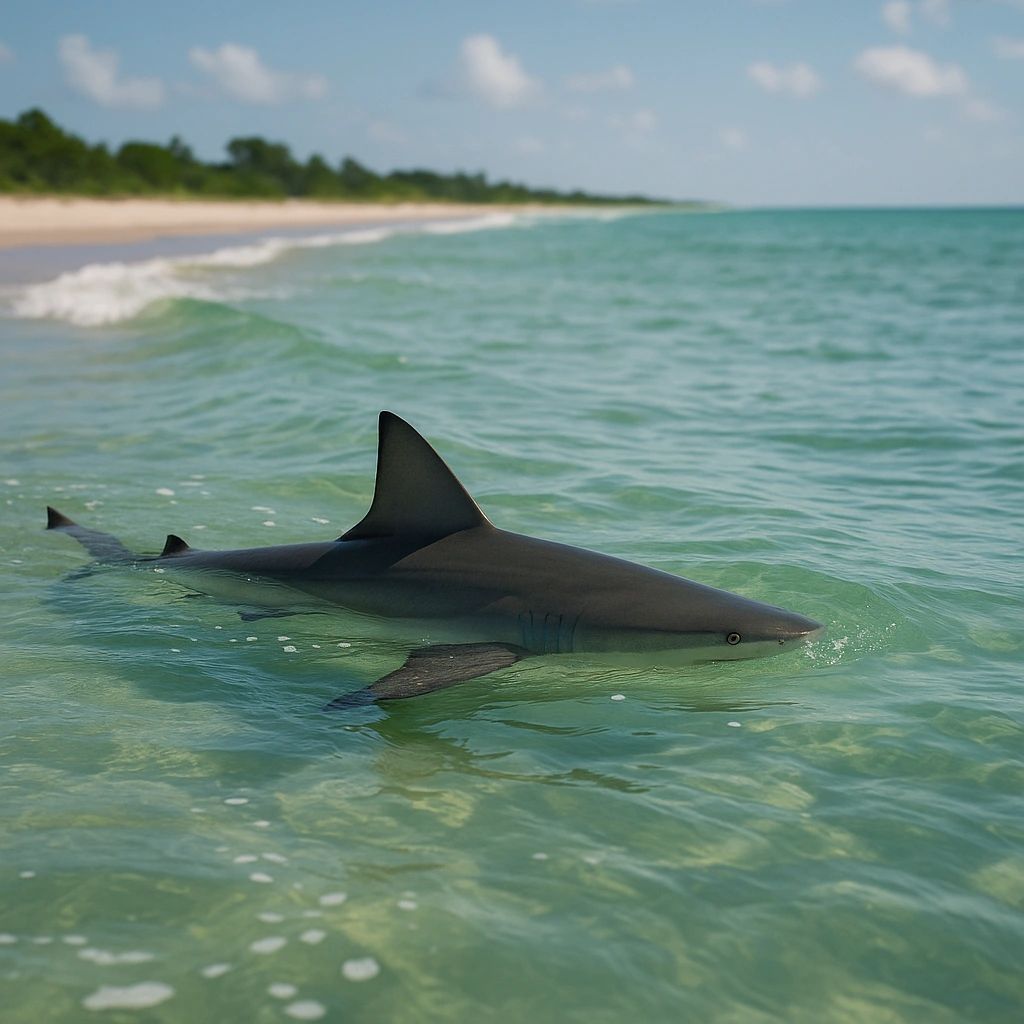
Have you ever been at the beach and wondered what’s swimming just beyond the waves? More and more, people are spotting sharks closer to the shore. From Florida to California, beachgoers are seeing dorsal fins popping up in shallow waters. But why is this happening? Are sharks getting braver—or is something else going on?
In this blog, we’ll explore the top reasons why sharks are swimming closer to the beach. We’ll break down what’s happening in the ocean, how humans play a role, and what scientists are doing to learn more. Get ready to dive in!
1. Warmer Water Is Pulling Sharks In
One of the biggest reasons sharks are moving closer to shore is climate change. The ocean is warming, and that’s a big deal for marine life. Just like people prefer certain temperatures, sharks do too. As ocean temperatures rise, sharks are moving toward cooler, shallower water.
According to a study published in Nature Climate Change, warmer oceans are shifting where sharks live and hunt. Some shark species, like blacktip sharks and bull sharks, have changed their migration patterns to follow the temperatures they prefer (Lear et al., 2023). This means they’re often ending up much closer to beaches than they used to be.
In Florida, for example, blacktip sharks used to migrate to deeper waters during the summer. Now, they’re staying close to shore because the shallow water is still warm enough for them to be comfortable—and filled with food.
2. Sea Life Is Coming to the Shore Too
Sharks don’t just swim around for fun. They follow their food. So when fish and other prey move closer to shore, sharks follow right behind.
Many fish species have also been affected by warmer waters and changing ocean currents. Some are moving into coastal areas to feed or spawn. A study in Marine Ecology Progress Series showed that baitfish, such as mullet and menhaden, often gather in shallows, especially during the warmer months (Kajiura & Tellman, 2016). These schools of fish are like an all-you-can-eat buffet for sharks.
Where the fish go, the sharks go. It’s a natural predator-prey relationship. And if the fish are hanging out near piers or jetties—or even just beyond the surf—sharks won’t be far behind.
3. Human Activity Is Changing the Game
Humans have made a lot of changes to coastal areas, and those changes are affecting shark behavior.
First, there’s fishing. In many places, people throw unused bait or fish parts into the water. This attracts scavengers—and sharks are some of the ocean’s best scavengers. Over time, sharks can learn to associate certain areas, like fishing piers or boat docks, with easy meals.
Second, coastal development plays a role. When we build homes, hotels, or businesses near the beach, we often change the natural landscape. Runoff from roads and yards can affect the water quality and even attract prey species. Artificial reefs and underwater structures can also become hiding spots for fish, drawing sharks in.
One 2021 study from Environmental Biology of Fishes reported that bull sharks have been found swimming into rivers and estuaries near big cities more frequently, likely due to prey availability and human-generated food waste (Heupel et al., 2021). In places like Miami and Sydney, this has led to increased sightings just yards from the beach.
4. Some Sharks Just Like It Shallow
Not all sharks prefer deep ocean waters. In fact, some species naturally live in or near shallow areas. These are known as coastal sharks, and they’ve been close to shore for a long time—but now we’re just noticing them more.
Species like bonnethead sharks, nurse sharks, and juvenile lemon sharks love warm, shallow water. They often use mangroves and seagrass beds as nursery areas to give birth and raise their young. These areas are usually just a few feet deep and are very close to the beach.
Thanks to better science and technology (more on that below!), we now know that many sharks spend their early lives just off the coast. These baby sharks aren’t a threat to people, but they are part of why we’re seeing more sharks near land.
5. Ocean Currents and Storms Can Push Sharks In
Sometimes sharks get pushed closer to shore by natural forces. Storms, tides, and changing currents can all move marine life in unexpected ways.
For example, hurricanes can stir up the ocean and move sharks from deep water to shallow lagoons or bays. According to a study in Scientific Reports, major storms can disorient sharks and temporarily push them into unusual areas, including river mouths and harbors (Papastamatiou et al., 2018).
Likewise, changes in currents—especially those driven by El Niño events—can move entire ecosystems. Fish and plankton go where the currents take them, and sharks will follow if that’s where their food goes.
6. Tracking Technology Is Getting Better
Here’s something cool: the reason we know more about sharks near the beach isn’t just because they’re coming closer—it’s also because we’re getting better at spotting them.
Today, scientists use satellite tags, drones, sonar buoys, and even AI-powered tracking tools to monitor sharks. Organizations like OCEARCH and NOAA have tagged hundreds of sharks to study where they go and when. This has revealed how often sharks pass by popular swimming spots, even if beachgoers never see them.
Drones in Australia have helped lifeguards spot sharks from the sky, and AI can now identify a shark’s shape from video footage in real time. These tools help scientists track shark behavior and keep swimmers safe. But they also show us just how often sharks hang out near the shoreline without causing any trouble.
In short, sharks have probably always come close at times—we just didn’t know until now.
7. Shark Populations Are Rebounding in Some Areas
In some regions, shark conservation efforts are working—and that means there are simply more sharks out there.
Decades ago, overfishing and shark finning caused sharp declines in many shark populations. But in places with strong protections, shark numbers are slowly going back up. The U.S. banned shark finning in its waters, and some states have created marine reserves where sharks are protected.
As a result, we’re seeing more sharks return to coastal habitats they used to use all the time. According to a 2020 study in Current Biology, populations of certain coastal sharks have rebounded in parts of the Atlantic due to long-term fishing regulations and marine protected areas (Carlson et al., 2020).
When there are more sharks overall, there’s a higher chance some of them will swim closer to land.
8. Sharks Use the Shore to Rest and Hide
Some sharks may head toward shallow areas to rest or escape larger predators.
Just like other animals, sharks have predators—especially when they’re young. Larger sharks, such as great hammerheads or tiger sharks, sometimes eat smaller sharks. That’s why baby sharks often stay close to shore, where bigger sharks are less likely to follow.
Also, shallows can provide a calm area to rest or recover after a long journey. Just like sea turtles and dolphins, sharks use coastal waters as part of their life cycle.
9. People Are Spending More Time in the Water
Let’s not forget this part: we may just be noticing sharks more because we’re out there more often.
In the past few decades, coastal tourism has exploded. More people are swimming, surfing, diving, kayaking, and fishing than ever before. With so many eyes on the water, shark sightings are naturally increasing.
This doesn’t mean shark behavior has changed dramatically—it might just mean we’re finally seeing what’s been happening all along. A shark swimming near a quiet beach might go unnoticed, but a shark near a crowded one will quickly make headlines.
10. Should We Be Worried?
The short answer: No, not really.
Yes, sharks are coming closer to shore. But that doesn’t mean we’re in danger. Shark attacks are still extremely rare. In fact, according to the International Shark Attack File at the University of Florida, the number of unprovoked shark bites dropped in 2024—even with more sharks being spotted close to beaches (ISAF, 2025).
Most sharks are not interested in humans. They might investigate out of curiosity, but they rarely bite—and when they do, it’s usually a case of mistaken identity. Swimmers and surfers sometimes look like seals or fish in murky water.
By learning more about shark behavior, we can stay safe and also help protect these amazing animals.
Tips to Stay Safe While Swimming
Just in case, here are a few simple ways to reduce your risk of a shark encounter:
- Don’t swim at dawn or dusk (sharks are most active then).
- Avoid wearing shiny jewelry (it looks like fish scales).
- Don’t swim near fishing piers or bait balls.
- Stay in groups—sharks are less likely to approach a crowd.
- If you see a shark, stay calm and back away slowly.
Final Thoughts: Sharing the Shore
Sharks are a vital part of ocean life. They help keep marine ecosystems healthy by balancing fish populations and cleaning up weak or sick animals. The fact that sharks are returning to coastal areas is actually a sign of a healthier ocean.
Yes, it can be a little scary to think about sharks swimming near the beach. But with science, safety, and respect, we can share the water and stay informed. Understanding why sharks come closer to shore helps us protect them—and ourselves.
Next time you see a fin in the waves, remember: it’s not just a mystery of the deep. It’s nature, right at your feet.
Bibliography
Carlson, J. K., Gulak, S. J. B., Hayes, C. G., Baremore, I. E., & Ward-Paige, C. (2020). Status and recovery of Atlantic coastal shark populations in the United States. Current Biology, 30(12), 2428-2435. https://doi.org/10.1016/j.cub.2020.04.021
Heupel, M. R., Knip, D. M., Simpfendorfer, C. A., & Dulvy, N. K. (2021). Sizing up the ecological role of sharks as predators. Environmental Biology of Fishes, 104(8), 1075-1084. https://doi.org/10.1007/s10641-021-01137-2
International Shark Attack File (ISAF). (2025). 2024 Shark attack summary. University of Florida, Florida Museum of Natural History. https://www.floridamuseum.ufl.edu/shark-attacks/
Kajiura, S. M., & Tellman, S. L. (2016). Quantification of massive seasonal aggregations of blacktip sharks (Carcharhinus limbatus) in southeast Florida. Marine Ecology Progress Series, 561, 231–243. https://doi.org/10.3354/meps11933
Lear, K. O., Gleiss, A. C., Whitney, N. M., & Payne, N. L. (2023). Shifting thermal niches of sharks driven by climate change. Nature Climate Change, 13, 312–318. https://doi.org/10.1038/s41558-023-01500-4
Papastamatiou, Y. P., Watanabe, Y. Y., Bradley, D., Dee, L. E., Weng, K., & Caselle, J. E. (2018). Drivers of daily routines in an open ocean top predator. Scientific Reports, 8, 10814. https://doi.org/10.1038/s41598-018-29180-9
Originally published at the live site .