
Maritime ·
“The Red Snapper in the Gulf of Mexico
Picture yourself on a boat in the shimmering turquoise waters of the Gulf of Mexico. The sun glints off the waves. Below the surface, reefs and wrecks teem with marine life. Among them swims the red snapper — a bright-co...
By Rebecca "Madam Chronicler" Ryan
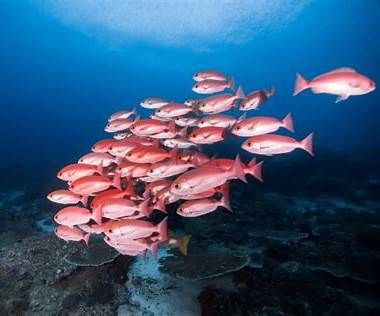
Picture yourself on a boat in the shimmering turquoise waters of the Gulf of Mexico. The sun glints off the waves. Below the surface, reefs and wrecks teem with marine life. Among them swims the red snapper — a bright-colored fish that is both a prized catch for fishermen and a key part of the Gulf’s ecosystem.
The red snapper (scientific name: Lutjanus campechanus) is more than just dinner. It’s a species that researchers and fishermen worry about, care for, and manage together. In this blog, we’ll dive into: what makes red snapper special, what threats it faces in the Gulf, how scientists are studying it, how fishermen and managers are part of the story, and why it all matters for the future of the Gulf and its coastal communities.
What is the Red Snapper and Why Does It Matter?
The red snapper is a long‐lived reef fish found in the Gulf of Mexico, especially in U.S. waters. It has bright reddish and pinkish tones, big eyes, and a stout body. It can live many years and grows to large size. SEDAR+2NOAA Institutional Repository+2
Why it matters:
- Ecological importance: As a reef‐dweller, red snapper helps keep the reef ecosystem balanced.
- Economic importance: It supports both commercial fishing and recreational fishing (sport-fishing) industries in the Gulf region. ERIC
- Cultural importance: Fishermen in Gulf states know this fish well. It is part of their heritage, local economies, and way of life.
Because of all these reasons, the red snapper is a centerpiece of marine conservation and fisheries management in the Gulf.
Threats and Challenges Facing Red Snapper
Even though red snapper is valuable, it has faced—and still faces—many threats. Some of the key challenges include:
Overfishing and mis-management
For many years, red snapper stocks were overfished—that is, more fish were removed than nature could replace. As a result, the species suffered declines. Policies were instituted to monitor and manage the fishery. ERIC+1 Also, because fishing occurs in commercial, recreational, and charter sectors, tracking all the catches and effort is complex. U.S.-law (under the Magnuson‑Stevens Fishery Conservation and Management Act) requires that data and management be reviewed for accuracy in the Gulf red snapper fishery. U.S. Code
Habitat loss and changes
Juvenile red snapper use habitats like low‐relief reefs, oyster beds, shell banks, and artificial structures. A meta‐analysis found that habitat complexity (how much structure exists) and competition among fish have strong effects on juvenile abundance in the Gulf. SpringerLink Loss of those habitats—or changes in them—can reduce red snapper recruitment (young fish growing to adulthood).
Bycatch and shrimp trawl impacts
Bycatch means unintended capture of species during fishing operations targeting other species. In the Gulf, shrimp trawl fisheries historically caught many juvenile red snapper as bycatch, impacting future populations. For instance, a study notes how changes in shrimping effort affected red snapper. ResearchGate
Ecosystem and environmental factors
Environmental changes — such as water temperature, oxygen levels (hypoxia), nutrient loading, and ocean currents — all influence red snapper populations. For example, the meta-analysis mentioned above found that for adult red snapper, many drivers had small or no effect, but for juveniles the drivers were more significant. SpringerLink Also, larvae (baby fish) are transported by currents, so how the Gulf’s oceanography works matters a lot.
Stock structure and connectivity issues
Management typically divides the fishery into zones or areas by state or offshore region. But fish don’t care about political boundaries. Studies show that larval red snapper move across state lines, meaning connectivity (movement between areas) is important. OUP Academic+1 A recent assessment review (SEDAR 74) flagged issues with the assessment model, including data limitations and the complexity of modelling multiple areas. Gulf Council Media
How Scientists Are Studying Red Snapper in the Gulf
Science is playing a huge role in understanding red snapper in the Gulf. Let’s look at some of the major research approaches.
Stock assessments and modelling
Stock assessments are scientific evaluations of how many fish are out there, how fast they’re growing, how many are dying, how many are being caught, and whether the population is healthy or overfished. A major assessment for the Gulf red snapper (SEDAR 74) used an age‐structured model named Stock Synthesis, splitting the Gulf into three areas, including many fleets and parameters. The review found that although the model was advanced, there were significant data gaps and internal issues. Gulf Council Media These models provide the scientific foundation for management decisions.
Larval connectivity and dispersal studies
Scientists are using modelling to simulate how red snapper larvae move, settle, and recruit (grow into the fishery). One study found that median dispersal distance is about 80 km, and there is considerable exchange of larvae among states (Alabama, Mississippi, Louisiana receive recruits from other states). NOAA Institutional Repository+1 Another study (2022) found that larval red snapper from the Gulf may supply the Atlantic stock as much as one-third of some years, suggesting Gulf management has broader implications. NOAA Fisheries These connectivity studies show the importance of regional cooperation across state lines.
Habitat and juvenile studies
As mentioned, habitat is key for juveniles. The meta‐analysis of 82 independent studies found that habitat complexity and availability are large drivers for juvenile abundance. SpringerLink Tagging studies track movement of individual fish (e.g., “Movement of Tagged Red Snapper in the Northern Gulf of Mexico” showed many fish stay near release site, but others move significantly). SEDAR
Bycatch and fishing effort studies
Science also evaluates how other fishing activities impact red snapper. The shrimp‐trawl bycatch paper (Gallaway et al.) analyzed how shrimping effort influences juvenile red snapper mortality. ResearchGate Bycatch reduction devices, alternative gear, and mapping of fishing effort are all part of this.
Environmental driver meta-analysis
The 2020 meta‐analysis (Erisman et al.) reviewed environmental and ecological drivers affecting adult and juvenile red snapper in the Gulf. It found larger effects for juveniles, fewer for adults, and indicated research gaps such as temperature and hypoxia effects. SpringerLink This shows that understanding the whole life‐cycle and environment is essential for management.
Fishermen, Managers and Scientists: Working Together
Research is only part of the story. Management and collaboration with fishermen are the rest. Here’s how it all comes together.
Collaborative data and fishermen input
Working with fishermen allows scientists and managers to get real-world data, local knowledge, and more frequent observations. While the research into red snapper has focused more on science and modelling, the principle stands that involving stakeholders (fishermen) leads to better decisions. For example, management laws require peer review and involvement of commercial, recreational and charter fishermen in review of statistics for the red snapper fishery. U.S. Code When fishermen help collect data or provide input on fishing grounds, habitat changes, spawning aggregations, it improves the science and the sense of ownership of the fishery.
Management actions based on research
Because of the research and assessments, managers have taken actions such as:
- Adjusting catch limits (commercial and recreational).
- Modifying seasons, size limits, and bag limits.
- Protecting key habitats (juvenile nurseries, artificial reefs).
- Monitoring and reducing bycatch.
- Developing cooperative research programs.
Shared responsibility and regional cooperation
The connectivity research shows that recruits move across boundaries. Therefore states and federal agencies must cooperate. For example, Alabama, Mississippi and Louisiana may receive significant recruitment from other states, meaning that if one state mismanages, it affects others. OUP Academic+1 Such cooperation can help set equitable quotas, shared monitoring, and coordinated habitat protection.
Feedback and monitoring
Management is not “set and forget.” Monitoring—via tagging, surveys, researchers’ studies—helps determine if fish stocks are rebuilding, stable or declining. Scientists review results and recommend changes. That cycle (research → management → monitoring → research) is essential.
Successes and Ongoing Challenges
Some successes
- The fact that there is enough research, many peer‐reviewed studies, and meta‐analyses shows a mature scientific base for red snapper in the Gulf (Erisman et al., 2020) SpringerLink
- Improved management frameworks: The assessments (even with limitations) allow managers to set precautionary targets and rebuilding plans.
- Habitat protection and awareness: Because we know juveniles need complex habitats, management and habitat restoration efforts can focus there.
- Bycatch reduction: Research into shrimp trawl bycatch and the effect on red snapper has led to better gear regulations. ResearchGate
Still challenging
- Data gaps: The SEDAR 74 review found issues with age data, model assumptions, and whether three‐area division is well supported. Gulf Council Media
- Habitat and environmental uncertainties: While habitat complexity is known to be important, factors like temperature, hypoxia, ocean circulation remain less certain. (Erisman et al., 2020) SpringerLink
- Connectivity versus management boundaries: Because fish and larvae move across state lines, state‐based management can misalign with biological reality. Researchers suggest interstate cooperation is beneficial. OUP Academic+1
- Pressure from multiple fisheries sectors: Recreational, commercial, and bycatch sectors all affect red snapper; balancing them is complex. ResearchGate+1
- Changing oceans: Climate change, ocean acidification, plankton shifts, and other large‐scale environmental changes may affect red snapper in ways still uncertain.
- Enforcement and compliance: Research and management are only as good as monitoring and enforcement; ensuring fishing rules are followed remains an issue.
Why This Matters to the Gulf and to You
If you live in a Gulf coast state (Florida, Alabama, Mississippi, Louisiana, Texas) or you visit the Gulf for fishing, recreation, or nature, the status of red snapper matters in many ways:
- Economic: A healthy red snapper fishery supports jobs (fishing guides, charter boats, commercial harvesters), local businesses and tourism.
- Environmental: Reef ecosystems benefit from the presence of healthy predator populations like red snapper, which help maintain ecological balance.
- Cultural/Recreational: Recreational anglers care about red snapper because it’s a prized gamefish; conservation ensures future generations can fish too.
- Food security: For many communities, fish are an important protein source; sustainable populations guarantee ongoing harvests.
- Governance and collaboration: The red snapper story is a model of how scientists, managers, fishermen and states can collaborate to manage a valuable marine resource.
Thus, your interest—whether you’re a fisherman, beach-goer, student, teacher, or nature-lover—links into a broader story of ocean stewardship.
Looking Ahead: The Future of Red Snapper Research and Management
What happens next? The research and management of red snapper in the Gulf are evolving. Here are key themes to watch:
Improved models and data
Future assessments will likely include better age‐composition data, finer spatial resolution, and more robust diagnostics. The SEDAR 74 review recommended addressing the gaps in data and model validation. Gulf Council Media Researchers will continue refining models of connectivity, recruitment, and modelling fish‐life cycles under changing ocean conditions.
Habitat restoration and protection
Protecting and restoring juvenile habitat (shell banks, reefs, oyster beds) will remain important. Understanding how habitat complexity drives young fish survival will help managers decide where to invest. The meta-analysis showed that these habitat drivers matter most for juveniles. SpringerLink
Regional and interstate cooperation
Because larvae and young fish move across state boundaries, future management may include more shared approaches rather than purely state‐by‐state. Some researchers suggest that cooperation in heavily connected regions could improve sustainable harvests. NOAA Institutional Repository+1
Addressing environmental change
As waters warm, hypoxia zones shift, and ocean currents change, red snapper populations may respond in ways still uncertain. Linking red snapper research with climate science, oceanography, and ecosystem-based management will be key.
Engaging stakeholders
Fishermen, charter operators, recreational anglers, commercial harvesters, scientists and managers all have a stake. Collaborative research, co‐management, and data sharing will continue to improve outcomes. Laws like the one requiring peer review and stakeholder participation (16 U.S.C. §1883) reflect this. U.S. Code Education and outreach will also help build support for sustainable practices among the public and fishing communities.
Key Take-Away Points
- Red snapper in the Gulf of Mexico is an economically and ecologically important species.
- It has faced serious challenges (overfishing, habitat loss, bycatch, environmental change), but research and management have made progress.
- Science in the Gulf uses stock assessments, larval connectivity modelling, habitat studies, bycatch studies, and meta‐analyses to inform management.
- Management must adapt to realities: fish don’t respect state lines; habitats matter; environmental change matters.
- Fishermen, scientists and managers working together make the difference.
- The Gulf coast region benefits from a healthy red snapper fishery through environment, economy and community.
- The future of red snapper research will be about better data, smarter management, ecosystem thinking, and collaboration.
Closing Thoughts
Imagine once again that boat ride on the Gulf. The sea breeze, the blue horizon, the reefs below alive with fish. When the red snapper swims under that hull, it carries more than its own story — it carries the story of science, fisheries, habitats, management, and people. It carries the story of how we as a region can protect our sea, ensure that future fishermen still cast lines, and that future families still enjoy reefs and fish.
In the broader narrative of ocean conservation, the red snapper in the Gulf of Mexico stands out as a success story in progress. It reminds us that when we combine the power of science, the experience of fishermen, the wisdom of managers, and the beauty of nature, we can do more than catch fish: we can sustain life.
So next time you hear about a red snapper catch, a new study, or a regulation change — remember, it’s all part of a larger ecosystem of care. And you’re part of it too.
Bibliography
Erisman, B. E., Bolser, D., Ilich, A., Frasier, K. E., Glaspie, C. N., Moreno, P. T., Dell’Apa, A., de Mutsert, K., Yassin, M. S., Nepal, S., Tang, T., & Sacco, A. E. (2020). A meta-analytical review of the effects of environmental and ecological drivers on the abundance of red snapper (Lutjanus campechanus) in the U.S. Gulf of Mexico. Reviews in Fish Biology and Fisheries, 30(3), 437-462. https://doi.org/10.1007/s11160-020-09608-w
Gallaway, B. J., Raborn, S., Picariello, L., & Putman, N. F. (2020). Changes in shrimping effort in the Gulf of Mexico and the impacts to red snapper. iScience. https://doi.org/10.1016/j.isci.2020.101111
Karnauskas, M., Shertzer, K. W., Paris, C. B., Farmer, N. A., Switzer, T. S., Lowerre-Barbieri, S. K., Kellison, G. T., He, R., & Vaz, A. C. (2022). Source–sink recruitment of red snapper: Connectivity between the Gulf of Mexico and Atlantic Ocean. Fisheries Oceanography, 31(6), 571-586. https://doi.org/10.1111/fog.12607
“Red Snapper connectivity in the Gulf of Mexico.” (2023). Marine and Coastal Fisheries. Oxford Academic. https://doi.org/10.1002/mcf.210275
Rindone, R. R., & Kellison, G. T. (2015). Data availability for red snapper in Gulf of Mexico and Southeastern U.S. Atlantic Ocean waters. Marine and Coastal Fisheries: Dynamics, Management, and Ecosystem Science, 7(1), 587-598.
U.S. Code, Title 16, Section 1883. (1996). Gulf of Mexico red snapper research.
Originally published at the live site .