
Maritime ·
Alien Sharks of the Deep: Nature’s Strangest Predators
The deep sea is one of the most mysterious places on Earth. It’s dark, cold, and full of secrets. In these depths, some of the most bizarre creatures roam the waters, including the strange and wonderful group known as “a...
By Rebecca "Madam Chronicler" Ryan
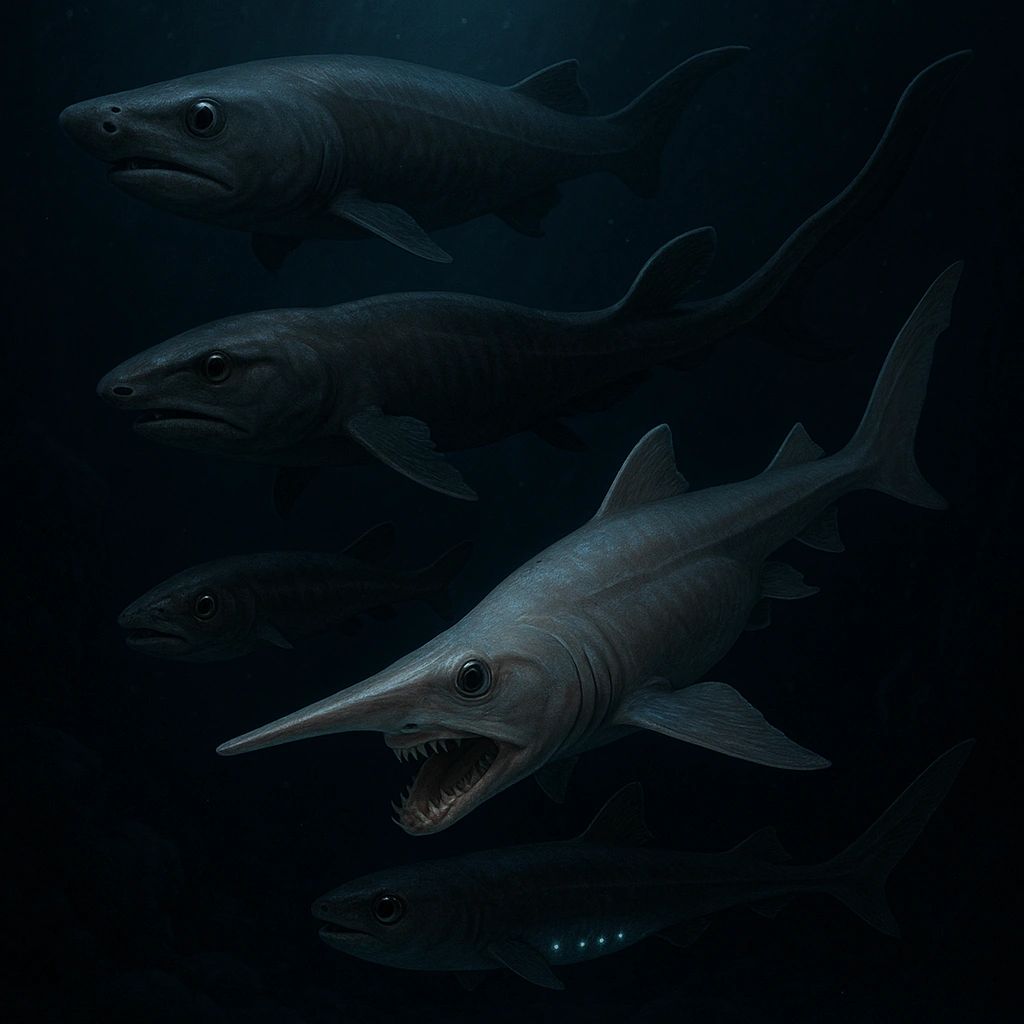
The deep sea is one of the most mysterious places on Earth. It’s dark, cold, and full of secrets. In these depths, some of the most bizarre creatures roam the waters, including the strange and wonderful group known as “alien sharks.” These sharks don’t come from outer space, but they certainly look like they could! With their odd shapes, glowing eyes, and freaky features, alien sharks are a fascinating example of nature’s creativity.
In this blog, we’ll dive into the world of alien sharks of the deep. We’ll explore their unusual appearances, how they survive in harsh conditions, and why scientists are so fascinated by them. Get ready to meet some of the weirdest sharks ever discovered!
What Are Alien Sharks?
“Alien sharks” isn’t a scientific term. Instead, it’s a nickname used to describe deep-sea sharks with strange, otherworldly appearances. Many of these sharks live thousands of feet below the surface, where light barely reaches. Their bodies have adapted to survive the intense pressure, cold temperatures, and darkness of the deep sea.
These sharks often look like creatures from a science fiction movie. Some have huge eyes that glow. Others have long, whip-like tails or heads that look like hammers or saws. Many alien sharks have remained unchanged for millions of years, earning them the title of “living fossils.”
Why Do They Look So Strange?
Alien sharks look weird for a reason. Life in the deep sea is no picnic. There’s almost no light, and food is hard to find. To survive, these sharks have evolved special adaptations.
Here are some reasons why they look so unusual:
- Big Eyes: In the deep, every bit of light matters. Sharks like the goblin shark have large, sensitive eyes that help them spot prey in near total darkness.
- Bioluminescence: Some sharks, like the lanternshark, can glow! They use special light-producing organs called photophores to attract prey or hide from predators.
- Unique Jaws: Many alien sharks have weird jaws that can shoot forward to grab prey quickly, like the goblin shark.
- Flexible Bodies: Deep-sea sharks often have soft, bendy bodies. This helps them stay buoyant and move through the water with little effort.
- Slow Metabolism: Food is scarce in the deep sea, so these sharks have slow metabolisms. They can go for long periods without eating.
Meet the Alien Sharks of the Deep
Let’s take a closer look at some of the most famous alien sharks of the deep.
1. Goblin Shark (Mitsukurina owstoni)
The goblin shark is often called the “ugliest shark in the world,” but it’s also one of the coolest! This shark has a long, flat snout and tiny, nail-like teeth. Its most famous feature is its jaw, which can shoot out like a slingshot to snatch prey.
Goblin sharks live around 300 to 1,300 meters (980 to 4,270 feet) deep, but they’ve been found as deep as 1,200 meters (3,940 feet). They’re sometimes called “living fossils” because they belong to a family of sharks that dates back about 125 million years.
When a goblin shark senses prey nearby, it uses special sensors in its snout to detect electrical signals. Then, it thrusts its jaws forward to grab the prey in an instant!
2. Frilled Shark (Chlamydoselachus anguineus)
The frilled shark looks like something from prehistoric times. With its long, eel-like body and rows of needle-sharp teeth, it resembles a sea serpent from ancient myths. It has six pairs of gill slits with frilly edges, which is where it gets its name.
Frilled sharks live between 500 and 1,500 meters (1,640 to 4,920 feet) deep. They move in a snake-like manner, twisting through the water to hunt fish and squid. Their teeth are shaped like tiny hooks, perfect for grabbing slippery prey.
These sharks rarely come to the surface, but they sometimes get caught in fishing nets. When scientists study them, they often call them “living fossils” because their body plan has barely changed in millions of years.
3. Lanternsharks (Etmopteridae family)
Lanternsharks are some of the smallest alien sharks, usually only a few inches long. But what they lack in size, they make up for with glowing abilities!
Lanternsharks can produce light through bioluminescence. They have special organs called photophores along their bellies and sides. Scientists believe the light helps them camouflage by blending in with faint light from above. It may also help attract prey or signal to other sharks.
Some species live as deep as 1,500 meters (4,920 feet). One type, the ninja lanternshark (Etmopterus benchleyi), was only discovered in 2015 and has a dark black body with glowing patterns—earning it the “ninja” name.
4. Cookiecutter Shark (Isistius brasiliensis)
The cookiecutter shark may be small, but it packs a powerful bite! This shark gets its name from the round, cookie-shaped wounds it leaves on larger animals.
Living at depths of up to 3,500 meters (11,480 feet), cookiecutter sharks use their strong jaws and razor-sharp teeth to latch onto whales, dolphins, and even submarines. They twist their bodies to carve out a chunk of flesh before swimming away.
These sharks also glow, which helps lure in curious prey. Their strange feeding method makes them one of the oddest predators in the ocean.
5. Sixgill Shark (Hexanchus griseus)
The bluntnose sixgill shark is one of the largest deep-sea sharks, growing up to 16 feet long. It gets its name from its six gill slits—most sharks have only five.
Sixgill sharks live at depths up to 2,500 meters (8,200 feet). They prefer dark, cold waters and usually hunt at night, swimming up from the depths to feed.
These sharks are slow-moving but can launch fast attacks when needed. They mainly eat fish, squid, and crustaceans, but they’ve also been known to scavenge on whale carcasses.
6. Ghost Shark (Chimaeras)
While not technically “true” sharks, ghost sharks—or chimaeras—are close relatives. They live at extreme depths and have some of the strangest features in the shark family tree.
Ghost sharks have large, wing-like fins and eerie, glowing eyes. Their skin is smooth and scaleless, giving them a ghostly appearance. Some species even have venomous spines on their backs for defense.
These creatures live in deep waters around 200 to 2,600 meters (656 to 8,530 feet). They feed on small fish, worms, and crustaceans along the ocean floor.
How Do Scientists Study Alien Sharks?
Studying deep-sea sharks is no easy task. It’s dark, cold, and deep—too far for most submarines to reach. However, thanks to technology, scientists are learning more about these creatures.
Here are some ways researchers study alien sharks:
- Deep-Sea Submersibles: Special submarines like remotely operated vehicles (ROVs) can dive thousands of feet to film and collect samples.
- Tagging: Scientists sometimes catch deep-sea sharks and attach tracking tags. These tags record depth, temperature, and movement patterns.
- Bycatch Studies: Deep-sea fishing sometimes accidentally catches alien sharks. Researchers study these specimens to learn more about their biology.
- DNA Analysis: Scientists use genetic tools to study relationships between different shark species and uncover new ones.
Why Are Alien Sharks Important?
Alien sharks may seem creepy, but they play an important role in ocean ecosystems. They help keep fish populations in balance and clean up dead animals from the seafloor. Studying them also teaches scientists about evolution and how life survives in extreme places.
However, many deep-sea sharks are at risk. Fishing, pollution, and climate change threaten their habitats. Because they grow slowly and have few babies, it’s hard for their populations to recover once they are harmed.
Final Thoughts: Protecting the Deep
Alien sharks remind us just how strange and wonderful nature can be. They’ve survived in the most extreme conditions for millions of years, but now they face new dangers from human activities.
By learning about these unique sharks, we can help protect them and the deep-sea world they call home. After all, there’s still so much we don’t know about these mysterious creatures of the deep!
Bibliography
Clark, E., & Kristof, E. (2016). Deep-sea elasmobranchs: Diversity, adaptations, and ecological significance. Journal of Fish Biology, 89(3), 965-990. https://doi.org/10.1111/jfb.13040
Ebert, D. A., Fowler, S., & Compagno, L. J. V. (2013). Sharks of the world: A fully illustrated guide. Wild Nature Press.
Iglésias, S. P., & Lévy-Hartmann, L. (2012). Description of a new deep-sea lanternshark (Etmopterus benchleyi) from the eastern Pacific Ocean (Squaliformes: Etmopteridae). Zootaxa, 3758(1), 101–118. https://doi.org/10.11646/zootaxa.3758.1.8
Kyne, P. M., & Simpfendorfer, C. A. (2010). Deepwater chondrichthyans. In J. C. Carrier, J. A. Musick, & M. R. Heithaus (Eds.), Sharks and their relatives II: Biodiversity, adaptive physiology, and conservation (pp. 37-113). CRC Press.
Yano, K., Miya, M., Aizawa, M., & Noichi, T. (2007). Redescription of a rare deep-sea shark Mitsukurina owstoni (family Mitsukurinidae) collected from Suruga Bay, Japan. Ichthyological Research, 54(1), 59-62. https://doi.org/10.1007/s10228-006-0386-4
Originally published at the live site .