
Stories ·
Alligator vs Crocodile: 9 Shocking Differences You Must Know
When you're staring into the murky waters of a swamp or riverbank, spotting a hulking reptile can raise a big question: Is that an alligator or a crocodile? These two prehistoric predators look strikingly similar at firs...
By Rebecca "Madam Chronicler" Ryan
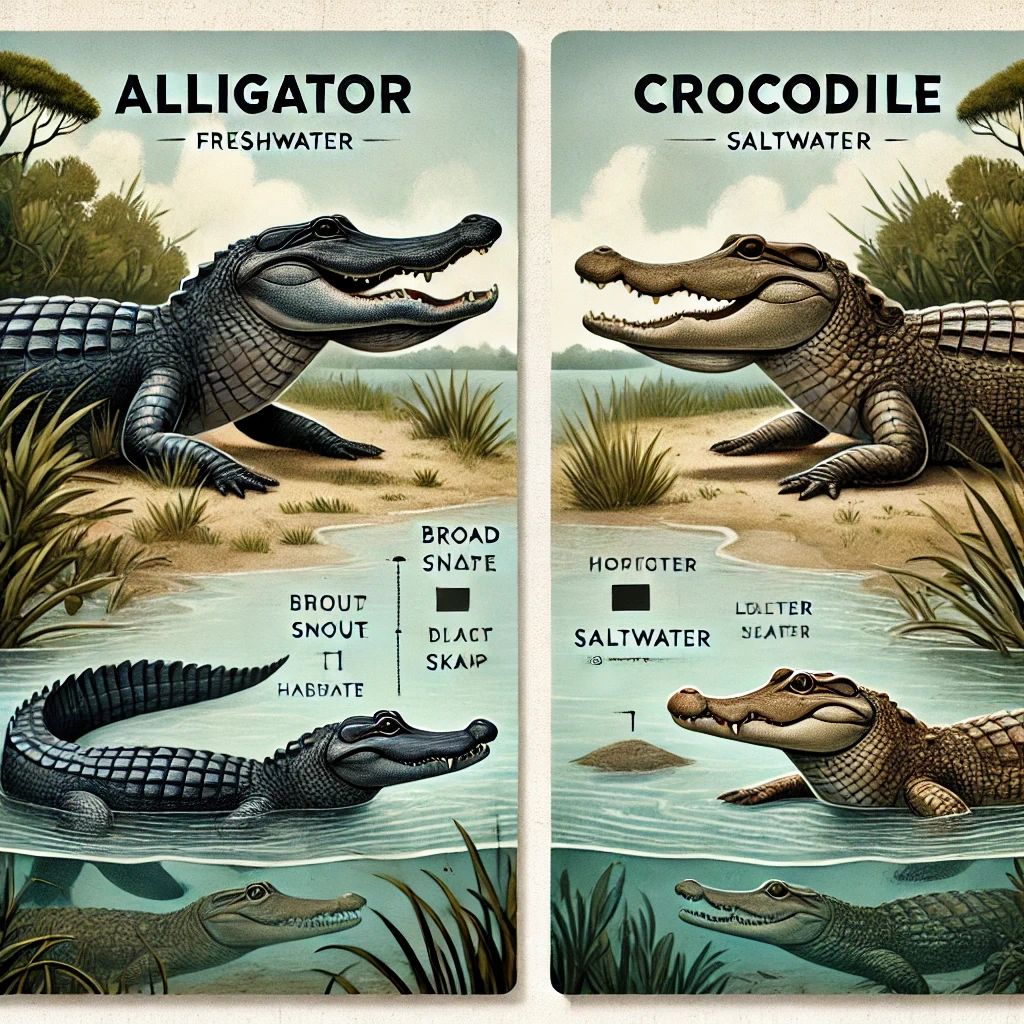
When you’re staring into the murky waters of a swamp or riverbank, spotting a hulking reptile can raise a big question: Is that an alligator or a crocodile? These two prehistoric predators look strikingly similar at first glance, but don’t be fooled—alligators and crocodiles are not the same. In this in-depth comparison, we’ll explore the key differences that set them apart—from snout shape and behavior to size, habitat, and aggression. Whether you’re a wildlife enthusiast or just curious about who would win in a fight, this Alligator vs Crocodile showdown has all the facts you need.
🦷 Physical Differences Between Alligators and Crocodiles
Snout Shape
Alligators boast a wide, U-shaped snout that’s perfect for cracking turtle shells. Crocodiles, on the other hand, feature a V-shaped snout—narrower and more versatile for varied prey.
Teeth and Jawline
Crocodiles reveal both upper and lower teeth when their mouths are shut—especially their prominent fourth lower tooth. Alligators keep it tidy: only the upper teeth are visible.
Skin Color and Texture
Expect darker, nearly black skin on alligators—excellent camouflage in freshwater marshes. Crocodiles? Their olive green or tan hues and rougher textures blend better with salty, sandy coasts.
🌍 Where Do They Live?
Alligator Habitat
Found primarily in the southeastern U.S., with hotspots in Florida and Louisiana, and a small population in China. They thrive in freshwater environments like swamps, marshes, and lakes.
Crocodile Habitat
Widespread across Africa, Australia, Southeast Asia, and the Americas. They flourish in saltwater areas thanks to their advanced salt glands. South Florida is the only U.S. region where both species coexist.
😠 Behavior and Temperament
Are Alligators More Docile?
Generally, yes. Alligators are cautious and tend to flee from humans—unless provoked, especially during mating season.
Crocodiles Are Notoriously Aggressive
Known for their territorial nature, Nile and Saltwater crocs are responsible for the majority of fatal human attacks annually. Respect is key.
🍖 Diet and Hunting Techniques
Alligator Diet
Ambush predators that enjoy:
- Fish
- Crustaceans
- Birds
- Larger mammals (antelope, wild boar—even humans)
They use stealth in freshwater areas, waiting just beneath the surface.
Crocodile Diet
Powerful and bold, they go after:
- Fish
- Crustaceans
- Birds
- Larger mammals (antelope, wild boar—even humans)
Their method combines brute force with deadly precision.
📏 Size Matters: Who’s Bigger?
Alligators
- American alligator: up to 13–15 feet
- Chinese alligator: around 5 feet
Crocodiles
- Saltwater crocodile: the world’s largest reptile, up to 23 feet
- Nile crocodile: often 16+ feet
🏆 Winner: Crocodile by a massive margin.
⏳ Lifespan and Reproduction
Alligators
- Live up to 50 years in the wild
- Lay 20–50 eggs in vegetative nests
Crocodiles
- Can live 70–100 years
- Lay 40–60 eggs in sandy nests
Both are rare among reptiles: devoted mothers who protect and carry hatchlings.
🧭 Can They Coexist?
Only in South Florida. Even there, they stick to their comfort zones—alligators prefer freshwater, while crocodiles dominate brackish and saltwater.
🥊 Who Would Win in a Fight?
Crocodile’s Edge
- Stronger build
- Greater endurance
- 3,700 PSI bite force (vs alligator’s 2,100 PSI)
Alligator’s Advantage
- More agile on land
- Faster for short bursts
Verdict: Crocodile wins, thanks to sheer size and power.
🔮 Cultural Symbolism
- Alligators: Seen in Native American traditions as symbols of survival, primal force, and connection to nature.
- Crocodiles: Feature in Egyptian mythology (Sobek), often linked with strength, protection, and deception.
🌿 Conservation Status
Alligators
- Once endangered, now a conservation success story
- Listed as “Least Concern” by IUCN
Crocodiles
- Mixed status
- Saltwater and Nile crocs are stable
- Philippine and Orinoco crocs are critically endangered
❓ Alligator vs Crocodile: FAQs
1. Do they make good pets?
No way. Wild, dangerous, and illegal in many places.
2. Can you outrun them?
Yes, they are capable of short sprints only. Run as fast as possible in a straight line and don’t trip!
3. Which is more dangerous to humans?
Crocodiles, hands down. They’re involved in hundreds of attacks annually.
4. Are crocodiles more intelligent?
Studies suggest crocodiles may have slightly superior learning behavior—especially in hunting strategies.
5. Do they live together peacefully?
Not really. In shared regions, they tend to avoid direct contact.
6. Who has the stronger bite?
Crocodile, with an astounding 3,700 PSI bite force.
🏁 Final Verdict: Alligator or Crocodile?
There’s no clear “better” reptile—it’s about specialization. Choose the alligator for calm, freshwater stealth. Favor the crocodile for sheer strength and salty dominance.
Either way, both animals are evolutionary marvels worthy of respect.
📚 Sources
- Britton, A. R. C. (2020). Biology of Crocodilians – CSIRO Publishing
- Grigg, G., & Kirshner, D. (2015). Biology and Evolution of Crocodylians – Cornell University Press
- IUCN Red List: iucnredlist.org
- Florida Fish & Wildlife: Living with Alligators
- Smithsonian National Zoo: Crocodile and Alligator Facts
About the Author
Rebecca “Madam Chronicler” Ryan is a writer and researcher for The Chronicler Library. She is the co-creator of The Chronicle of Fear and The Waterline Chronicles, and a lead researcher and contributor for The Captain’s War Chronicles and The Captain’s Cellar. Her work blends myth, history, and the natural world with empathy, insight, and intellectual rigor.
Originally published at the live site .