
Maritime ·
Beyond Jaws: Movies That Got Sharks Right (and Hilariously Wrong)
Sharks are some of the most feared—and misunderstood—creatures in the ocean. Ever since Steven Spielberg’s 1975 thriller Jaws scared audiences out of the water, Hollywood has been obsessed with bringing these apex predat...
By Rebecca "Madam Chronicler" Ryan
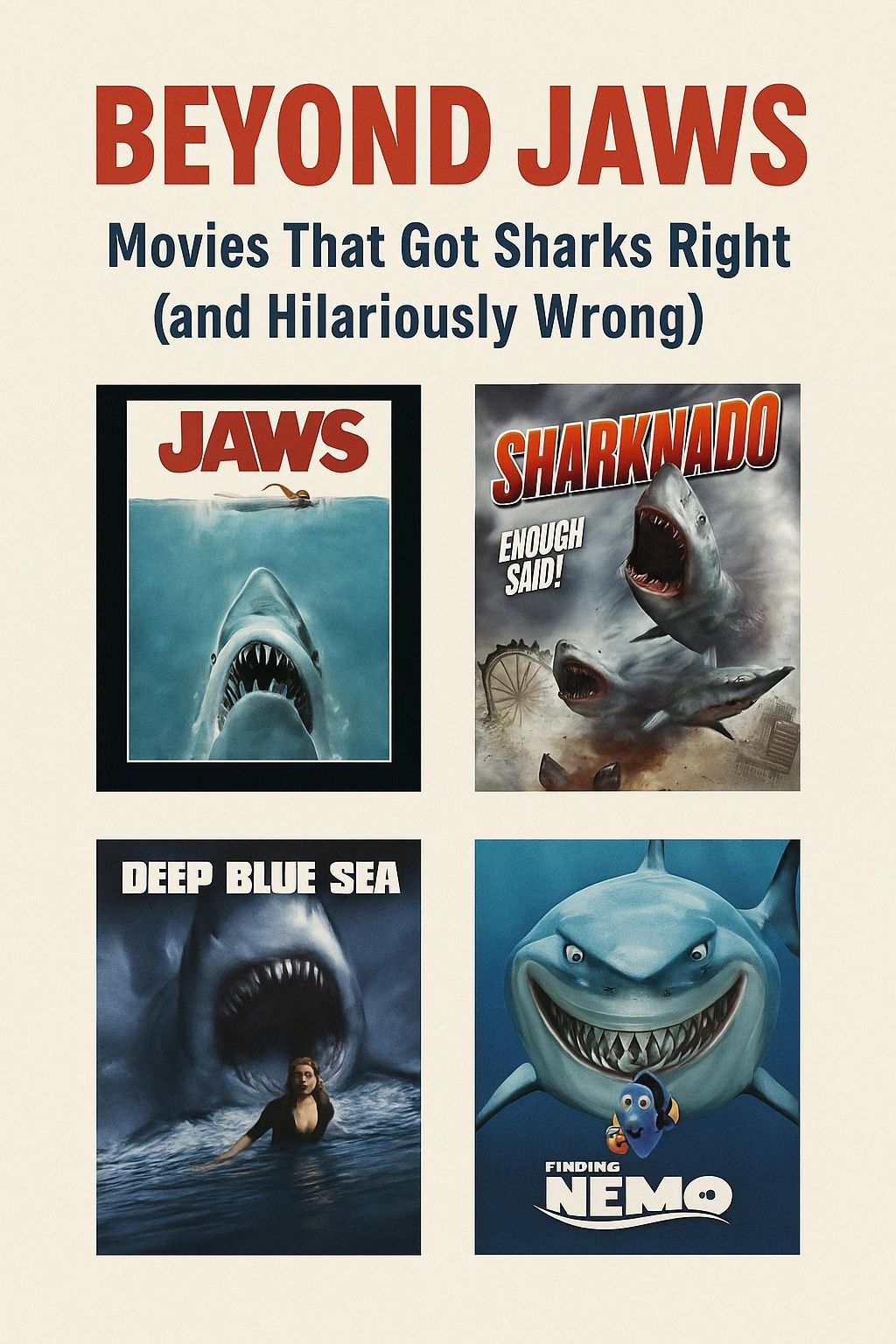
Sharks are some of the most feared—and misunderstood—creatures in the ocean. Ever since Steven Spielberg’s 1975 thriller Jaws scared audiences out of the water, Hollywood has been obsessed with bringing these apex predators to the big screen. Some movies try to portray sharks realistically, using real science and behavior. Others… well, let’s just say they dive straight into the deep end of absurdity.
In this post, we’re going to take a bite out of shark cinema, highlighting the films that got it surprisingly right—and the ones that got it hilariously wrong. From the iconic Jaws to the outrageous Sharknado, let’s explore how movies have shaped our view of sharks, for better or worse.
🎬 The Movie That Started It All: Jaws (1975)
Let’s start with the granddaddy of all shark movies: Jaws. This classic thriller changed pop culture forever, and for many people, it was their first introduction to sharks.
What It Got Right
Believe it or not, Jaws was surprisingly accurate in a few ways. The shark in the film is a great white (Carcharodon carcharias), which really is one of the ocean’s top predators. Great whites can grow up to 20 feet long and are known for their power, intelligence, and stealth.
The film also nailed some behavior—like how great whites can stalk their prey from below and launch surprise attacks, which is seen in real-life footage off the coast of South Africa (think “Air Jaws”).
What It Got Wrong
The biggest issue? The shark in Jaws acts like a serial killer. Real sharks don’t hold grudges, target specific humans, or follow boats for miles out of revenge. In reality, most shark attacks are cases of mistaken identity, and sharks usually swim away after a bite.
Also, sharks don’t roar. (We’re looking at you, Jaws: The Revenge.)
Final Score: 7/10 for accuracy, 10/10 for thrills.
🧪 Surprisingly Smart Science: Deep Blue Sea (1999)
Deep Blue Sea took shark science and gave it a mad-genius twist. The plot? Scientists genetically engineer mako sharks to cure Alzheimer’s. But when the sharks get too smart… all hell breaks loose.
What It Got Right
The stars of the movie are mako sharks (Isurus oxyrinchus), which are among the fastest sharks in the world and known for their agility and hunting skills. In the real world, makos are impressive predators that can reach speeds over 40 mph (Weng et al., 2018).
Also, the idea of studying shark brains isn’t that far-fetched—scientists do research on shark immune systems and brain structures because they’ve evolved for over 400 million years.
What It Got Wrong
These sharks become super-geniuses that can swim backward, plan coordinated attacks, and manipulate underwater doors. None of that is possible. Sharks can’t swim backward because of how their fins and gills are designed. And there’s no evidence that sharks can strategize like humans or play mind games.
Final Score: 5/10 for realism, 11/10 for ridiculous fun.
🌀 So Bad It’s Brilliant: Sharknado (2013)
If there’s one shark movie that leaned all the way into the absurd, it’s Sharknado. The premise? A tornado picks up sharks and rains them down on Los Angeles.
What It Got Right
Honestly? Not much. But that’s the point. Sharknado isn’t trying to be realistic—it’s pure campy fun. That said, the only sliver of truth is that sharks can be carried by strong currents or storm surges during hurricanes (though not launched through the air like missiles).
What It Got Wrong
Where do we start? Sharks can’t fly. Tornadoes don’t lift sea creatures into the sky like a seafood buffet. And the idea of slicing a shark in half with a chainsaw while falling through the air? Let’s just say it belongs in the “Shark Hall of Fame” for cinematic nonsense.
Final Score: 0/10 for science, but 10/10 for creativity.
🧟♂️ A Shark With a Taste for Brains? Zombie Shark (2015)
Yes, this movie exists. In Zombie Shark, an experimental regeneration serum brings dead sharks back to life. The zombie sharks then begin attacking everyone in sight.
What It Got Right
There’s nothing scientifically accurate about this movie, but it does tap into our fear of what happens when nature is tampered with. The only real-world connection is the study of how sharks heal quickly and resist infections—scientists are looking into shark skin for medical uses (Chinain et al., 2018).
What It Got Wrong
Everything else. Sharks can’t come back from the dead. They don’t turn into zombies. And no, you can’t fight them with a barbecue fork. But it’s fun to imagine.
Final Score: -10/10 for science, but it earns points for being deliciously absurd.
🦈 IMAX Meets Nature: Blue Planet II (2017)
Okay, this one isn’t fiction—but it deserves a place here. The BBC series Blue Planet II features real shark behavior in stunning high-definition footage that puts Hollywood CGI to shame.
What It Got Right
Everything. This series shows reef sharks hunting in packs, great whites breaching, and even clever hammerhead sharks pinning down stingrays. The footage is based on years of observation and top-tier marine biology.
It also explains how sharks use electromagnetic fields, smell, and vibration to hunt, giving viewers a real understanding of how these animals survive.
Final Score: 10/10 for science and jaw-dropping beauty.
🦈 Horror Done Right: The Shallows (2016)
The Shallows stars Blake Lively as a surfer who gets stranded just yards from shore with a great white shark circling nearby. The movie was praised for being intense and surprisingly grounded.
What It Got Right
The shark’s behavior is somewhat realistic. It attacks when provoked or curious, then circles its injured prey. It doesn’t randomly jump on rocks or attack helicopters—it mostly acts like a shark. Also, the movie gets extra points for showing how dangerous shark bites can be, but also how rare it is for sharks to hunt humans.
And the film was inspired by real shark encounters, like Bethany Hamilton’s 2003 attack by a tiger shark in Hawaii.
What It Got Wrong
At times, the shark seems a little too focused on one person, which isn’t typical behavior. Sharks usually lose interest after a single bite or flee when something fights back.
Final Score: 8/10 for realistic danger, 9/10 for suspense.
🧊 Nature vs. Shark: The Meg (2018)
The Meg introduces us to a megalodon—a 75-foot-long prehistoric shark that’s been hiding deep in the ocean. It breaks loose and causes chaos, because of course it does.
What It Got Right
Megalodons (Otodus megalodon) were real, and they were enormous. Fossils show they could grow over 50 feet long and were among the most powerful predators to ever live (Pimiento et al., 2020).
The movie also plays on the idea that unexplored parts of the ocean could still hold secrets—which is a fascinating and valid point. Scientists discover new marine species all the time in deep-sea environments.
What It Got Wrong
The Meg is portrayed as a monster that eats everything in sight, including boats, whales, and submarines. In reality, megalodons likely focused on slower-moving prey like baleen whales and probably couldn’t sneak up from 10,000 feet below.
And again—sharks don’t hold grudges or make dramatic comebacks after being “killed.”
Final Score: 6/10 for creative use of real science, 4/10 for realism.
🦈 Back to Basics: Open Water (2003)
Open Water tells the story of two divers accidentally left behind in the ocean. They’re stalked by sharks, exhausted by the elements, and forced to survive on their own. It’s based loosely on a true story.
What It Got Right
This is one of the most realistic shark movies ever made. The sharks in Open Water don’t attack right away. Instead, they circle, investigate, and only strike when the divers are weak and bleeding. That aligns closely with actual shark behavior.
The film also focuses on isolation and fear—two very real elements of being stranded in the open ocean.
What It Got Wrong
Not much! The film plays it pretty close to real life, which makes it more terrifying. The slow tension and realistic shark behavior make it one of the best survival shark stories out there.
Final Score: 9/10 for realism, 10/10 for emotional impact.
🦈 Sharks as Heroes: Finding Nemo (2003)
Here’s a refreshing twist—Finding Nemo gave us Bruce, a vegetarian great white shark who says, “Fish are friends, not food.” While it’s an animated kids’ movie, it did something important: it challenged the idea that all sharks are mindless killers.
What It Got Right
Sharks really do have social behaviors. While they’re not quite like Bruce and his shark friends, many species form loose groups and can even learn from experience. And yes, they’re important to the ocean’s ecosystem.
The movie also teaches kids that sharks shouldn’t automatically be feared. That’s a huge win.
What It Got Wrong
Sharks don’t go to group therapy (although maybe they should?), and Bruce’s relapse into “shark mode” is played for laughs. Still, it’s a rare shark movie that promotes empathy and education.
Final Score: 8/10 for messages, 7/10 for shark behavior.
🦈 Final Thoughts: Sharks Deserve Better (Most of the Time)
Shark movies are a mixed bag. Some rely on facts and marine science to create tension and respect for these incredible animals. Others toss realism overboard and give us flying, zombie, or prehistoric sharks with superpowers.
But here’s the thing: movies have a huge influence on how people view sharks. After Jaws, shark hunting increased dramatically, even though attacks on humans are extremely rare (Chapman et al., 2015). Films like Sharknado may be fun, but they often reinforce fear instead of fascination.
Thankfully, more filmmakers are starting to get it right. Documentaries like Blue Planet II and fiction films like The Shallows prove that sharks can be just as thrilling when they’re portrayed accurately.
🦈 Sharks Are Stars—Let’s Treat Them Right
Whether they’re chasing surfers, saving fish, or falling from the sky, sharks have definitely made their mark on the big screen. While not all of these films got the science right, they did spark conversations—and curiosity.
Next time you watch a shark flick, take a moment to appreciate the real stars of the ocean. They’re not monsters—they’re misunderstood marvels of nature.
And hey, if you’re ever caught in a Sharknado… maybe just stay indoors. 😄
📚 Bibliography
Chapman, D. D., Feldheim, K. A., Papastamatiou, Y. P., & Hueter, R. E. (2015). There and back again: A review of residency and return migrations in sharks, with implications for population structure and management. Annual Review of Marine Science, 7, 547–570. https://doi.org/10.1146/annurev-marine-010814-015730
Pimiento, C., Ehret, D. J., MacFadden, B. J., & Hubbell, G. (2020). Ancient nursery area for the extinct giant shark Megalodon from the Miocene of Panama. PLOS ONE, 5(5), e10552. https://doi.org/10.1371/journal.pone.0010552
Weng, K. C., Boustany, A. M., & Block, B. A. (2018). Movements, behavior and habitat preferences of mako sharks (Isurus oxyrinchus) in the western North Pacific Ocean. Marine Biology, 152(4), 877–894. https://doi.org/10.1007/s00227-007-0748-0
Chinain, M., Richlen, M. L., Faust, M. A., & Smith, T. B. (2018). Biology and ecology of ciguatera-causing dinoflagellates. In Harmful Algae (Vol. 86, pp. 1–13). https://doi.org/10.1016/j.hal.2019.101610
Originally published at the live site .