
Rivers ·
Bull Sharks in the St. Johns River: Florida’s Freshwater Predator
When you think of sharks, you probably picture them swimming far out in the deep blue sea. But did you know some sharks can swim far inland too—right into freshwater rivers? One of the most famous rivers in Florida, the ...
By Rebecca "Madam Chronicler" Ryan
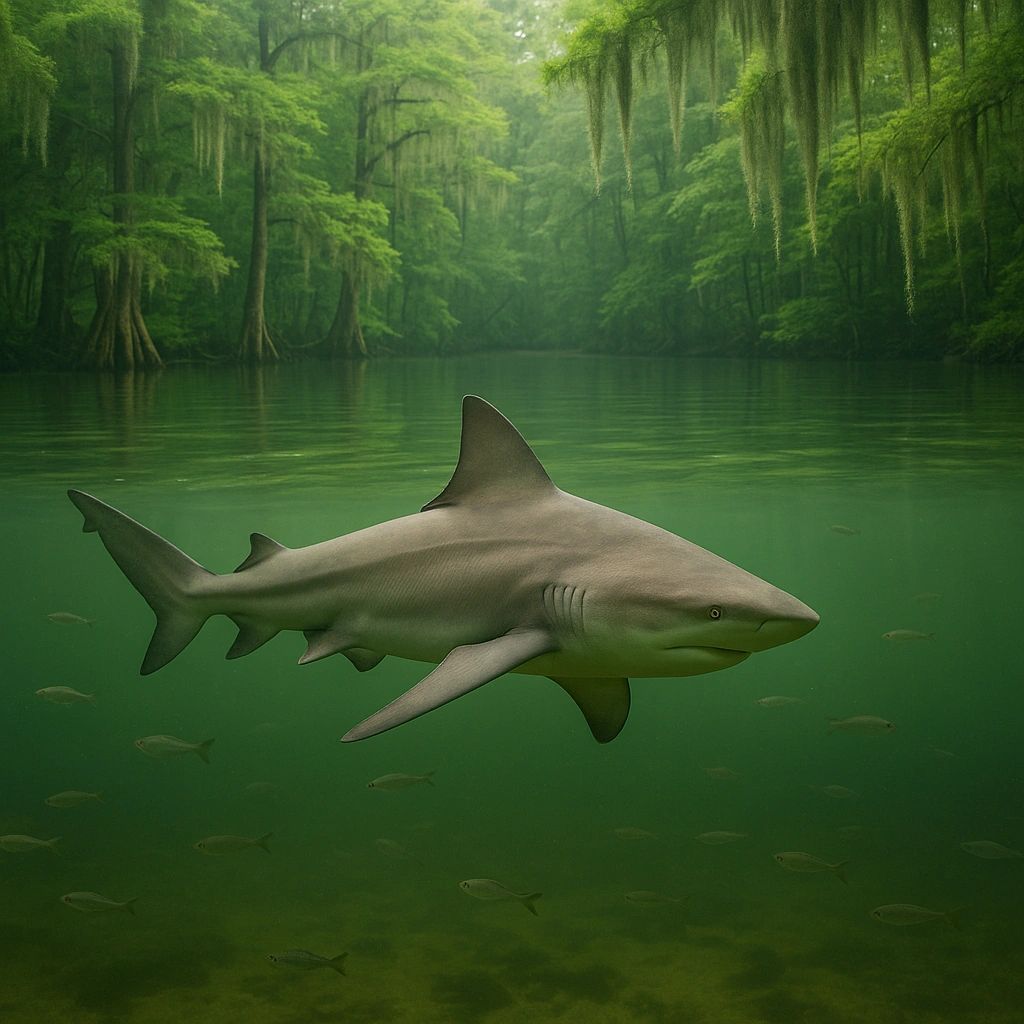
When you think of sharks, you probably picture them swimming far out in the deep blue sea. But did you know some sharks can swim far inland too—right into freshwater rivers? One of the most famous rivers in Florida, the St. Johns River, is home to a surprising visitor: the bull shark. These tough predators are full of surprises and have even been found hundreds of miles from the ocean!
In this post, we’ll dive into the world of bull sharks in the St. Johns River. We’ll learn why they’re there, how they survive in freshwater, what they eat, and whether people should be worried about them. Don’t worry—we’ll stick to the science and keep things clear, fun, and exciting!
Meet the Bull Shark: Nature’s Tough Guy
Bull sharks (Carcharhinus leucas) are one of the most adaptable sharks on the planet. Unlike most sharks, which live only in salty ocean water, bull sharks can survive in both saltwater and freshwater. That’s what makes them so special—and also a little scary.
Bull sharks get their name from their bulky bodies, short snouts, and aggressive behavior. They can grow up to 11 feet long and weigh over 500 pounds. These sharks are powerful swimmers and known for their ability to live in all kinds of environments, from coastal shallows to inland rivers.
A Shark in the River? Yes, Really!
The St. Johns River is one of the longest rivers in Florida. It starts near Vero Beach in Indian River County and flows north—yes, north!—for over 300 miles until it empties into the Atlantic Ocean near Jacksonville. Along the way, it passes through towns and cities like Sanford, Palatka, and Green Cove Springs.
It may seem strange that sharks would be in a river like this, but scientists have confirmed that bull sharks have been found far upriver—sometimes over 100 miles from the ocean! According to tracking studies and historical sightings, juvenile bull sharks use the river as a nursery, a place where they can grow safely without the threat of bigger predators.
Why Bull Sharks Love the St. Johns River
There are a few key reasons bull sharks are attracted to the St. Johns River:
1. Freshwater Abilities
Bull sharks are one of the few species of sharks that can survive in freshwater. They do this by adjusting the way their kidneys and other organs handle salt. In saltwater, sharks need to get rid of excess salt. In freshwater, they do the opposite—they hold onto the salt they need to survive. This amazing trick is called osmoregulation.
2. Safe Nursery Grounds
Baby bull sharks, called pups, are especially vulnerable when they’re small. Rivers like the St. Johns provide a quiet, shallow space for them to grow. There aren’t many large predators, and there’s plenty of food. Scientists believe this is why young bull sharks are the most common ones found in the river.
3. Plenty of Food
The St. Johns River is home to many fish and other animals bull sharks love to eat. Mullet, catfish, and even smaller sharks are all on the menu. The river’s rich ecosystem makes it an ideal hunting ground for these clever predators.
How Do Bull Sharks Survive in Freshwater?
Bull sharks have special ways to handle the challenges of freshwater. In the ocean, their bodies naturally hold less salt than the surrounding water, so they constantly lose water and gain salt. But in freshwater, the situation flips—they gain water and lose salt.
To survive, bull sharks have evolved a few important adaptations:
- Kidneys that adjust to conserve or release salt depending on where they are.
- Rectal glands that help balance salt levels.
- Cell membranes that keep their body fluids in check.
This flexibility allows them to swim between the salty ocean and the freshwater river with no problem.
Are Bull Sharks Dangerous to Humans?
Bull sharks are considered one of the most dangerous sharks to humans. They have been involved in more unprovoked attacks than most other shark species—mainly because they like to hang out in shallow, murky waters where people swim and fish.
But here’s the truth: shark attacks are still incredibly rare. Most of the time, sharks don’t want anything to do with humans. They may bite if they mistake a person for prey, but it’s not because they’re out hunting us. In the St. Johns River, there are very few confirmed shark attacks, and most bull sharks there are young and smaller in size.
Still, it’s always smart to be cautious. Avoid swimming in murky water, especially at dawn or dusk when sharks are more active. And never swim near schools of fish or where people are cleaning fish, as these can attract predators.
Shark Tagging and Research in the St. Johns
Scientists have been tagging bull sharks in Florida to better understand their movements. Using satellite and acoustic tags, researchers track where the sharks go and how long they stay in freshwater.
A study published in Environmental Biology of Fishes found that juvenile bull sharks entered the St. Lucie River in southeastern Florida and stayed for months at a time (Curtis et al., 2011). Similar patterns have been observed in the St. Johns River. These long visits show that rivers play a huge role in the life cycle of bull sharks.
Research from the University of North Florida has also helped track bull shark movement near Jacksonville. Their data suggests that the sharks often move in and out of the river depending on the temperature and the season. They’re more likely to be present during the warmer months—spring and summer—when water conditions are ideal.
Bull Sharks and the Ecosystem
Bull sharks are apex predators, which means they’re at the top of the food chain. That’s actually a good thing! Apex predators help keep ecosystems balanced by controlling populations of prey animals. Without sharks, certain fish species might grow out of control and upset the food web.
In rivers like the St. Johns, bull sharks may help keep populations of mullet and catfish in check. Their presence is a sign of a healthy, working ecosystem. In fact, if the sharks weren’t there, we’d have more reason to worry.
Local Sightings and Stories
Fishermen and boaters have told stories of bull sharks in the St. Johns River for years. One famous report came from Palatka, where a fisherman accidentally caught a juvenile bull shark on light tackle. Other sightings have come from Lake Monroe and even near downtown Jacksonville.
These stories may sound wild, but they’re backed by science. Bull sharks have been recorded over 100 miles inland in rivers across the world—including the Amazon, the Mississippi, and Australia’s Brisbane River.
Should You Be Worried About Swimming in the St. Johns?
It’s okay to be cautious, but there’s no need to panic. The chance of a bull shark attacking a person in the St. Johns River is extremely low. Most sharks avoid people, and the ones in the river are usually juveniles who are more focused on small fish than large mammals.
If you do swim or fish in the St. Johns, just follow a few simple safety tips:
- Avoid murky water where you can’t see your feet.
- Don’t swim alone, especially at dawn or dusk.
- Keep splashing to a minimum—this can attract sharks.
- Don’t swim near fishing spots or where people are cleaning fish.
These habits won’t just protect you from sharks—they’re good water safety tips overall.
Helping Sharks and Rivers Thrive
Bull sharks face many threats, including pollution, habitat destruction, and overfishing. The St. Johns River has been affected by human activities for decades. Fertilizer runoff, industrial waste, and urban development can all harm the delicate balance of freshwater ecosystems.
To help protect bull sharks and the river they visit, here’s what we can do:
- Support clean water programs that reduce pollution.
- Practice catch and release fishing if you catch a juvenile shark.
- Avoid dumping chemicals or trash into waterways.
- Support local research efforts that track and protect shark populations.
The more we understand these amazing creatures, the better we can protect both them and the rivers they visit.
Final Thoughts: The Secret Lives of River Sharks
Bull sharks in the St. Johns River are one of nature’s coolest surprises. These powerful, adaptable predators aren’t just ocean creatures—they’re freshwater visitors who use the river as a safe space to grow and thrive.
They may seem scary at first, but when we look closer, we find that bull sharks are part of a complex and beautiful ecosystem. Their presence in the St. Johns tells us the river is alive and working. It reminds us that even deep inland, the wildness of the ocean can swim right up to our backyards.
So the next time you’re near the St. Johns River, take a moment to wonder: could a shark be cruising below the surface? Maybe so—but more importantly, that shark is just one part of a much bigger story.
Bibliography
Curtis, T. H., Parkyn, D. C., & Burgess, G. H. (2011). Use of coastal riverine habitats by juvenile bull sharks in Florida: a comparison between two rivers. Environmental Biology of Fishes, 92(2), 123–138. https://doi.org/10.1007/s10641-011-9836-1
Heupel, M. R., Carlson, J. K., & Simpfendorfer, C. A. (2007). Shark nursery areas: concepts, definition, characterization and assumptions. Marine Ecology Progress Series, 337, 287–297. https://doi.org/10.3354/meps337287
Simpfendorfer, C. A., & Milward, N. E. (1993). Utilization of a tropical bay as a nursery area by sharks of the families Carcharhinidae and Sphyrnidae. Environmental Biology of Fishes, 37, 337–345. https://doi.org/10.1007/BF00005200
Pillans, R. D., & Franklin, C. E. (2004). Plasma osmolyte concentrations and rectal gland mass of bull sharks, Carcharhinus leucas, captured along a salinity gradient. Comparative Biochemistry and Physiology Part A: Molecular & Integrative Physiology, 138(3), 363–371. https://doi.org/10.1016/j.cbpb.2004.04.005
Matich, P., Heithaus, M. R., & Layman, C. A. (2011). Contrasting patterns of individual specialization and trophic coupling in two marine apex predators. Journal of Animal Ecology, 80(1), 294–305. https://doi.org/10.1111/j.1365-2656.2010.01753.x
Originally published at the live site .