
Rivers ·
How Dams and Levees Are Hurting Fish in the Mississippi River
The Mississippi River is one of the most iconic rivers in the world. It flows more than 2,300 miles from Minnesota all the way down to the Gulf of Mexico, shaping landscapes, feeding agriculture, and supporting millions ...
By Rebecca "Madam Chronicler" Ryan
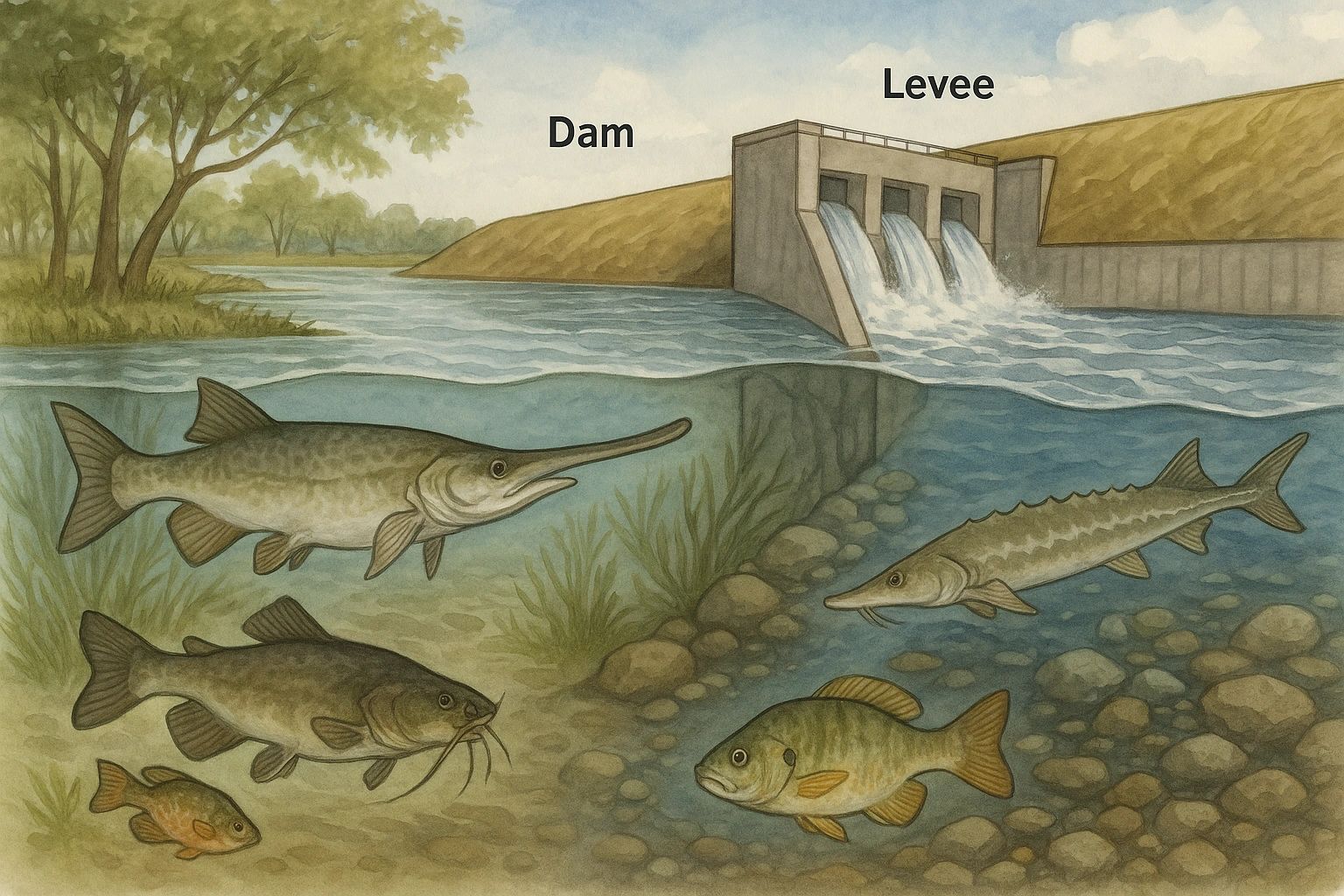
The Mississippi River is one of the most iconic rivers in the world. It flows more than 2,300 miles from Minnesota all the way down to the Gulf of Mexico, shaping landscapes, feeding agriculture, and supporting millions of people along the way. For centuries, this mighty river has also been home to an incredible variety of fish—from ancient paddlefish and sturgeon to catfish, bass, and sunfish.
But today, the river’s fish populations are facing a serious challenge. The dams and levees built to control flooding, generate electricity, and improve navigation are taking a heavy toll on aquatic life. These massive structures have changed how the river flows, how fish move, and how habitats form. And the damage doesn’t stop at the Mississippi itself—local bayous, the watery backroads of the South, are also suffering.
In this blog, we’ll explore how dams and levees affect fish in the Mississippi River system and its bayous, why it matters, and what scientists are doing to find solutions.
The Mississippi River and Its Bayous: A Natural Fish Paradise
Before humans built dams and levees, the Mississippi River was a natural powerhouse of biodiversity. Each spring, seasonal floods spread across wide floodplains and bayous, creating wetlands teeming with life. Fish used these flooded areas as nurseries, finding food and shelter among flooded trees and grasses. Migratory fish swam freely up and down the river, moving between spawning grounds, feeding areas, and winter refuges.
Bayous, those slow-moving, winding waterways found especially in Louisiana and Mississippi, acted like side streets connected to the main river. They provided calm waters for spawning, feeding, and hiding from predators. Species like catfish, gar, and sunfish thrived in these environments.
This dynamic system supported hundreds of fish species and countless other animals. It was nature’s way of balancing floods and life.
Enter the Dams and Levees
The story of dams and levees on the Mississippi goes back more than a century. After catastrophic floods, such as the Great Mississippi Flood of 1927, the U.S. Army Corps of Engineers began building extensive levee systems to contain the river. Dams and locks were also added along tributaries and main channels to regulate water levels and allow boats to pass through shallow areas.
These structures had important human benefits. Levees protect communities and farmland from devastating floods. Dams provide hydroelectric power, irrigation, and navigation routes for barges carrying grain, coal, and goods. But for fish and the ecosystems they depend on, the costs have been enormous.
Barrier to Migration
One of the most damaging impacts of dams is that they block fish migration. Many fish species in the Mississippi River basin need to move long distances to complete their life cycles. Paddlefish, for example, migrate upstream to spawn in fast-flowing gravel beds. Sturgeon, another ancient species, also need to travel to specific habitats to reproduce.
When a dam stands in the way, these migrations are cut short. Fish either cannot reach their spawning grounds or are forced into smaller areas with poor habitat. Over time, this leads to declining populations.
A 2019 study in Ecological Applications found that dams on large rivers in North America, including the Mississippi, have significantly reduced connectivity for migratory fish species. The result is genetic isolation, smaller populations, and even local extinctions (Poff & Schmidt, 2019).
Altered Flow and Habitat Loss
Levees and dams also change how the river flows. Instead of a natural rise and fall with the seasons, water levels are now regulated to meet human needs. This has two big consequences for fish:
- Loss of Floodplain Habitat Fish once relied on seasonal floods to reach fertile floodplains and bayous. These areas acted as breeding and feeding grounds. With levees confining the river, fish are cut off from these nurseries. Studies show that juvenile fish growth and survival rates drop when they lose access to floodplains (Bayley, 1995).
- Sediment and Nutrient Changes Dams trap sediment that would normally flow downstream. This reduces the formation of sandbars and islands, key habitats for fish and aquatic insects. It also disrupts the delivery of nutrients that fuel food webs in the river and coastal wetlands (Benke, 2001).
Temperature and Oxygen Problems
Dams also change water temperature and oxygen levels. Reservoirs created behind dams often become stratified—warm water on top, cold water below. When water is released from the bottom, it can be much colder and lower in oxygen than what fish downstream are used to.
For species that depend on specific temperature ranges for spawning or survival, this can be deadly. Cold, oxygen-poor water can stress fish, reduce reproduction, and even cause die-offs.
Impact on Local Bayous
Bayous may seem separate from the main Mississippi, but they are deeply connected. When the river is altered, bayous feel the effects. Levees prevent water from naturally flowing into and out of bayous, cutting off the seasonal flushes of nutrients and fresh water that keep them healthy.
Instead, many bayous have become stagnant, with reduced oxygen and poor water quality. Fish that once relied on these calm waters for breeding and shelter now find them uninhabitable.
For example, research in Louisiana bayous shows that reduced connectivity with the Mississippi has caused declines in fish diversity, with only hardy species like gar and catfish able to persist (Gosselink, 2003).
Native Fish at Risk
Several native fish are especially vulnerable to dams and levees in the Mississippi system:
- Paddlefish (Polyodon spathula): This ancient filter-feeding fish relies on long migrations to spawn. Populations have dropped sharply in dammed rivers.
- Sturgeon (Scaphirhynchus albus and others): Both shovelnose and pallid sturgeon have been heavily impacted by habitat loss and migration barriers. The pallid sturgeon is now endangered.
- Blue Sucker (Cycleptus elongatus): This species depends on rocky, fast-flowing habitats that are often drowned by reservoirs.
- Catfish (Ictaluridae family): While hardy, catfish also lose critical nursery habitats when floodplains are cut off.
Why This Matters
Fish are not just part of the river—they are central to the culture, economy, and ecology of the Mississippi and its bayous. Local communities have fished these waters for centuries, relying on catfish fries, crawfish boils, and commercial harvests for food and livelihood.
Healthy fish populations also support recreational fishing, a multibillion-dollar industry in states along the Mississippi. Beyond economics, fish are key players in ecosystems. They move nutrients, control insect populations, and provide food for birds, mammals, and people.
When dams and levees hurt fish, the entire web of life in the Mississippi River basin suffers.
Possible Solutions and Hope for the Future
The good news is that scientists, engineers, and communities are working on ways to reduce the harm of dams and levees while still protecting people. Some of these efforts include:
- Fish Passages and Ladders Special structures can help fish bypass dams during migration. While not perfect, they provide critical access to upstream habitats.
- Managed Flooding In some places, levees are opened during certain times to allow water—and fish—back into floodplains and bayous. This “reconnection” restores habitats without putting communities at risk.
- Dam Removal On smaller tributaries, some dams have been removed, restoring free-flowing rivers. Studies show that fish populations rebound quickly when barriers are taken out (Bednarek, 2001).
- Habitat Restoration Efforts to rebuild wetlands, plant floodplain forests, and reconnect side channels can bring back lost habitats and help fish thrive.
A Call to Action
The Mississippi River and its bayous are living systems that need balance. While dams and levees have brought benefits to people, we now know the costs to fish and ecosystems are high. By investing in smarter river management, we can protect both communities and the incredible biodiversity that makes the Mississippi so special.
The story of the river is still being written—and with science, creativity, and care, we can make sure fish continue to swim its waters for generations to come.
Bibliography
- Bayley, P. B. (1995). Understanding large river–floodplain ecosystems. BioScience, 45(3), 153–158. https://doi.org/10.2307/1312554
- Bednarek, A. T. (2001). Undamming rivers: A review of the ecological impacts of dam removal. Environmental Management, 27(6), 803–814. https://doi.org/10.1007/s002670010189
- Benke, A. C. (2001). Importance of flood regime to invertebrate habitat in floodplain rivers. Regulated Rivers: Research & Management, 17(4-5), 425–432. https://doi.org/10.1002/rrr.659
- Gosselink, J. G. (2003). Coastal Louisiana ecosystem assessment and restoration (CLEAR). Louisiana Department of Natural Resources.
- Poff, N. L., & Schmidt, J. C. (2019). How dams can go with the flow. Science, 365(6459), 478–479. https://doi.org/10.1126/science.aaw3532
Originally published at the live site .