
Maritime ·
How Do Sharks See? A Deep Dive Into Shark Vision
Sharks are some of the most fascinating creatures in the ocean. Known for their sharp teeth and powerful swimming abilities, these animals also have some pretty amazing senses. One sense that surprises many people is the...
By Rebecca "Madam Chronicler" Ryan
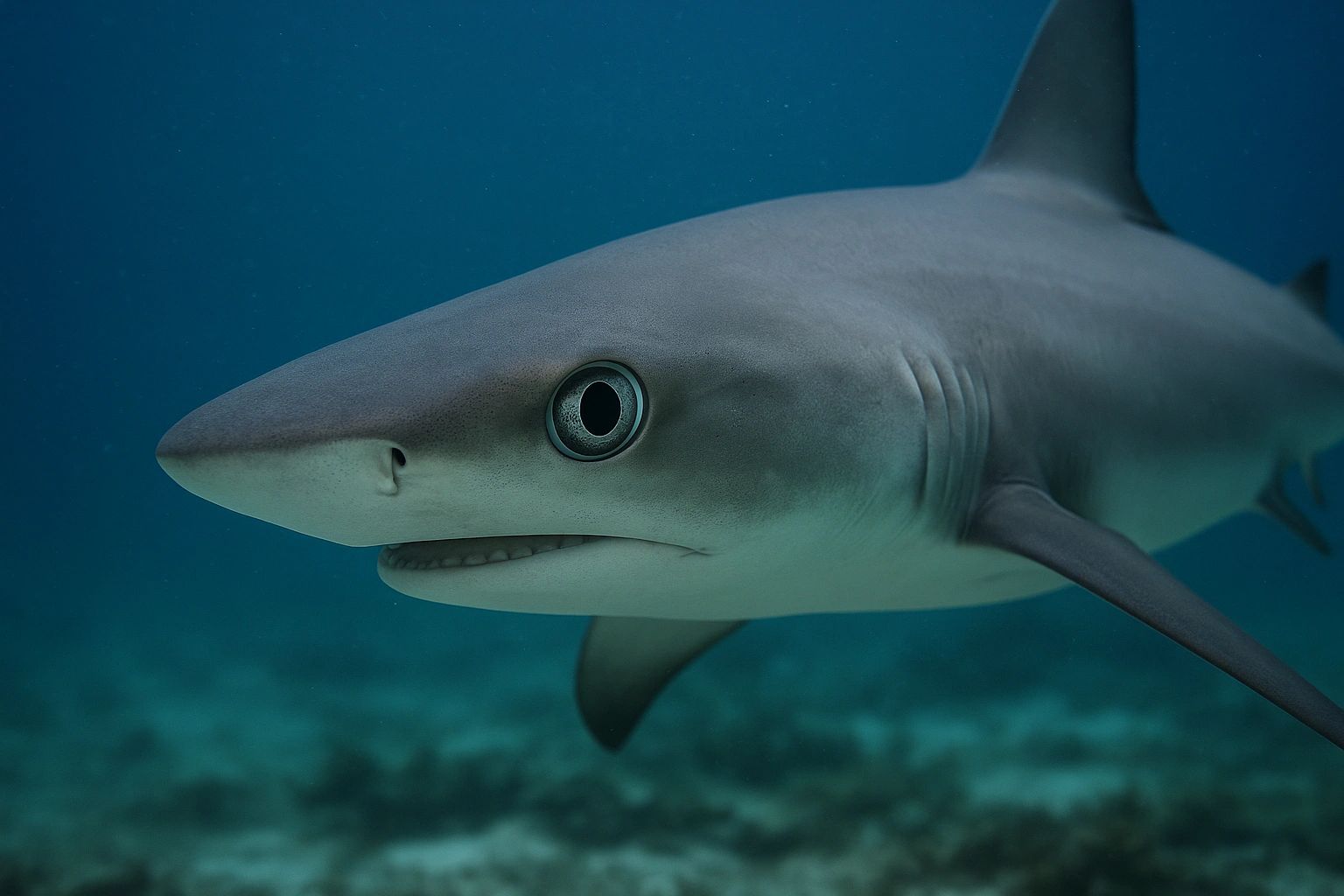
Sharks are some of the most fascinating creatures in the ocean. Known for their sharp teeth and powerful swimming abilities, these animals also have some pretty amazing senses. One sense that surprises many people is their eyesight. While sharks are often thought of as creatures that rely mostly on their sense of smell or their ability to detect vibrations, their vision is actually quite advanced. In this blog post, we’ll take a deep dive into how sharks see the world around them!
Sharks See the World Differently
Sharks live in a very different world than we do. The ocean is often dark, murky, and filled with tiny particles that make it hard to see. But sharks have evolved eyes that are perfectly adapted to this environment.
Many sharks are active hunters both during the day and at night. This means their eyes need to work well in a wide range of lighting conditions. Sharks’ eyes are specially designed to help them spot prey, avoid predators, and navigate through their watery world.
The Structure of Shark Eyes
Let’s start by looking at the structure of a shark’s eye. Believe it or not, sharks’ eyes are quite similar to human eyes in many ways. Both shark eyes and human eyes have:
- Corneas: The clear outer layer that helps focus light.
- Irises: The colored part of the eye that controls how much light enters.
- Lenses: These focus light onto the retina.
- Retinas: The part of the eye that senses light and sends signals to the brain.
However, there are some important differences that make shark eyes unique.
Tapetum Lucidum: The Secret to Night Vision
One of the most amazing features of shark eyes is something called the tapetum lucidum. This is a layer of special cells located behind the retina. These cells act like tiny mirrors, reflecting light back through the retina. This gives the retina a second chance to absorb the light, which greatly improves the shark’s ability to see in low light conditions.
This feature is why many sharks can hunt at night or in deep waters where there is very little light. In fact, the tapetum lucidum is the same reason why cats and dogs seem to have glowing eyes when light shines on them at night.
Large Eyes for Deep Sea Hunters
Some sharks live in the deepest parts of the ocean, where sunlight barely reaches. These deep-sea sharks often have very large eyes to help them gather as much light as possible.
For example, the cookiecutter shark (Isistius brasiliensis) has large, bulbous eyes that allow it to see in the deep sea’s darkness. The larger the eye, the more light it can collect, making it easier to spot prey or avoid predators in the dark.
How Well Can Sharks See?
Now that we know about the structure of shark eyes, let’s explore what sharks can actually see.
Light Sensitivity
Thanks to their tapetum lucidum and large pupils, many sharks are extremely sensitive to light. In fact, studies have shown that sharks can see in light levels ten times dimmer than what humans need to see clearly.
This ability helps them hunt in murky water, at night, or in deep sea environments. However, this also means their eyes can be overwhelmed by very bright lights, so they often prefer dim or shaded areas.
Color Vision: Can Sharks See in Color?
One of the biggest questions scientists have about shark vision is whether sharks can see in color. Humans have color vision thanks to special cells in our retinas called cones. Most sharks, however, have very few cones or none at all.
A study published in the journal Naturwissenschaften in 2011 found that many sharks are likely colorblind. In this study, researchers examined the eyes of 17 different shark species. They discovered that most of them had only one type of cone, which suggests they see the world in shades of gray.
That said, not all sharks have been studied for color vision. It’s possible that some species might see limited colors. Still, most evidence suggests sharks rely more on contrast—how light or dark something is—rather than color when detecting prey.
Motion Detection and Contrast
Sharks’ eyes are particularly good at spotting movement and differences in brightness. In the underwater world, animals often blend in with their surroundings. However, anything that moves quickly or reflects light in a certain way can catch a shark’s attention.
This is why many fish have shiny scales—while it helps them blend in with water reflections, it can also make them more noticeable to predators like sharks if they aren’t careful. Sharks use their excellent motion detection to track swift prey like fish and squid.
Eyes on the Side or Front?
Another interesting thing about sharks is where their eyes are located. In most shark species, the eyes are located on the sides of their heads. This gives them a wide field of vision, allowing them to see much of what’s around them.
However, there is a trade-off: sharks with eyes on the sides may have a small blind spot right in front of their snout and behind their head. But sharks have other senses, such as their sense of smell and special electroreceptors, that help them detect things they can’t see.
Some shark species, such as hammerhead sharks, have very unusual eye placements. Their eyes are positioned at the tips of their wide, hammer-shaped heads. This gives them nearly 360-degree vision and allows them to see above, below, and around them at the same time!
Sharks Adjust Their Vision
Sharks can also adjust their vision depending on their environment. Many sharks have pupils that can change size to control how much light enters their eyes. Some species can even partially close their eyes to protect them during an attack.
For example, great white sharks are known to roll their eyes back when biting prey. This protects their delicate eyes from injury during a struggle. Other sharks have a special eyelid-like structure called a nictitating membrane that covers the eye for protection while still allowing some vision.
Baby Sharks and Vision
Even baby sharks, called pups, are born with well-developed eyesight. Studies show that many shark pups are able to see and hunt shortly after birth. This is important because most shark species don’t take care of their young. Shark pups need to rely on their sharp senses to survive on their own from the start.
How Scientists Study Shark Eyesight
Learning how sharks see isn’t easy. Scientists use many methods to study shark vision, including:
- Examining the eyes under a microscope
- Testing how sharks respond to light and dark environments
- Using special cameras that mimic shark vision
- Analyzing the structure of the retina
One breakthrough study published in Biology Letters in 2016 used underwater cameras designed to match the visual system of sharks. The scientists discovered that sharks are especially good at spotting prey silhouettes against the lighter water above them.
Why Shark Vision Matters
Understanding how sharks see isn’t just fascinating—it’s also important for conservation and safety.
1. Reducing Shark Attacks
Knowing that sharks are sensitive to contrast and motion helps scientists design wetsuits and surfboards that are less likely to attract sharks. By reducing the chance of mistaken identity, fewer shark bites might occur.
2. Protecting Sharks
Some fishing methods accidentally catch sharks because of the bait’s movement or brightness. By learning what attracts sharks visually, fishermen can change their gear to avoid catching them.
3. Conserving Habitats
As humans continue to impact the ocean, we often change the light conditions underwater. Pollution and artificial lights can affect shark behavior. Protecting areas from light pollution can help sharks thrive.
Fun Facts About Shark Vision
- Some sharks can see almost all the way around themselves thanks to their wide-set eyes!
- Sharks’ eyes are about 10 times more sensitive to light than human eyes.
- Hammerhead sharks may have the widest field of vision of any shark.
- A shark’s tapetum lucidum makes its eyes shine when light hits them at night—just like cats!
- Most sharks see best in low-light conditions, making them excellent night hunters.
Conclusion
Sharks are more than just fearsome teeth and powerful swimmers. They are also creatures with incredible eyesight that helps them survive in the challenging world of the ocean. From their night vision abilities to their sensitivity to movement, sharks have evolved eyes that allow them to be expert hunters and navigators of the sea.
Although most sharks likely see the world in shades of gray, their keen ability to detect contrast and motion makes them highly skilled at spotting prey. Their wide fields of view, light-sensitive retinas, and protective eye structures give them an edge in their underwater environment.
Understanding shark vision not only satisfies our curiosity but also helps us coexist with these important animals by improving safety and conservation efforts. The next time you think about sharks, remember—there’s a whole lot more to their eyes than meets the eye!
Bibliography
Hart, N. S., Lisney, T. J., & Collin, S. P. (2006). Visual communication in elasmobranchs. In Communication in Fishes (Vol. 2, pp. 337–392). Enfield, NH: Science Publishers.
Lisney, T. J., Theiss, S. M., Collin, S. P., & Hart, N. S. (2012). Vision in elasmobranchs and their relatives: 21st-century developments. Journal of Fish Biology, 80(5), 2024–2054. https://doi.org/10.1111/j.1095-8649.2012.03253.x
Hart, N. S., & Collin, S. P. (2015). Shark senses and shark repellents. In C. M. O. C. Meyer & D. L. Shiffman (Eds.), Sharks in the Shallows: Attacks on Humans (pp. 37–59). Johns Hopkins University Press.
Sivak, J. G. (1980). Optical properties of the shark eye. Journal of Experimental Biology, 89(1), 313–325.
McComb, D. M., Tricas, T. C., & Kajiura, S. M. (2009). Enhanced visual fields in hammerhead sharks. Journal of Experimental Biology, 212(24), 4010–4018. https://doi.org/10.1242/jeb.034009
Westhoff, G., Thies, I., & Bleckmann, H. (2016). Visual prey detection in clear and turbid water by the bull shark, Carcharhinus leucas. Biology Letters, 12(9), 20160315. https://doi.org/10.1098/rsbl.2016.0315
Gruber, S. H., & Cohen, J. L. (1985). Visual system of the juvenile lemon shark, Negaprion brevirostris: Behavioral field tests of visual acuity. Journal of Experimental Biology, 119(1), 41–55.
Originally published at the live site .