
Maritime ·
How Smart Are Sharks? Uncovering the Cognitive Power of Ocean Pre
When you picture a shark, what comes to mind? A mindless eating machine? A solitary predator gliding through the deep? Hollywood blockbusters and sensational headlines have painted sharks as instinct-driven creatures who...
By Rebecca "Madam Chronicler" Ryan
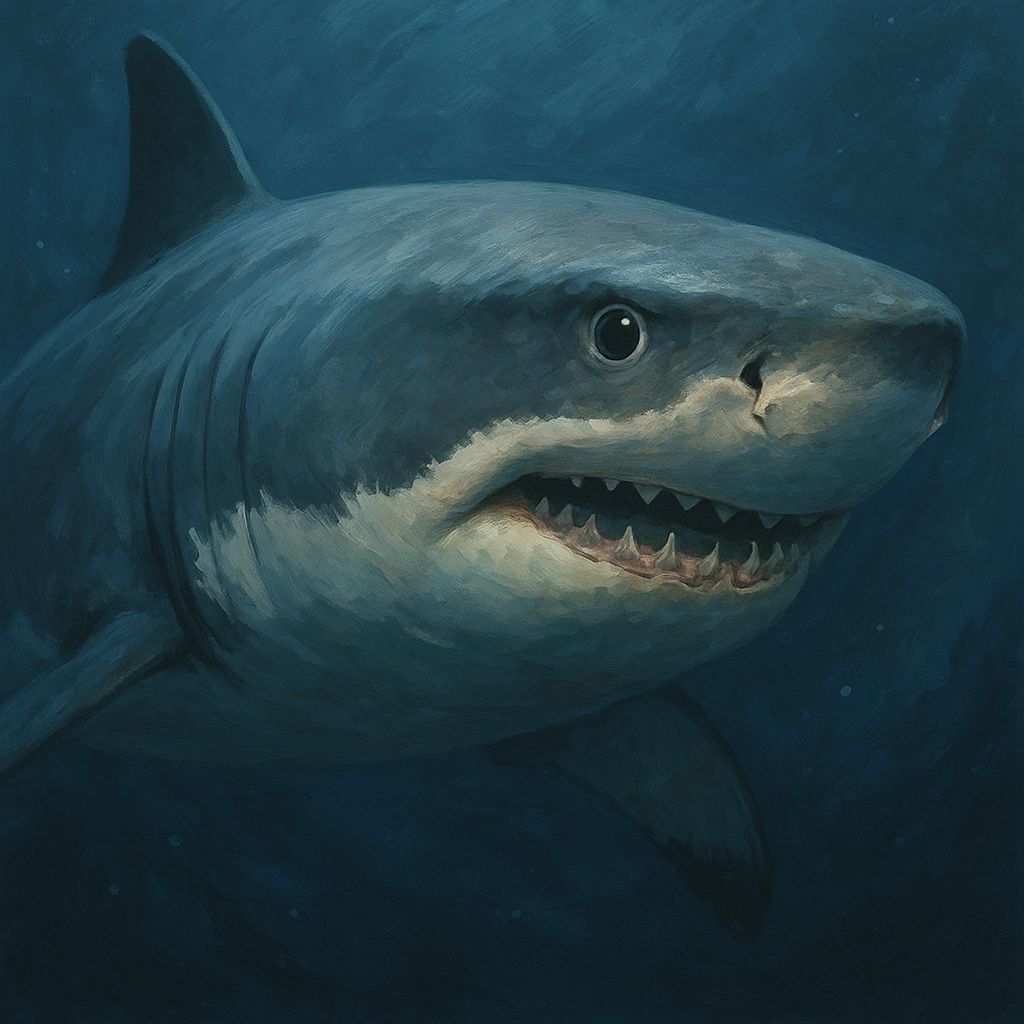
When you picture a shark, what comes to mind? A mindless eating machine? A solitary predator gliding through the deep? Hollywood blockbusters and sensational headlines have painted sharks as instinct-driven creatures whose only skill is to hunt and devour. But modern science tells a very different story.
In reality, sharks are intelligent, perceptive, and adaptable. Their cognitive abilities rival those of many other vertebrates, and researchers are only beginning to understand the depths of shark intelligence. From problem-solving and memory to social learning and navigation, sharks demonstrate remarkable capabilities that challenge outdated myths.
So, just how smart are sharks? Let’s take a deep dive into the science.
The Evolutionary Case for Shark Intelligence
Sharks have been swimming Earth’s oceans for over 400 million years. That makes them older than dinosaurs, mammals, or birds. Surviving for so long required more than just sharp teeth—it demanded adaptability and a suite of finely tuned cognitive skills.
Sharks belong to the class Chondrichthyes, which includes rays and skates. These animals have relatively large brains compared to their body size. In fact, some shark species have brain-to-body ratios that match or exceed those of many mammals and birds (Northcutt, 1977).
Brain development in sharks is especially prominent in areas associated with sensory processing, learning, and motor coordination. For example:
- The telencephalon (linked to learning and memory) is well developed in many species.
- The cerebellum (involved in balance and motor control) is highly complex.
- The olfactory bulbs are massive, allowing for powerful scent detection.
Together, these traits point toward a brain capable of more than just instinctual behavior.
Learning and Memory in Sharks
One of the hallmarks of intelligence is the ability to learn from experience. In controlled laboratory settings, multiple shark species have demonstrated impressive learning and memory capabilities.
Classical Conditioning
In the 1960s, Clark E. Roggenkamp and colleagues trained lemon sharks (Negaprion brevirostris) to associate a light with food—a classic Pavlovian conditioning experiment (Gruber & Myrberg, 1977). The sharks learned the task quickly and retained the information for up to 50 weeks, suggesting long-term memory.
Discrimination and Choice
In another study, Port Jackson sharks were taught to distinguish between visual symbols to earn food rewards (Guttridge et al., 2013). The sharks could tell apart different shapes, remember them, and even reverse their choice when the reward conditions changed.
This kind of reversal learning—shifting behavior when circumstances change—is a sign of cognitive flexibility. It’s a trait shared by intelligent animals like primates, dolphins, and parrots.
Problem Solving and Innovation
Problem solving in animals involves more than trial and error. It often requires planning, persistence, and innovation. Sharks have shown that they are up to the task.
In one study, bamboo sharks were presented with a puzzle box that required them to slide a door to access food (Fuss et al., 2014). Not only did they solve the problem, but they did it faster over successive trials, indicating both learning and retention.
Another experiment with grey bamboo sharks revealed that individuals could generalize learned rules to solve novel problems. This type of conceptual learning is a sophisticated form of intelligence.
What’s more, sharks show evidence of individual differences—some sharks are more curious or better at solving problems than others (Byrnes & Brown, 2016). These personality traits influence how quickly they learn, just as in humans.
Social Behavior and Learning
Although sharks are often seen as solitary animals, many species exhibit social structures, especially during mating, feeding, or migration.
For example, juvenile lemon sharks form social groups in mangrove nurseries. These groups show individual preferences and may promote safety, learning, or even social bonding (Guttridge et al., 2009).
Sharks can also learn from each other. In a study of social learning, young lemon sharks watched trained individuals perform a task. Those with social exposure learned faster than those trained in isolation (Guttridge et al., 2013).
This is evidence of social learning, a powerful cognitive ability that underlies culture in species like primates, elephants, and cetaceans.
Navigation and Spatial Awareness
Sharks are master navigators. Great white sharks have been known to travel thousands of miles across open ocean, returning to the same feeding or breeding grounds year after year.
They use a combination of:
- Geomagnetic cues: Sharks may detect Earth’s magnetic fields like a compass.
- Celestial cues: Night migrations may be guided by stars or moonlight.
- Olfactory landmarks: Scent trails can guide them back to known areas.
In one case, a female great white shark swam from South Africa to Australia and back—a round-trip of over 12,000 miles (Bonfil et al., 2005). That kind of migration demands exceptional spatial memory and orientation.
Even reef-dwelling species like blacktip reef sharks show home range awareness, navigating complex environments with apparent ease.
Emotional Processing and Pain Perception
A controversial but important aspect of animal intelligence is emotion. While it’s difficult to measure feelings in animals, scientists now accept that fish—including sharks—are capable of experiencing stress, pain, and perhaps even rudimentary emotions.
A study on rainbow trout demonstrated that they exhibit behavioral and physiological responses to noxious stimuli similar to pain responses in mammals (Sneddon et al., 2003). While sharks have different anatomies, they also possess nociceptors—sensory neurons that detect harmful stimuli.
Though sharks likely don’t feel pain in the same way humans do, their avoidance behaviors, stress responses, and adaptability suggest some level of affective processing.
Comparing Shark Intelligence to Other Animals
Where do sharks stand in the animal kingdom in terms of smarts?
While they may not match the symbolic reasoning of apes or the vocal complexity of dolphins, sharks hold their own in terms of adaptability, sensory integration, memory, and problem-solving.
Their cognitive toolkit has evolved for survival in a dynamic, three-dimensional, and often dangerous ocean environment. Sharks don’t need to recognize themselves in a mirror to be smart—they need to learn, adapt, and make decisions in real time.
Researchers now group sharks alongside other “smart fish” like cichlids, wrasses, and rays, all of which show diverse and complex behaviors.
Intelligence by Species: Not All Sharks Are the Same
Just as not all birds are equally smart, shark intelligence varies by species.
Lemon Sharks
Extensively studied in the Bahamas, lemon sharks are social, adaptable, and fast learners. Their frequent use in lab and field research has made them poster children for shark cognition.
Port Jackson Sharks
These bottom-dwelling sharks from Australia are favorites for learning and memory experiments. They’ve demonstrated reversal learning, maze solving, and spatial memory.
Great Whites and Makos
These large pelagic predators have massive brains and excellent spatial awareness. Though hard to study in captivity, tagging studies show signs of complex migration and environmental learning.
Hammerheads
Known for their unique head shapes, hammerheads have larger relative brain sizes than most other sharks, particularly in regions responsible for sensory processing and coordination (Yopak et al., 2007).
Myths vs. Science: Busting Shark Stereotypes
Let’s debunk some persistent myths:
❌ “Sharks are mindless killing machines.” ✅ Sharks are selective, cautious, and capable of learning from experience.
❌ “Sharks just swim and eat.” ✅ Many species display social behavior, navigation skills, and problem-solving.
❌ “Fish don’t feel pain or have intelligence.” ✅ Scientific studies strongly support that many fish, including sharks, have complex nervous systems and behavior patterns consistent with learning and adaptation.
Why Shark Intelligence Matters for Conservation
Understanding shark intelligence isn’t just an academic exercise—it has real-world applications.
When we recognize sharks as sentient, learning animals:
- We make better ethical choices about their treatment.
- We can design enrichment strategies for sharks in aquariums.
- We develop more effective conservation strategies that account for shark movement, behavior, and habitat use.
Knowing how sharks learn and navigate can help us design better marine protected areas, reduce harmful interactions with fisheries, and improve shark-human coexistence.
Public perception also matters. When people see sharks as smart and sophisticated—not just scary—they are more likely to support conservation efforts.
Conclusion: The Ocean’s Brainy Predators
So, how smart are sharks?
They are perceptive learners, clever problem-solvers, master navigators, and occasionally even social collaborators. Their intelligence may not mirror human cognition, but it is perfectly suited to the watery world they rule.
As science continues to illuminate the minds of sharks, we find ourselves face-to-face with creatures that are not just survivors—but thinkers. Understanding shark intelligence helps us respect them not as threats, but as vital and remarkable parts of our planet’s blue heart.
The next time you spot a shark gliding through the water, don’t just think “teeth.” Think: adaptation, perception, cognition, survival.
In short: think “smart.”
References
Bonfil, R., Meyer, M., Scholl, M. C., Johnson, R., O’Brien, S., Oosthuizen, H., … & Paterson, M. (2005). Transoceanic migration, spatial dynamics, and population linkages of white sharks. Science, 310(5745), 100–103. https://doi.org/10.1126/science.1114898
Byrnes, E. E., & Brown, C. (2016). Individual personality differences in Port Jackson sharks. Journal of Fish Biology, 89(6), 2417–2432. https://doi.org/10.1111/jfb.13124
Fuss, T., Bleckmann, H., & Schluessel, V. (2014). Visual discrimination learning of orientation and shape in bamboo sharks. Animal Cognition, 17(1), 139–146. https://doi.org/10.1007/s10071-013-0645-2
Gruber, S. H., & Myrberg, A. A. (1977). Approaches to the study of the behavior of sharks. American Zoologist, 17(2), 471–486.
Guttridge, T. L., van Dijk, S., Stamhuis, E. J., Krause, J., & Gruber, S. H. (2013). Social learning in juvenile lemon sharks. Animal Cognition, 16(1), 55–64. https://doi.org/10.1007/s10071-012-0550-6
Northcutt, R. G. (1977). Elasmobranch central nervous system organization and its evolutionary significance. American Zoologist, 17(2), 379–410.
Sneddon, L. U., Braithwaite, V. A., & Gentle, M. J. (2003). Do fish have nociceptors? Evidence for the evolution of a vertebrate sensory system. Proceedings of the Royal Society B: Biological Sciences, 270(1520), 1115–1121. https://doi.org/10.1098/rspb.2003.2349
Yopak, K. E., Lisney, T. J., Collin, S. P., & Montgomery, J. C. (2007). Variation in brain organization and cerebellar foliation in chondrichthyans: A phylogenetic perspective. Brain, Behavior and Evolution, 69(2), 157–167. https://doi.org/10.1159/000097826
Originally published at the live site .