
Maritime ·
How to Spot Baitfish (and Stay Safe from Sharks)
Whether you're paddling through shallow estuaries, casting lines from a pier, snorkeling near a coral reef, or simply enjoying a sunny day near the beach, you've probably noticed shimmering clouds of small fish darting a...
By Rebecca "Madam Chronicler" Ryan
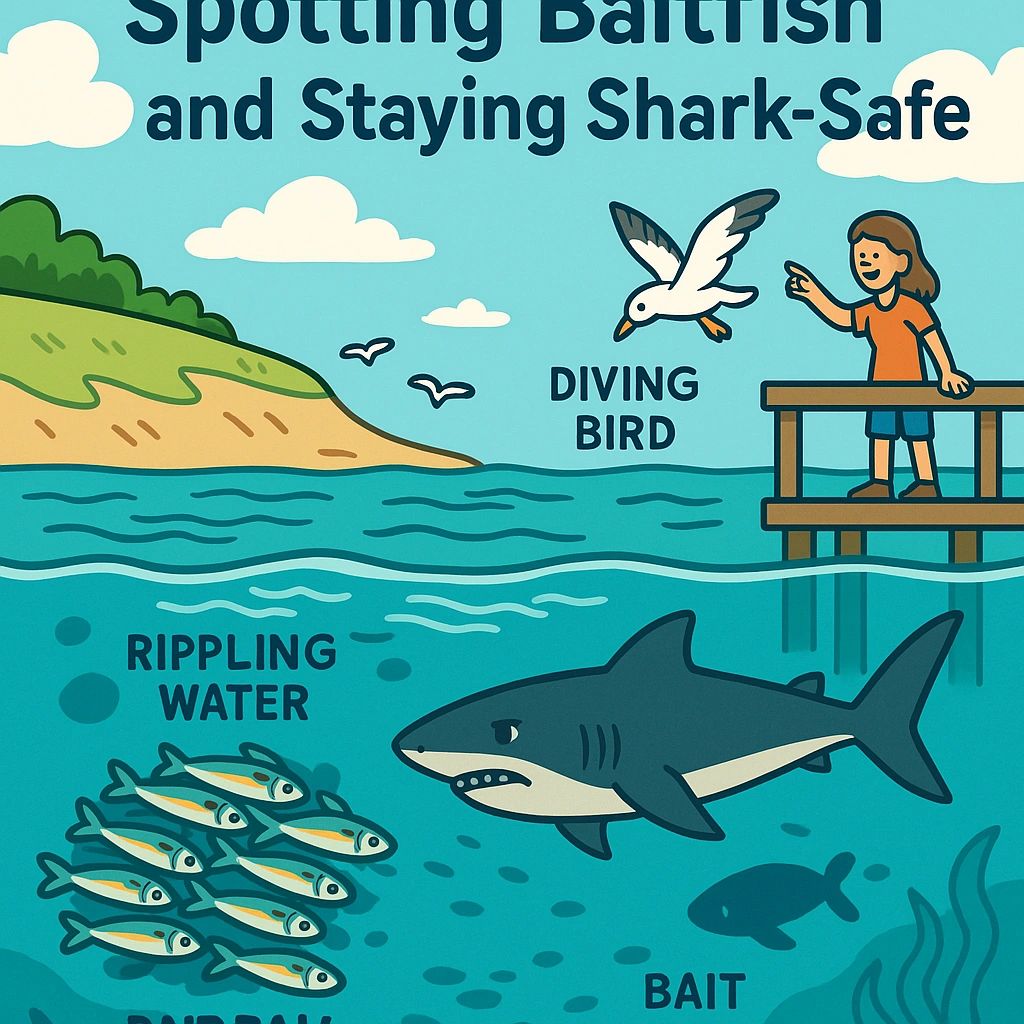
Whether you’re paddling through shallow estuaries, casting lines from a pier, snorkeling near a coral reef, or simply enjoying a sunny day near the beach, you’ve probably noticed shimmering clouds of small fish darting around just beneath the surface. These are baitfish, the unsung heroes of the marine food chain. And guess what? When you learn to spot them, you’re not only discovering a sign of vibrant marine life — you’re also learning how to avoid running into a big predator: the shark.
This guide will help you:
- Learn what baitfish are and why they matter
- Recognize their behavior patterns and appearances
- Understand the connection between baitfish and sharks
- Stay safe while observing marine life at the edge of land and sea
Let’s dive in!
🌊 What Are Baitfish, Anyway?
Baitfish are small, schooling fish that are the primary food source for many larger fish, seabirds, marine mammals — and yes, sharks. Think of them as the popcorn of the ocean. They’re nutritious, plentiful, and everyone’s after them.
Common Types of Baitfish Include:
- Menhaden
- Anchovies
- Sardines
- Herring
- Mullet
- Silversides
- Pilchards
They tend to school together for protection and are often seen in massive, glittering swarms that reflect sunlight — a phenomenon sometimes called a “bait ball.”
🐟 How to Spot Baitfish
If you want to get good at spotting baitfish, you have to think like a predator. Here’s what to look for:
1. Rippling Water or “Nervous Water”
Baitfish often swim in tight formations, creating subtle surface disturbances. If you see water that looks like it’s lightly rippling or shimmering even on a calm day — as if it’s “nervous” — that’s a good sign.
2. Surface Flash
On sunny days, you might spot flashes of silver or white just under the water. That’s sunlight bouncing off the shiny scales of baitfish.
3. Jumping Fish
If baitfish are trying to escape predators, they might leap from the water in tiny sprays. This is often accompanied by splashing sounds or a quick fluttering motion across the surface.
4. Bird Activity
Seabirds, especially gulls, pelicans, and terns, are expert baitfish hunters. If you see a flock dive-bombing a certain area of water, they’re likely feeding on baitfish — which means something larger might be hunting underneath.
5. Bait Balls
When threatened, baitfish will form a tight, spherical mass for protection. This ball might churn, roll, or pulse in the water, and it’s a major attractant for predators like tuna, dolphins, and sharks.
🦈 Baitfish = Shark Snacks
Here’s the thing: if you see baitfish, you might also be near a shark.
Why?
Sharks follow the food. When large schools of baitfish gather, sharks often aren’t far behind. In fact, some species — like blacktip sharks, spinner sharks, and bull sharks — love to rush through bait balls to snag easy meals.
🧠 How Sharks Hunt Baitfish
Sharks use a mix of senses to hunt baitfish:
- Sight: Bait balls are shiny and easy to see.
- Smell: Sharks can detect the scent of injured baitfish from hundreds of yards away.
- Vibration: Their lateral lines pick up on the frantic movements of panicked fish.
- Electroreception: They sense tiny electric fields given off by muscle movement.
Sometimes, when baitfish are really panicked, they create a “feeding frenzy” situation where multiple predators (including sharks, dolphins, and seabirds) all attack at once. It’s wild — and it’s best viewed from a safe distance.
🚩 Red Flags: Signs That a Shark Might Be Nearby
So, you’re out in the water and you spot some baitfish. Should you panic? Nope. But keep your eyes peeled for these signs that a shark may be close:
- Sudden silence from birds or dolphins (they might back off if a shark enters the area)
- Exploding bait balls, with fish scattering in every direction
- A sharp drop in baitfish presence — they may have darted away to escape a predator
- Vertical jumping or spinning fish, which might be blacktip or spinner sharks launching out of the water
- Dark shadows beneath the water that don’t move like regular fish
✅ Safe Ways to Watch Baitfish (and Avoid Sharks)
If you’re fascinated by baitfish — and who isn’t? — there are smart ways to observe them without getting too close to danger.
1. Watch from the Shore or a Pier
You’ll often see bait balls close to beaches, especially in the early morning or late afternoon. This is also a great time for bird watching!
2. Use Polarized Sunglasses
Polarized lenses cut through glare and help you spot schools of fish under the surface.
3. Avoid Murky Water
Sharks don’t see well in cloudy water either — they might mistake a swimmer for prey near baitfish. Stick to clear water.
4. Don’t Swim in the Middle of Baitfish
It might seem cool to snorkel through a giant school, but if a shark decides to strike, you’re smack in the middle of the buffet. Not ideal.
5. Skip Dawn and Dusk Swims
These are peak feeding times for sharks — and baitfish. Enough said.
🧭 Where You’ll Commonly See Baitfish (and Their Followers)
Baitfish love structure and shallow, nutrient-rich waters.
Hotspots Include:
- Inlets and river mouths
- Mangroves and estuaries
- Seagrass beds
- Reefs and jetty systems
- Shore breaks and sandbars
These areas are also hotspots for marine predators. So while you’re out fishing or exploring, take a moment to observe the whole scene — the birds, the movement of the water, and what’s happening beneath the surface.
📚 Why Baitfish Matter to the Whole Ocean
They’re not just shark snacks. Baitfish are keystone species, meaning they’re essential to the ecosystem. Without them:
- Seabirds would go hungry
- Larger fish like tuna and tarpon would disappear
- Dolphins and whales would struggle to find food
- Coral reefs and seagrass ecosystems would suffer
That’s why it’s so important to observe, respect, and protect baitfish populations.
🌎 Conservation Tips: Help Protect Baitfish and Their Habitat
Many baitfish species are overfished to make fishmeal, pet food, or even fertilizer. But these little fish are worth far more to the ocean than just what they provide humans.
Here’s how you can help:
- Support sustainable seafood and avoid products made from wild baitfish
- Report fish kills or baitfish strandings to local wildlife authorities
- Respect no-fishing zones and marine sanctuaries
- Avoid dumping waste or fuel into coastal areas
- Educate others about the importance of these little fish
🧭 Bonus: Shark-Safe Practices for Ocean Lovers
Even if you’re not afraid of sharks (and you don’t have to be!), it’s always good to know how to lower your risk of an unwanted encounter.
Shark Safety Tips:
- Avoid splashing excessively in open water — it attracts attention
- Stay in groups — sharks are more likely to target isolated swimmers
- Keep pets out of the water — their movements mimic distressed prey
- Don’t wear shiny jewelry — it looks like fish scales to a shark
- Never swim near people fishing, cleaning fish, or where fish guts are dumped
🐬 Want to See Baitfish Without Worry?
Try visiting a local aquarium, marine research station, or guided wildlife tour. These places often offer safe ways to observe baitfish and learn about the larger food web. Plus, they’re great for kids and curious grown-ups alike.
🌟 Final Thoughts: Small Fish, Big Clues
Baitfish are more than background swimmers — they’re signs of a healthy ecosystem and the key to unlocking the hidden drama of the ocean. By learning to spot them and understanding what they signal, you’ll become more aware of your surroundings, more in tune with the marine world, and better equipped to stay safe in sharky waters.
So next time you head out to the edge of land and sea, keep your eyes open. The little flashes in the waves just might tell you a big story.
📚 Bibliography
- Block, B. A., & Ferraro, E. (2015). The Biology of Sharks and Rays. Monterey Bay Aquarium Research Institute.
- Compagno, L. J. V. (2001). Sharks of the World. FAO Species Catalogue for Fishery Purposes.
- Helfman, G., Collette, B., Facey, D., & Bowen, B. (2009). The Diversity of Fishes: Biology, Evolution, and Ecology. Wiley-Blackwell.
- NOAA Fisheries. (2023). Baitfish Ecology and Management. Retrieved from https://www.fisheries.noaa.gov
- Safina, C. (2010). Voyage of the Turtle: In Pursuit of the Earth’s Last Dinosaur. Holt Paperbacks.
- Smithsonian Ocean. (2024). Shark Feeding Behavior. Retrieved from https://ocean.si.edu
Originally published at the live site .