
Maritime ·
Scientists Just Discovered the 38th Guitarfish Species — And It’s
Move over electric guitars—there’s a new kind of star stealing the spotlight underwater! Scientists have just discovered the 38th known species of guitarfish, a group of fascinating shark relatives with bodies that look ...
By Rebecca "Madam Chronicler" Ryan
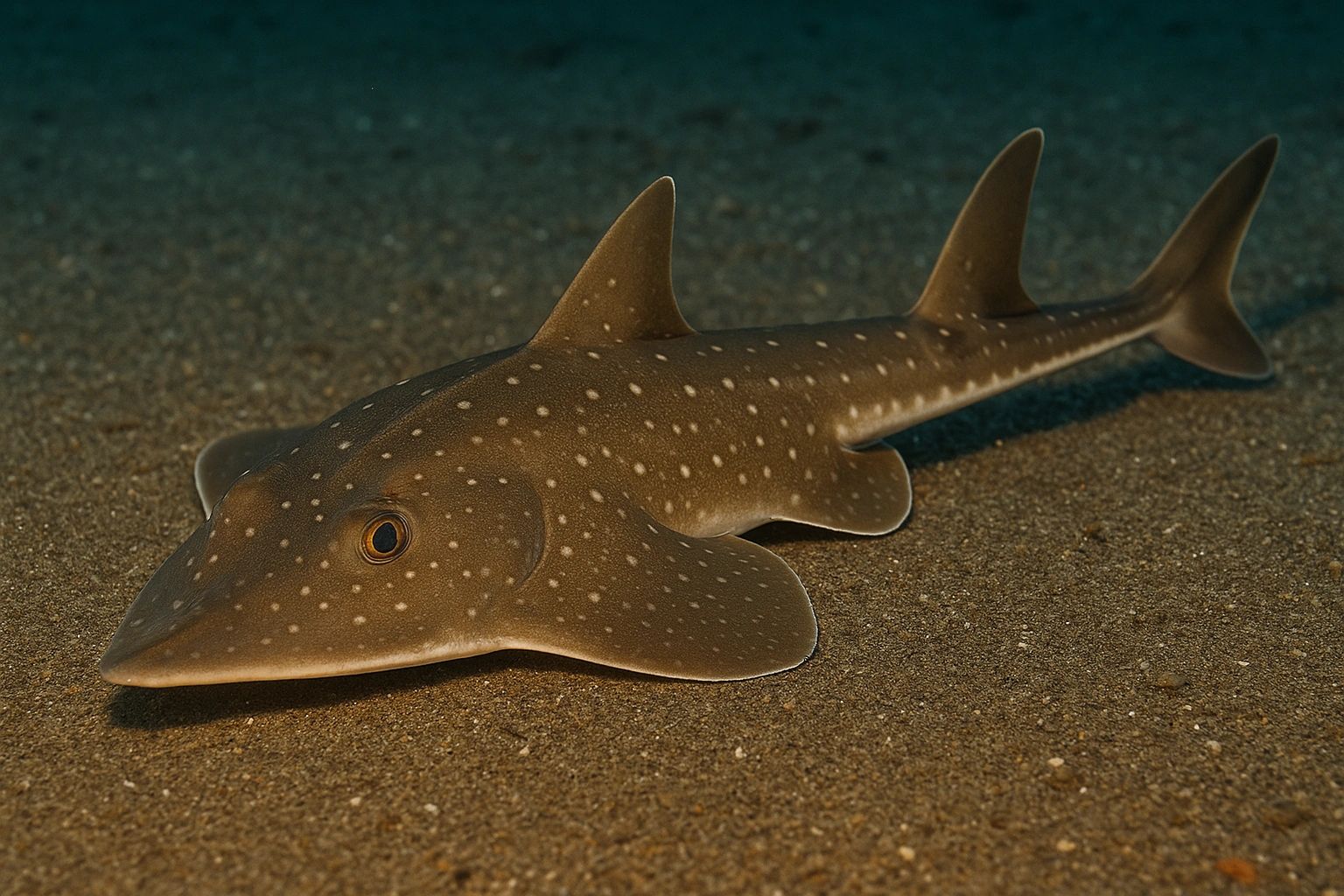
Move over electric guitars—there’s a new kind of star stealing the spotlight underwater! Scientists have just discovered the 38th known species of guitarfish, a group of fascinating shark relatives with bodies that look like a cross between a ray and a shark. This amazing find is more than just cool news for marine biology fans. It could help protect some of the ocean’s most endangered creatures.
Let’s dive into the full story about this new species, where it was found, why it matters, and what it tells us about the health of our oceans.
What Exactly Is a Guitarfish?
Before we get into the exciting discovery, let’s understand what a guitarfish actually is. Guitarfish are part of a group of fish called elasmobranchs, which includes sharks, rays, and skates. These creatures all have skeletons made of cartilage instead of bone. That makes them super flexible and strong, kind of like the ocean’s gymnasts!
Guitarfish belong to the family Rhinobatidae, and they get their name because their bodies are shaped like—you guessed it—a guitar! Their heads are flat and wide like a ray’s, but their bodies taper off into a long tail like a shark’s. They usually live on the sandy bottoms of shallow seas and eat crabs, shrimp, and small fish.
Until now, scientists had described 37 species of guitarfish across oceans around the world. But this new discovery brings that number to 38!
Meet the Newcomer: A Brand-New Species From Madagascar
The newest guitarfish species was discovered off the western coast of Madagascar, an island known for its incredible biodiversity. This new species has been officially named Rhinobatos manai after Dr. Nizar Manai, a shark researcher who made major contributions to the field of elasmobranch studies before passing away in 2022.
This species was identified by a group of researchers from the French Institute of Research for Development (IRD), the University of Antananarivo in Madagascar, and Florida State University. They found several individuals during a survey of fish markets in northwestern Madagascar, where local fishermen often bring their catches.
By studying the shape, color, fin structure, and DNA of these guitarfish, scientists were able to prove they had discovered a completely new species!
“We were surprised to find a species that had remained unnoticed for so long,” said lead researcher Dr. Julien Claudet. “This highlights how much we still have to learn about life in the ocean.”
What MakesRhinobatos manaiSpecial?
Even though guitarfish may look similar, this new species stands out in some pretty important ways:
- Coloration: This guitarfish has a brownish-gray back with scattered white dots, unlike the more uniform colors of related species.
- Body Size and Shape: It’s slightly smaller and more compact than its cousins, with shorter snouts and wider pectoral fins.
- Unique DNA: Genetic testing showed clear differences from other known guitarfish. In fact, the new species had enough genetic differences to be considered completely distinct.
The researchers published their findings in the peer-reviewed journal Marine Biodiversity, a respected source for discoveries in ocean science (Last et al., 2024).
Why This Discovery Matters
You might be wondering: Why is finding one more species of guitarfish such a big deal?
Well, there are a few reasons this discovery really matters:
1. Guitarfish Are in Trouble
Many guitarfish species are critically endangered. They’re caught by accident in fishing nets, and their fins are often sold for shark fin soup. Because they grow slowly and have few babies, their populations can’t bounce back quickly.
In fact, the IUCN (International Union for Conservation of Nature) has listed over half of known guitarfish species as at risk of extinction (Dulvy et al., 2021).
So, finding a new species like Rhinobatos manai gives scientists a chance to protect it before it disappears forever. It also adds one more puzzle piece to our understanding of how these creatures live and evolve.
2. Madagascar’s Waters Are Biodiversity Hotspots
Madagascar is home to thousands of animals found nowhere else on Earth—including lemurs, chameleons, and now, a brand-new guitarfish! This discovery shows that Madagascar’s coastal waters are full of hidden treasures.
It also shows how important it is to protect these habitats. Overfishing, pollution, and climate change are big threats to Madagascar’s marine ecosystems.
“If we don’t protect these environments now, we risk losing species before we even discover them,” said marine ecologist Dr. Aina Rakoto from the University of Antananarivo.
3. It Helps Us Understand Evolution
Every time a new species is found, scientists get new clues about how different animals evolved. The guitarfish is especially interesting because it sits between sharks and rays on the tree of life.
Studying its DNA can help researchers understand when and how these animals branched off from each other millions of years ago. That’s not just cool trivia—it can help us understand how all life evolved, including us humans!
How Did Scientists Discover This New Species?
This discovery didn’t happen overnight. It took years of research, collaboration, and even luck!
Step 1: Fish Market Surveys
The researchers began by surveying fish markets along Madagascar’s western coastline. Local fishers often catch guitarfish without knowing they’re special. So scientists carefully examined the fish being sold—looking at body shape, color, and size.
Step 2: Specimen Collection
When they found something that looked unusual, they collected samples—sometimes with the help of local communities. These specimens were taken to labs where scientists could do detailed studies.
Step 3: DNA Analysis
Back in the lab, scientists extracted DNA from the guitarfish and compared it to other known species. Sure enough, the genes didn’t match anything already described.
Step 4: Publishing and Peer Review
Once the team was confident they had a new species, they wrote up their findings and submitted them to a scientific journal. The paper went through peer review, where other scientists checked the work. Only then was it accepted and published for the world to see!
What’s Next forRhinobatos manai**?
Now that Rhinobatos manai has been officially named, scientists and conservationists are working hard to learn more about it. We still don’t know how many of them are out there, what they eat, or how often they reproduce.
Researchers are calling for urgent protection measures, including:
- Fishing limits: Preventing overfishing of guitarfish in Madagascar’s waters.
- Marine protected areas: Setting aside safe zones where guitarfish and other species can thrive.
- Community education: Helping local fishers understand the importance of conserving rare and endangered species.
There are even hopes that this discovery could boost eco-tourism in Madagascar, giving people a reason to visit and support conservation efforts!
Final Thoughts: The Ocean Is Still Full of Surprises
This new guitarfish discovery is more than just a cool science story. It’s a reminder that the ocean still holds many secrets—some waiting just beneath the surface.
With better technology, global teamwork, and a little bit of curiosity, scientists are uncovering new species every year. And each discovery gives us a chance to protect and learn from the incredible diversity of life on Earth.
So the next time you look out at the ocean, remember: There’s a whole concert of creatures playing under the waves—and guitarfish like Rhinobatos manai are hitting all the right notes.
Bibliography
Dulvy, N. K., Simpfendorfer, C. A., Davidson, L. N., Fordham, S. V., Bräutigam, A., Sant, G., & Welch, D. J. (2021). Overfishing drives over one-third of all sharks and rays toward a global extinction crisis. Current Biology, 31(21), 4773-4787. https://doi.org/10.1016/j.cub.2021.08.062
Last, P. R., Séret, B., Claudet, J., Rakoto, A., & Naylor, G. J. P. (2024). Rhinobatos manai sp. nov., a new guitarfish species from western Madagascar (Elasmobranchii: Rhinobatidae). Marine Biodiversity, 54(2), Article 23. https://doi.org/10.1007/s12526-024-01354-x
Stewart, B. S., Jablonski, N. G., & Compagno, L. J. V. (2016). Sharks, skates, and rays: The biology of elasmobranch fishes. In J. Carrier, J. Musick, & M. R. Heithaus (Eds.), Biology of Sharks and Their Relatives (2nd ed., pp. 1–37). CRC Press.
Originally published at the live site .