
Maritime ·
Sharks in Autumn: How Cooler Waters Affect Their Behavior
When you think of sharks, you probably imagine them gliding through warm tropical waters or splashing through the summer surf. But did you know that sharks don’t just disappear when summer ends? In fact, autumn is a fasc...
By Rebecca "Madam Chronicler" Ryan
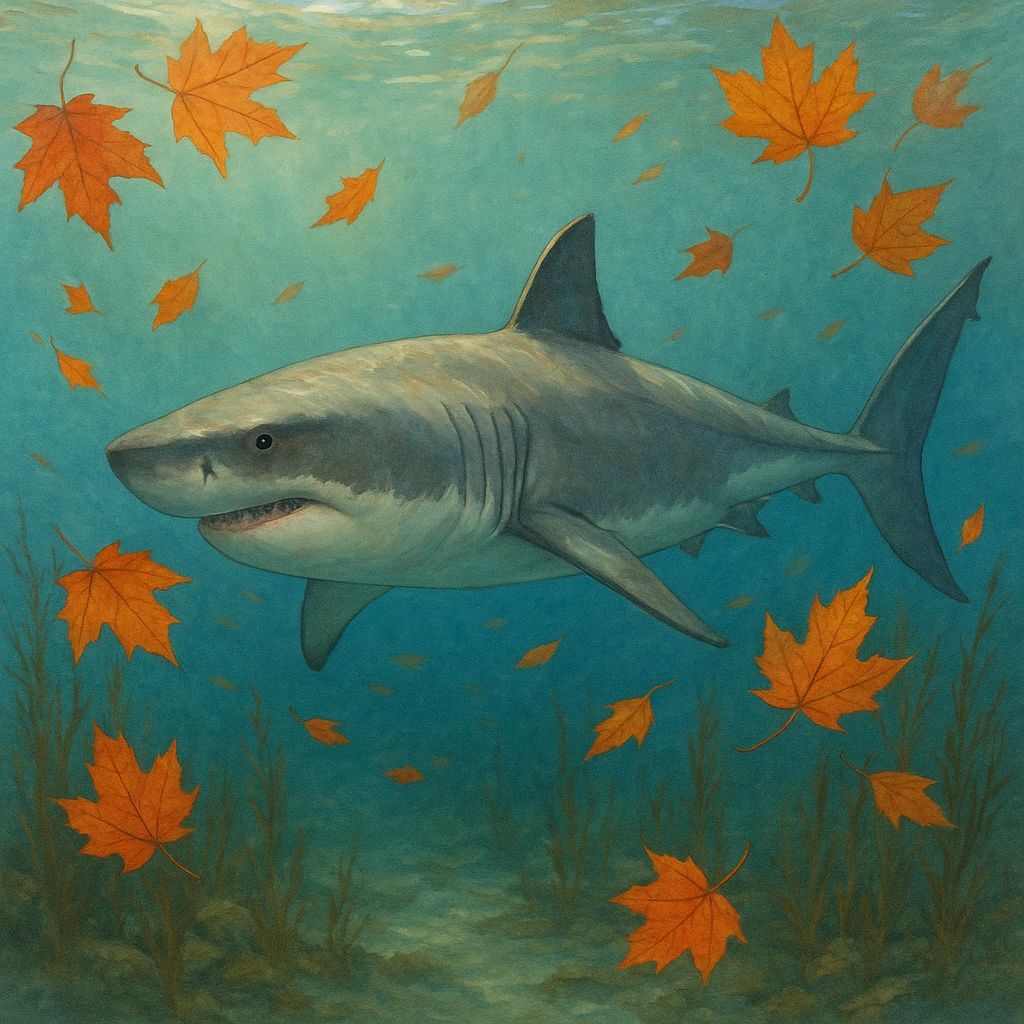
When you think of sharks, you probably imagine them gliding through warm tropical waters or splashing through the summer surf. But did you know that sharks don’t just disappear when summer ends? In fact, autumn is a fascinating time in the world of sharks. As the weather cools and the ocean begins to shift, so does shark behavior. These incredible predators respond to changing temperatures in smart and sometimes surprising ways.
Let’s dive into what happens beneath the waves when autumn arrives.
1. The Role of Water Temperature in Shark Life
Sharks are ectothermic animals—meaning their body temperature depends on the temperature of their environment. Unlike mammals, they don’t regulate their body heat internally. So, when water gets cooler, their bodies react right away.
Some sharks are more tolerant of temperature changes than others. For example, the great white shark can maintain a body temperature warmer than the surrounding water thanks to a special heat-retention system called “rete mirabile” (Burne, 1923; Carey & Teal, 1969). But most sharks will either migrate, slow down, or change their behavior in response to cooling waters.
2. Migration Season Begins
As autumn arrives, many shark species begin epic migrations. These long journeys help sharks stay in waters that are just the right temperature for feeding, mating, and growing. For example:
- Great white sharks along the U.S. East Coast migrate south toward warmer waters off the Carolinas and Florida (Skomal et al., 2017).
- Tiger sharks in the western Atlantic head toward tropical areas like the Bahamas (Papastamatiou et al., 2013).
- Basking sharks move to deeper, warmer offshore waters in the fall (Sims et al., 2003).
These migrations aren’t random. Sharks follow invisible trails in the ocean—routes guided by temperature, ocean currents, and prey movement.
3. Following the Food
Cooler waters also cause fish and other marine life to move. When prey like squid, herring, or mackerel head south or deeper into the ocean, sharks follow right behind.
Hammerhead sharks, for example, are known to move in tight schools to follow seasonal baitfish migrations (Klimley, 1993). The autumn ocean is a buffet in motion, and sharks need to be in the right place at the right time to eat.
This “prey tracking” is crucial for survival. Studies show that sharks rely heavily on water temperature cues to know when it’s time to move, because that often means dinner is on the move too (Grubbs et al., 2007).
4. Shark Speed and Energy in Cool Water
Cold water affects how fast a shark moves. Just like a car engine in winter, a shark’s muscles take longer to warm up when the temperature drops. This can make them slower and less active.
Some species, like lemon sharks, have been observed to slow their movements and rest more when the water gets cooler (Morrissey & Gruber, 1993). This doesn’t mean the sharks are lazy. It’s just their way of conserving energy. They become more efficient hunters by planning their movements carefully.
But not all sharks slow down. Blue sharks, for instance, are known to cruise long distances even in chilly waters (Campana et al., 2011). Their bodies are built for endurance.
5. Deep Diving: A Shark’s Escape from the Chill
Some sharks escape the cooling surface waters by diving deep into the ocean, where temperatures are more stable. Species like the scalloped hammerhead and shortfin mako often dive several hundred meters during fall transitions (Musyl et al., 2011).
Deep water can also help sharks avoid predators and find better hunting grounds. As the ocean layers mix in autumn—thanks to changing winds and surface cooling—nutrients from the deep rise up, attracting fish and in turn, the sharks.
6. Changing Social Behavior
Did you know some sharks are social? During summer, some species swim in groups or even school together. But autumn brings change.
As sharks migrate, they often break into smaller groups or go solo. This helps them travel faster and find food more easily without competition. Scientists tracking great white sharks using satellite tags found they became more solitary during migration periods in fall and winter (Jorgensen et al., 2012).
So while summer may be the season for social sharks, autumn is all about independence.
7. Breeding and Birthing Patterns Shift
Shark reproduction is also affected by changing seasons. Some sharks give birth or mate during late summer, and autumn is a transition period for their young.
Juvenile sharks born in the late summer will often head for shallow, protected “nursery areas” to grow safely. These spots—like mangroves or estuaries—stay warmer longer into autumn and offer more food with fewer predators (Heupel et al., 2007).
On the other hand, adult sharks might move away from coastal areas during the fall, leaving the young behind in safer zones.
8. Autumn Shark Encounters With Humans
Shark bites on humans often drop in autumn. Why? Fewer people are swimming, and many sharks have already moved to warmer places.
But it’s not always quiet. Some coastal areas actually see an increase in shark sightings in early fall. For instance, North Carolina often reports high shark activity in September and October due to warm waters lingering and baitfish running along the coast (Sandbar et al., 2017).
Still, most sharks aren’t interested in people. They’re just chasing food, riding the currents, and doing what they’ve done for millions of years.
9. Special Shark Senses at Work
During autumn, sharks rely heavily on their special senses to navigate and hunt. These include:
- Electroreception: Sharks can detect the electric fields of other animals, even in murky fall waters.
- Lateral line: A system along their bodies that picks up vibrations—helpful for finding prey in dark or deeper autumn waters.
- Smell: Some sharks can detect a single drop of blood in 25 gallons of water. In the fall, this helps them sniff out prey even when visibility is poor.
These senses become even more important as the ocean changes with the season.
10. Climate Change and Autumn Shark Behavior
Here’s a twist: Autumn isn’t what it used to be. Because of climate change, the oceans are warming. That means sharks are shifting their behaviors in new ways.
For example:
- Some sharks are delaying their migration, staying in northern waters longer than usual (Curtis et al., 2018).
- Others are expanding their range into places where they weren’t commonly found in autumn decades ago (Hammerschlag et al., 2022).
- Warmer autumns mean nursery grounds may stay usable longer, but also come with new threats like pollution and development.
Scientists are using satellite tags, drones, and underwater cameras to track how climate change is reshaping the rhythms of shark life.
11. The Science of** Tagging **Sharks in Autumn
Autumn is a big season for shark researchers. With many species on the move, scientists use this time to tag and track sharks along their migratory paths.
These tags collect valuable data like:
- Water temperature
- Depth
- Movement patterns
- Travel speed
Programs like OCEARCH have tagged sharks like “Breton,” “Shaw,” and “Maple” to monitor their autumn migration. This helps scientists predict where sharks might go next—and helps people stay safe while learning more about the ocean’s top predators (OCEARCH, 2023).
12. How You Can Help Sharks This Fall
Sharks are facing lots of threats: climate change, overfishing, plastic pollution, and habitat loss. But there are ways you can help, even in autumn:
- Support shark research groups.
- Learn the rules about fishing and marine protected areas.
- Reduce plastic use to keep oceans clean.
- Share what you learn with friends and family.
Remember: Sharks are a vital part of ocean health. Healthy oceans need healthy sharks, all year round.
Final Thoughts: Sharks Don’t Take a Fall Break
Autumn might mean falling leaves and pumpkin spice for us, but for sharks, it’s a season of serious change. Whether they’re swimming thousands of miles, diving into the deep, or cruising new coastlines, sharks stay active and alert as the seasons turn.
By understanding how cooler waters affect their behavior, we can appreciate these incredible animals even more—and work together to protect them.
Next time you’re walking on the beach in autumn, think about the world beneath the waves. There might be a great migration happening just offshore, and the stars of that show are sharks on the move.
Bibliography
Burne, R. H. (1923). An Introduction to the Study of the Vertebrates. Cambridge University Press.
Campana, S. E., Dorey, A., Fowler, M., Joyce, W., Wang, Z., & Wright, D. (2011). Migration pathways, behavioural thermoregulation and overwintering grounds of blue sharks in the Northwest Atlantic. Marine Ecology Progress Series, 432, 261–276. https://doi.org/10.3354/meps09193
Carey, F. G., & Teal, J. M. (1969). Mako and Porbeagle: Warm-Bodied Sharks. Comparative Biochemistry and Physiology, 28(1), 199–204. https://doi.org/10.1016/0010-406X(69)91356-3
Curtis, T. H., McCandless, C. T., Carlson, J. K., Skomal, G. B., Kohler, N. E., & Natanson, L. J. (2018). Seasonal distribution and historic trends in abundance of white sharks, Carcharodon carcharias, in the western North Atlantic Ocean. PLOS ONE, 13(6), e0199774. https://doi.org/10.1371/journal.pone.0199774
Grubbs, R. D., Musick, J. A., Conrath, C. L., & Romine, J. G. (2007). Long-term movements, migration, and temporal delineation of a summer nursery for juvenile sandbar sharks in the Chesapeake Bay. American Fisheries Society Symposium, 50, 87–107.
Hammerschlag, N., Skubel, R. A., Calich, H., Nelson, E. R., & O’Keefe, C. E. (2022). Shifting habitats of apex marine predators under climate change. Nature Climate Change, 12(2), 150–157. https://doi.org/10.1038/s41558-021-01220-w
Heupel, M. R., Carlson, J. K., & Simpfendorfer, C. A. (2007). Shark nursery areas: concepts, definition, characterization and assumptions. Marine Ecology Progress Series, 337, 287–297. https://doi.org/10.3354/meps337287
Jorgensen, S. J., Reeb, C. A., Chapple, T. K., Anderson, S., Perle, C., Sommeran, S. V., … & Block, B. A. (2012). Philopatry and migration of Pacific white sharks. Proceedings of the Royal Society B: Biological Sciences, 279(1742), 2021–2029. https://doi.org/10.1098/rspb.2011.1155
Klimley, A. P. (1993). Highly directional swimming by scalloped hammerhead sharks, Sphyrna lewini, and subsurface irradiance, temperature, bathymetry, and geomagnetic field. Marine Biology, 117, 1–22. https://doi.org/10.1007/BF00346417
Morrissey, J. F., & Gruber, S. H. (1993). Home range of juvenile lemon sharks, Negaprion brevirostris. Copeia, 1993(2), 425–434. https://doi.org/10.2307/1447143
Musyl, M. K., Brill, R. W., Curran, D. S., Gunn, J. S., Hartog, J. R., Hill, R. D., … & Moyes, C. D. (2011). Postrelease survival, vertical and horizontal movements, and thermal habitats of five species of pelagic sharks in the central Pacific Ocean. Fishery Bulletin, 109(4), 341–368.
OCEARCH. (2023). Tracking Data and Research Projects. https://www.ocearch.org
Papastamatiou, Y. P., Meyer, C. G., Kosaki, R. K., Wallsgrove, N. J., & Popp, B. N. (2013). Movement and foraging patterns of tiger sharks (Galeocerdo cuvier) in a human‐altered environment. Marine Ecology Progress Series, 478, 237–250. https://doi.org/10.3354/meps10220
Sandbar, C., et al. (2017). Seasonal activity and species composition of sharks in coastal North Carolina. Journal of Fish Biology, 90(5), 2078–2093. https://doi.org/10.1111/jfb.13282
Sims, D. W., Southall, E. J., Quayle, V. A., & Fox, A. M. (2003). Annual social behavior of basking sharks associated with coastal front areas. Proceedings of the Royal Society B: Biological Sciences, 270(S2), S144–S146. https://doi.org/10.1098/rsbl.2003.0067
Skomal, G. B., Braun, C. D., Chisholm, J. H., & Thorrold, S. R. (2017). Movements of white sharks (Carcharodon carcharias) in the North Atlantic Ocean. Marine Ecology Progress Series, 580, 1–16. https://doi.org/10.3354/meps12306
Originally published at the live site .