
Rivers ·
The Birds of the Suwannee River: A Living Symphony
The Suwannee River is more than just a winding stretch of freshwater cutting through Florida and southern Georgia—it’s a lifeline for countless species of wildlife. Flowing over 246 miles, this river begins in the Okefen...
By Rebecca "Madam Chronicler" Ryan
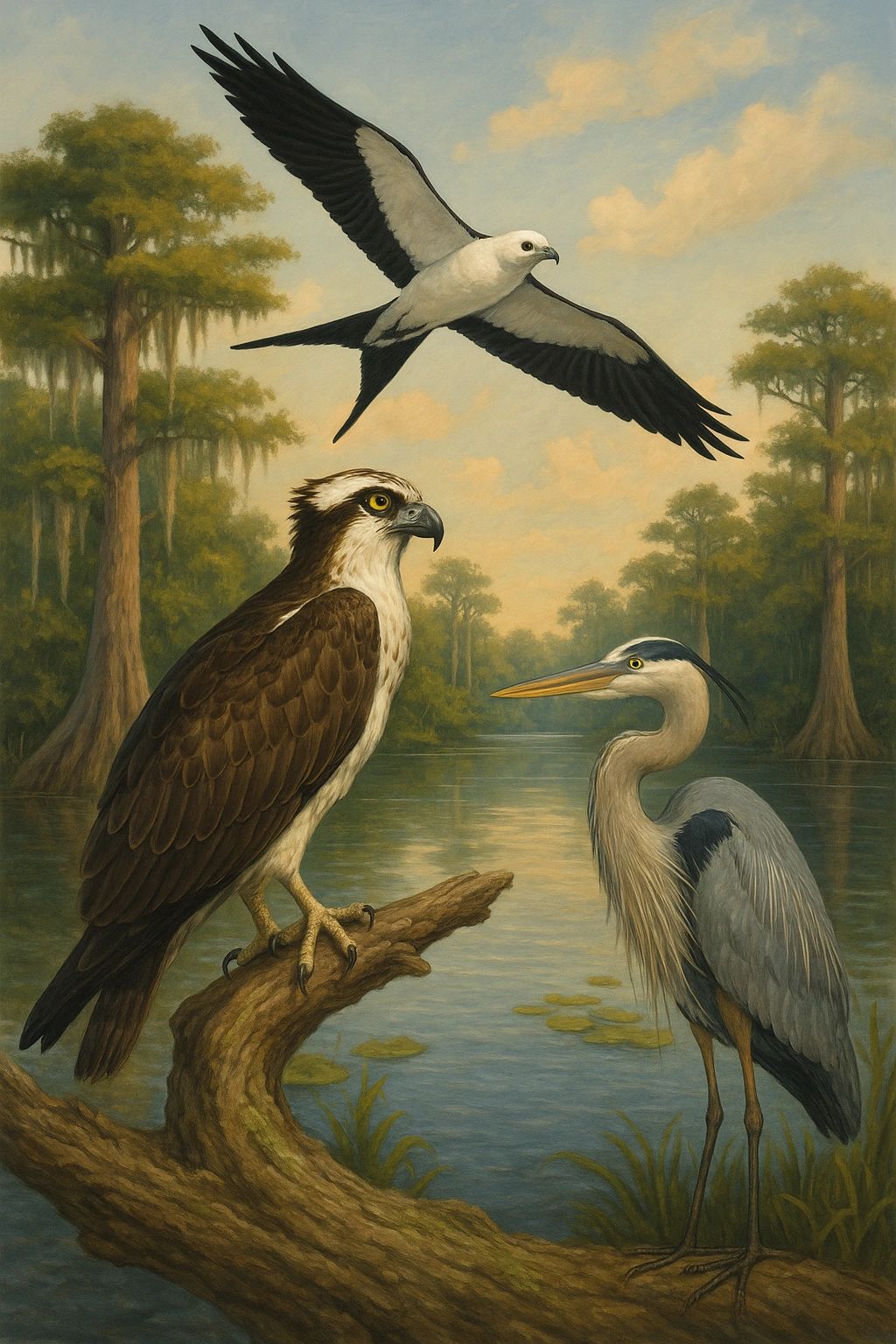
The Suwannee River is more than just a winding stretch of freshwater cutting through Florida and southern Georgia—it’s a lifeline for countless species of wildlife. Flowing over 246 miles, this river begins in the Okefenokee Swamp of Georgia and empties into the Gulf of Mexico in Florida. Along its journey, it nourishes floodplains, wetlands, hardwood forests, and limestone springs. Each of these habitats forms a patchwork of ecosystems that attract one group of animals in particular—birds.
Birds are often called nature’s storytellers. They migrate across continents, nest in hidden tree hollows, and sing at dawn to claim their place in the world. On the Suwannee, they bring color, sound, and life to every bend of the river. From the flash of a kingfisher diving for fish to the soaring silhouette of a bald eagle, the river is alive with wings.
In this blog, we’ll explore the birds of the Suwannee River: their diversity, the roles they play in the ecosystem, their migratory journeys, and the challenges they face in a changing world.
A River Built for Birds
The Suwannee is special because it flows through such diverse habitats. Each of these provides a different kind of home for birds:
- Cypress Swamps: With their towering knees and still waters, swamps are perfect for wading birds like herons, egrets, and ibises.
- Floodplain Forests: Hardwood trees like oak and magnolia offer cavities for owls, woodpeckers, and songbirds.
- Springs and Clear Pools: Kingfishers and ospreys find fish easily in the crystalline waters.
- Sandbars and Marshes: Shorebirds like plovers and sandpipers forage for insects and crustaceans.
- Uplands and Pine Forests: Woodpeckers, warblers, and hawks thrive in drier areas set back from the river’s edge.
The mix of wetlands, forests, and open water makes the Suwannee a birder’s paradise. Scientists have documented over 200 species of birds along its course (Florida Fish and Wildlife Conservation Commission, 2020).
Iconic Birds of the Suwannee
Let’s meet some of the river’s most memorable feathered residents.
1. The Bald Eagle
The bald eagle is perhaps the most dramatic sight on the Suwannee. With a wingspan of up to 7 feet, these raptors soar above the river, scanning for fish. Bald eagles nest in tall pines along the floodplain, building enormous stick nests that can weigh hundreds of pounds. Their comeback from near extinction due to DDT poisoning is a conservation success story (Watts et al., 2008).
2. Great Blue Heron
Standing like statues in the shallows, great blue herons are one of the river’s most reliable residents. They use their sharp bills like spears to catch fish, frogs, and even small snakes. Their slow, deliberate movements make them a favorite among bird photographers.
3. Wood Stork
The wood stork, a federally threatened species, finds a stronghold in the wetlands along the Suwannee. These large white wading birds use their open bills to snap up prey when fish touch them—a unique “tactile” feeding method (Bryan & Robinette, 2008). Their presence signals a healthy wetland ecosystem.
4. Osprey
Sometimes called “fish hawks,” ospreys dive dramatically into the river to snatch fish with their powerful talons. They are common along the Suwannee and often build nests on snags, dead trees, or even human-made platforms.
5. Swallow-tailed Kite
Few birds are as graceful as the swallow-tailed kite. With a forked tail and sleek black-and-white body, they glide effortlessly over the river in summer, hunting insects and small reptiles. Each year, they migrate to South America for the winter (Cely, 2007).
6. Prothonotary Warbler
The prothonotary warbler brings a splash of gold to the dark swamps. Unlike most warblers, it nests in tree cavities along the riverbanks. Because it depends on intact bottomland forests, it is considered a species of concern (Petit, 1999).
7. Barred Owl
As night falls, the haunting call of the barred owl—“Who cooks for you? Who cooks for you all?”—echoes through the floodplain. These owls prefer the deep woods along the Suwannee, where they hunt small mammals and amphibians.
8. Red-shouldered Hawk
Red-shouldered hawks are common along the river’s forests and fields. Their piercing “kee-ah” calls ring out over the canopy. They hunt snakes, frogs, and small birds, making them an important mid-level predator.
9. Pileated Woodpecker
With a flaming-red crest and loud drumming, pileated woodpeckers are impossible to miss. They carve rectangular holes in trees while searching for carpenter ants and beetles. Their excavations create homes for other cavity-nesting birds.
10. Ruby-throated Hummingbird
Tiny, dazzling ruby-throated hummingbirds zip along the Suwannee during migration. They feed on nectar from wildflowers along the banks and are the only hummingbird species that breeds in the eastern United States.
Migratory Highways
The Suwannee is part of the Atlantic Flyway, one of the great bird migration routes in North America. Every spring and fall, millions of birds travel along this invisible highway.
- Winter Residents: Ducks like the hooded merganser and American wigeon spend the cold months on the Suwannee’s wetlands.
- Summer Nesters: Species like the swallow-tailed kite and prothonotary warbler breed along the river before heading south.
- Year-round Residents: Great blue herons, barred owls, and woodpeckers stay put, toughing out both wet summers and cool winters.
The river’s varied habitats offer food and shelter for both long-distance migrants and permanent residents.
The Ecological Role of Birds
Birds on the Suwannee do more than delight birdwatchers—they play critical roles in the river’s ecosystem:
- Pest Control: Hawks, owls, and warblers keep insect and rodent populations in balance.
- Pollination and Seed Dispersal: Hummingbirds pollinate wildflowers, while fruit-eating birds spread seeds along the floodplain.
- Nutrient Cycling: Colonies of wading birds like egrets and herons deposit nutrients that enrich wetland soils.
- Indicators of Ecosystem Health: Sensitive species like the wood stork and prothonotary warbler act as “bioindicators,” showing whether habitats are healthy or degraded.
Without birds, the Suwannee’s ecosystems would lose balance, leading to cascading effects on other wildlife.
Birding Along the Suwannee
For nature lovers, the Suwannee River is a dream. Birding hotspots include:
- Stephen Foster Folk Culture Center State Park: A great place to see swallow-tailed kites and woodpeckers.
- Suwannee River State Park: Known for bald eagle sightings and warblers during migration.
- Manatee Springs State Park: Excellent for wading birds and wintering ducks.
- Okefenokee Swamp (headwaters): Home to barred owls, red-shouldered hawks, and wood storks.
Canoeing or kayaking is one of the best ways to birdwatch on the Suwannee. The quiet approach lets you slip close to herons, egrets, and even ospreys.
Threats to Bird Populations
While the Suwannee is still rich in birdlife, challenges remain:
- Habitat Loss: Development and logging threaten bottomland forests critical for nesting warblers and owls.
- Water Pollution: Runoff from agriculture introduces excess nutrients, leading to algal blooms that harm fish—the main food source for many birds (Katz & Raabe, 2005).
- Climate Change: Rising temperatures and shifting rainfall patterns affect migration timing and food availability (Seavy et al., 2009).
- Invasive Species: Non-native plants like Chinese tallow can overtake wetlands, reducing habitat quality for native birds.
Conservation groups, local communities, and state agencies are working to protect and restore habitats, but ongoing stewardship is needed.
Conservation Success Stories
There’s good news too. Bird conservation efforts along the Suwannee have made real progress:
- Bald Eagles: Once nearly gone from Florida, eagle populations have rebounded dramatically.
- Wood Storks: Active wetland restoration has helped stabilize their numbers in the Southeast.
- Prothonotary Warbler Research: Citizen-science projects track warbler populations to guide forest conservation.
- Protected Areas: State parks, wildlife refuges, and conservation easements safeguard critical habitat along the river.
These successes show that when people work together, bird populations can recover.
The Cultural Importance of Birds on the Suwannee
The Suwannee River has long been a cultural icon, celebrated in music, folklore, and local history. Birds are woven into that story:
- Indigenous peoples along the river saw eagles and herons as spiritual messengers.
- Folklore from early settlers spoke of owls as omens and whip-poor-wills as voices of the night.
- Today, birdwatching tourism supports local economies, from kayak outfitters to eco-lodges.
Birds are more than wildlife—they are part of the Suwannee’s living heritage.
How You Can Help the Birds of the Suwannee
Even small actions can make a difference:
- Support conservation groups like Audubon Florida.
- Volunteer for bird counts or citizen science projects.
- Plant native flowers and trees to provide food and shelter for birds.
- Keep the river clean by reducing fertilizer use and participating in river cleanups.
- Enjoy birds responsibly: observe from a distance and avoid disturbing nesting areas.
By protecting birds, we also protect the Suwannee River itself.
Conclusion
The Suwannee River is a treasure, not just for Florida and Georgia but for the entire network of life that depends on it. Birds remind us of that truth every day. From the cry of a hawk circling overhead to the whisper of warblers in the cypress swamps, they carry the spirit of the river on their wings.
To walk or paddle along the Suwannee is to be part of an ancient story, one written in feathers and songs. Protecting that story means safeguarding the habitats, waters, and skies that birds need to thrive.
So the next time you’re near the Suwannee, pause and look up. A heron might lift off from the water’s edge, or an eagle might wheel high above. These are not just birds; they are the guardians of a river, and the storytellers of a land.
Bibliography
Bryan, A. L., & Robinette, J. R. (2008). Foraging ecology of wood storks (Mycteria americana) in relation to habitat and hydrology. Waterbirds, 31(Special Publication 1), 138–145. https://doi.org/10.1675/1524-4695-31.sp1.138
Cely, J. E. (2007). The swallow-tailed kite in South Carolina: Status and habitat selection. Southeastern Naturalist, 6(3), 373–394. https://doi.org/10.1656/1528-7092(2007)6[373:TSKISC]2.0.CO;2
Florida Fish and Wildlife Conservation Commission. (2020). Florida’s breeding bird atlas. Tallahassee, FL.
Katz, B. G., & Raabe, E. A. (2005). Suwannee River Basin and Estuary: An integrated study of the river, its springs, and the coastal zone. U.S. Geological Survey Circular 1287.
Petit, L. J. (1999). Prothonotary warbler (Protonotaria citrea). In A. Poole & F. Gill (Eds.), The Birds of North America (No. 408). Cornell Lab of Ornithology.
Seavy, N. E., Humple, D. L., Cormier, R. L., & Gardali, T. (2009). Establishing the role of climate change in bird conservation in the 21st century. Ecological Applications, 19(8), 2131–2142. https://doi.org/10.1890/08-2281.1
Watts, B. D., Byrd, M. A., & Reese, J. G. (2008). Bald eagle habitat selection and population recovery in the Chesapeake Bay. Journal of Wildlife Management, 72(1), 152–158. https://doi.org/10.2193/2006-480
Originally published at the live site .