
Maritime ·
The Discovery of Shark Fossils at Portal Mountain: What It Reveal
Imagine walking across a frozen, rocky landscape in Antarctica and suddenly realizing you're standing on what used to be the bottom of an ancient ocean. That's exactly what happened to a team of scientists when they disc...
By Rebecca "Madam Chronicler" Ryan
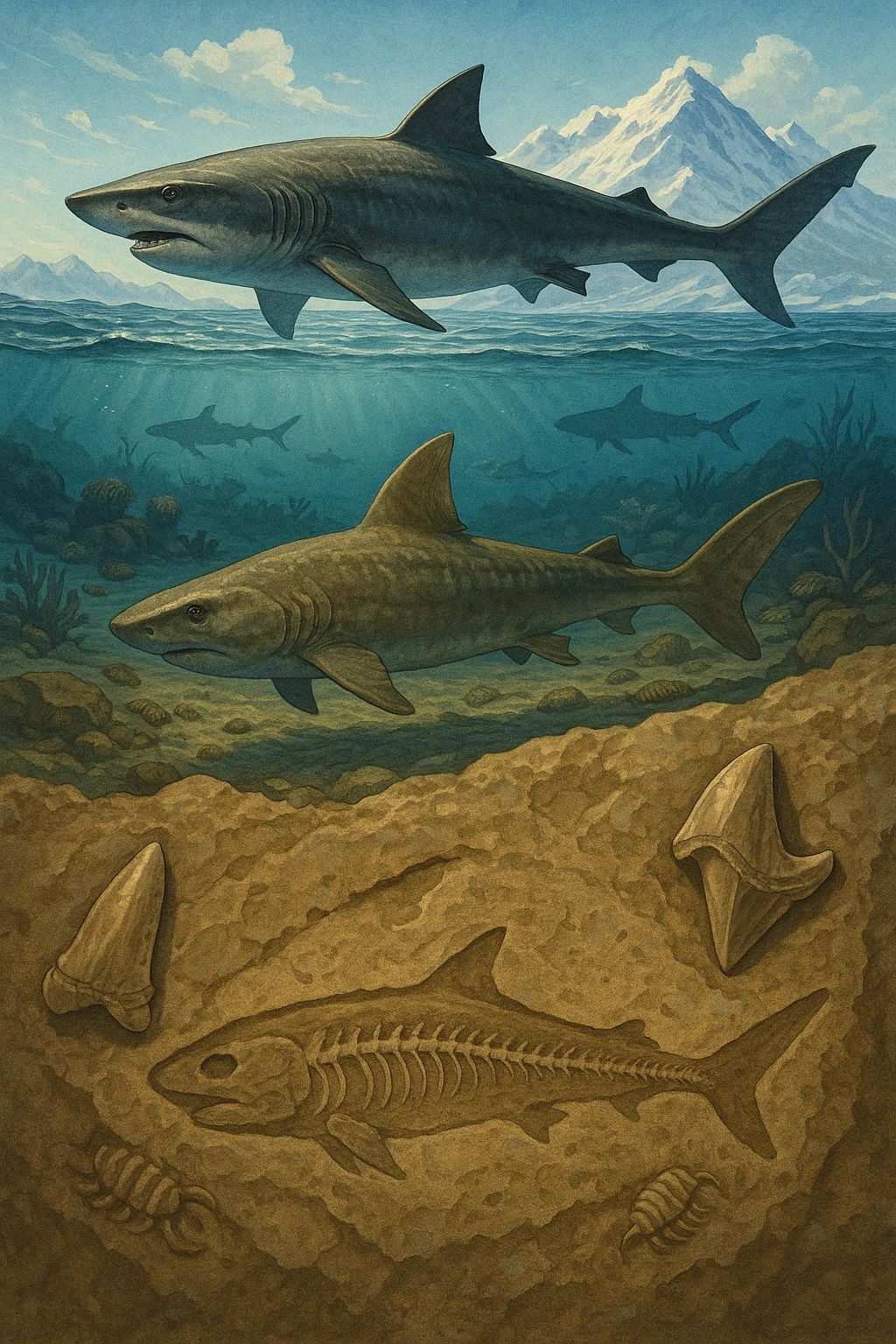
Imagine walking across a frozen, rocky landscape in Antarctica and suddenly realizing you’re standing on what used to be the bottom of an ancient ocean. That’s exactly what happened to a team of scientists when they discovered shark fossils at Portal Mountain. These fossils are helping researchers unlock the secrets of oceans that existed hundreds of millions of years ago—long before humans ever walked the Earth.
So, how did shark fossils end up on a mountain in the middle of Antarctica? And what can they tell us about Earth’s ancient oceans? Buckle up, because we’re going on a time-traveling journey back to the Paleozoic Era, when massive sharks ruled the seas, and the continents were in totally different places than they are now.
A Mountain in Antarctica, a Window into the Past
Portal Mountain is located in the Transantarctic Mountains of Antarctica. Today, it’s a cold, icy, and remote place, not exactly where you’d expect to find clues about ancient sea life. But over 400 million years ago, things looked very different. Back then, Antarctica was part of a supercontinent called Gondwana, which included what is now South America, Africa, India, Australia, and Antarctica.
Believe it or not, parts of Antarctica were once warm and covered by shallow seas. That’s where the sharks lived. When those sharks died, their remains settled into the muddy seafloor, where they were slowly buried and preserved over millions of years. Eventually, Earth’s tectonic plates shifted, mountains rose, and ice took over. But the fossils remained hidden, waiting for someone to find them.
The Big Discovery: Ancient Shark Teeth
In 2017, a research team from Augustana University and the South Dakota School of Mines and Technology, led by paleontologist Dr. Jim Martin, discovered ancient shark teeth at Portal Mountain. These teeth were found in rocks from the Devonian Period, which lasted from about 419 million to 359 million years ago. This time is often called the “Age of Fishes” because the oceans were teeming with life—including some of the earliest sharks.
The fossil teeth belong to a type of early shark called Antarctilamna, which was first discovered in the 1970s. These sharks looked different from the ones we know today. They were more eel-like and had flexible bodies. Still, they were definitely sharks, and their teeth are strong evidence that sharks were already widespread in the oceans during the Devonian.
Why Shark Teeth Matter
You might wonder, “Why are scientists so excited about a few old shark teeth?” Well, shark teeth are like puzzle pieces that help paleontologists understand the bigger picture of life in ancient oceans.
Sharks don’t have bones like humans do. Instead, their skeletons are made of cartilage, which doesn’t fossilize well. But their teeth are made of a harder material and fossilize much more easily. So when scientists find fossilized shark teeth, they can learn a lot about what kinds of sharks were swimming around, what they were eating, and how the ocean environment supported them.
Finding shark teeth in Antarctica tells us that ancient oceans covered that area and supported complex ecosystems—complete with predators like sharks.
The Devonian Period: A Fishy Golden Age
The Devonian Period was a turning point in the history of life on Earth. This was when many modern types of fish began to appear, including the earliest ancestors of sharks, bony fish, and even tetrapods (the first four-legged animals that later evolved into amphibians, reptiles, birds, and mammals).
During the Devonian, sea levels were high, and warm, shallow seas covered large parts of the continents. Coral reefs were growing, and marine biodiversity exploded. It was the perfect environment for early sharks to thrive.
The fossil shark teeth from Portal Mountain confirm that sharks had already made it to the far reaches of Gondwana, meaning they were highly adaptable and successful hunters even back then.
What the Fossils Tell Us About Ancient Oceans
The discovery of shark fossils at Portal Mountain helps scientists piece together a larger story about Earth’s history. Here’s what these fossils reveal:
1. Oceans Once Covered Antarctica
The presence of shark fossils in rock layers at Portal Mountain proves that this icy land was once under water. That tells us how much Earth’s geography has changed over hundreds of millions of years. What’s now a frozen desert used to be a warm, marine environment full of life.
2. Sharks Were Early Explorers
Sharks didn’t just stay in one place—they spread across ancient oceans. The Antarctilamna fossils show that sharks were swimming in southern Gondwana long before the continents broke apart. That means sharks were early global travelers, adapting to different environments and becoming key parts of marine ecosystems.
3. Climate Change Is Nothing New
The fossils also remind us that Earth’s climate has changed many times. There have been periods of extreme warmth and cooling. Antarctica went from tropical seas to being covered in glaciers. These past changes help scientists understand how current climate trends might affect ocean life today.
Other Creatures of the Ancient Seas
Sharks weren’t alone in the Devonian oceans. The same layers of rock that held shark teeth at Portal Mountain also contain fossils of other marine animals, such as:
- Placoderms: Armored fish with bony plates covering their heads and chests.
- Early bony fish: Ancestors of modern fish that had internal skeletons.
- Trilobites: Extinct marine arthropods that looked like underwater bugs.
- Brachiopods: Shellfish that resembled modern clams but belonged to a different group.
Together, these fossils paint a rich picture of ancient marine ecosystems, full of strange and wonderful life forms.
How Scientists Study These Fossils
Studying fossils in Antarctica is no easy task. Researchers have to deal with freezing temperatures, tricky terrain, and remote conditions. But it’s worth it for the chance to discover new clues about Earth’s distant past.
Once fossils are collected, they’re carefully cleaned and examined under microscopes. Scientists use tools like CT scanners to look inside them without damaging the fossils. They also compare the fossils to others found around the world to figure out their age and relationships.
Using all this data, scientists can create a kind of time-lapse of how life and oceans changed over millions of years.
What This Means for Modern Sharks
Believe it or not, studying ancient shark fossils can help us understand the sharks living in today’s oceans. Modern sharks are descendants of those early swimmers from the Devonian. Learning how ancient sharks adapted to changing oceans gives clues about how today’s sharks might cope with modern changes like warming waters and pollution.
It also reminds us that sharks have been on this planet a long time—over 400 million years! They’ve survived five mass extinctions, but now many shark species are in danger because of overfishing, habitat loss, and climate change. The fossil record tells us how resilient sharks have been, but also warns us not to take them for granted.
A Global Puzzle with Pieces from Antarctica
Fossils from Portal Mountain are just one piece of a massive puzzle that stretches across the globe. Fossil shark teeth have also been found in places like Morocco, Australia, and North America. Each discovery adds a bit more to our understanding of how ancient oceans worked and how life evolved.
Antarctica’s fossils are especially important because so little is known about the ancient ecosystems that once thrived there. Every find is like uncovering a lost chapter of Earth’s history.
Why This Discovery Inspires Wonder
When you think of sharks, you might picture them gliding through warm tropical waters or starring in ocean documentaries. But finding their fossils on a freezing mountain in Antarctica adds a whole new layer of mystery and excitement.
It’s a reminder that the planet is constantly changing—and that even the most unexpected places hold secrets from long ago. The ancient sharks of Portal Mountain are telling a story that’s been buried for hundreds of millions of years. And now, finally, we’re starting to listen.
Final Thoughts: What the** Ancient Sharks **Can Teach Us
The shark fossils at Portal Mountain are more than just cool science finds—they’re powerful time capsules. They reveal:
- That sharks are one of the oldest and most successful groups of animals on Earth.
- That the oceans we know today are just the latest version in a long history of change.
- That Antarctica was once a thriving marine world, full of life and warmth.
- And that studying the past can help us protect the future of our oceans.
So the next time you think about Antarctica, remember: beneath its icy surface lies a treasure trove of ancient secrets. And among those secrets swim the shadows of ancient sharks, whose teeth still tell tales of a forgotten sea.
Bibliography
Burrow, C. J., Young, G. C., Turner, S., & Senden, T. J. (2008). New information on the Devonian shark Antarctilamna (Chondrichthyes) based on CT scanning. Palaeontology, 51(3), 567–582. https://doi.org/10.1111/j.1475-4983.2008.00776.x
Martin, J. E., & Oster, J. (2018). Devonian vertebrate faunas of southern Victoria Land, Antarctica. In C. R. Scotese (Ed.), Paleogeographic Atlas Project. South Dakota School of Mines and Technology.
Long, J. A. (2011). The Rise of Fishes: 500 Million Years of Evolution. Baltimore, MD: Johns Hopkins University Press.
Young, G. C. (2010). Placoderms (armored fish): Dominant vertebrates of the Devonian Period. Annual Review of Earth and Planetary Sciences, 38, 523–550. https://doi.org/10.1146/annurev-earth-040809-152507
Turner, S. (2004). Early vertebrates: Analysis of their diversity, patterns of distribution and environmental interaction. Geological Society, London, Special Publications, 230(1), 67–94. https://doi.org/10.1144/GSL.SP.2004.230.01.07
Originally published at the live site .