
Maritime ·
The Known Unknowns: How Many Shark Species Are Out There?
To date, scientists have cataloged around 536 species of sharks, ranging from the tiny dwarf lanternshark (Etmopterus perryi), which is barely 8 inches long, to the massive whale shark (Rhincodon typus), the world’s larg...
By Rebecca "Madam Chronicler" Ryan
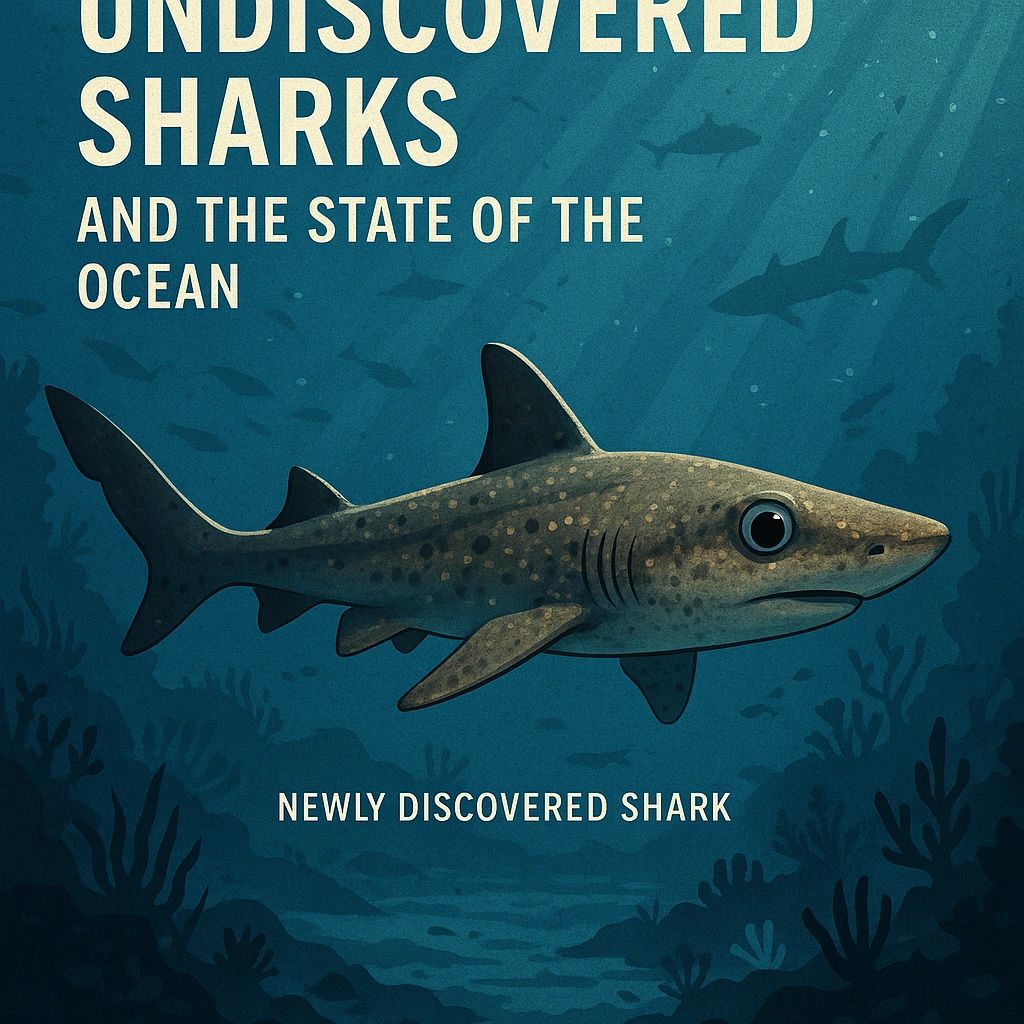
To date, scientists have cataloged around 536 species of sharks, ranging from the tiny dwarf lanternshark (Etmopterus perryi), which is barely 8 inches long, to the massive whale shark (Rhincodon typus), the world’s largest fish at 40 feet (Dulvy et al., 2014).
Yet the deep sea and remote regions still hold surprises. On average, 10–20 new shark and ray species are described each year, and many of these are small, cryptic, or deep-dwelling species that escaped earlier detection (Weigmann, 2016).
For example:
- In 2021, researchers described the ninja lanternshark (Etmopterus benchleyi), a deep-sea species with bioluminescent skin.
- In 2020, the American pocket shark (Mollisquama mississippiensis) was identified from just one specimen caught in the Gulf of Mexico.
- In 2015, scientists named the ghost shark (Hydrolagus erithacus), a type of chimaera from the South African coast.
These discoveries emphasize that even in the age of GPS, satellite imaging, and autonomous submersibles, Earth’s oceans remain a final frontier. It’s not just about finding new species—it’s about understanding how life has evolved in some of the planet’s most extreme environments.
Why Are So Many Sharks Still Undiscovered?
Several factors make sharks difficult to study, especially those that remain undescribed:
1. Deep-Sea Habitat
Many of the undiscovered sharks live at depths greater than 500 meters, in areas difficult and expensive to reach. Only in recent decades have submersibles and deep-sea trawls begun to uncover these hidden worlds.
2. Small Size and Elusive Behavior
Unlike large pelagic sharks, many new species are under a meter in length and exhibit cryptic behaviors. They may live under coral rubble, in seamount caves, or on muddy ocean floors.
3. Limited Research Funding
Taxonomy—the science of naming and classifying organisms—is underfunded compared to other scientific fields. As a result, many specimens languish unidentified in museum collections for decades.
4. Remote Geographic Ranges
Some sharks inhabit isolated archipelagos or deep trenches rarely visited by research vessels. Without physical access to these habitats, discovering new species is nearly impossible.
In other words, it’s not that undiscovered sharks don’t exist—it’s that we haven’t been able to reach them.
Why the Unknown Matters
It might seem like the discovery of a new lanternshark or ghost shark is a trivial footnote in marine biology. But the reality is far more serious.
Every undiscovered shark represents a missing piece of the puzzle of ocean ecosystems. Without understanding these species—how they live, reproduce, and interact with their environment—we risk underestimating the complexity and fragility of the marine web.
Furthermore, many of these newly discovered sharks are already at risk of extinction. Because deep-sea species tend to grow slowly and reproduce infrequently, they are especially vulnerable to overfishing and habitat degradation (Dulvy et al., 2014). Alarmingly, some sharks may go extinct before we even have a chance to name them.
The State of the Ocean: A Living System in Decline
To understand why undiscovered sharks matter, we must place them in the context of the overall state of the ocean. Scientists broadly agree: Earth’s oceans are in trouble.
Overfishing
Overfishing is the single greatest threat to sharks and rays. According to the IUCN Shark Specialist Group, over 37% of all shark and ray species are now threatened with extinction (Dulvy et al., 2021). Industrial longlining, trawling, and illegal fishing have driven massive declines, particularly among large, slow-reproducing species.
Climate Change
Warming waters, ocean acidification, and altered currents are changing the distribution of marine life, including sharks. Some species are migrating poleward, while others are experiencing temperature-induced stress, affecting feeding, reproduction, and habitat selection (Pörtner et al., 2014).
Habitat Loss
Coastal development, pollution, and bottom trawling are destroying critical habitats such as coral reefs, mangroves, and seagrass beds. Many shark species rely on these areas as nurseries for their young.
Plastic Pollution
Marine debris, especially plastics, poses a growing threat. Sharks have been documented ingesting plastics, becoming entangled in discarded fishing gear, and suffering from microplastic bioaccumulation (Parton et al., 2020).
In short, the ocean is changing fast—and not always for the better. And it’s changing in ways that make it harder than ever to protect creatures we barely know, like our undiscovered sharks.
What Undiscovered Sharks Can Tell Us
Sharks, both known and unknown, serve as biological indicators—species that reflect the health of their environments. When shark populations decline or disappear, it usually signals broader ecosystem imbalances.
Studying newly discovered sharks helps us:
- Identify ecosystem hotspots in need of protection
- Understand evolutionary pathways, especially in extreme or isolated environments
- Explore the adaptability of marine life in the face of climate change
- Develop new biomedical insights (e.g., unique compounds found in shark immune systems or bioluminescence)
Each discovery is more than a scientific footnote—it’s a new opportunity to understand life in all its forms.
Challenges in Discovering and Protecting New Species
Discovering a new shark species is only the beginning. The real work is in ensuring that species is protected before it vanishes.
1. Descriptive Lag
The time between a species being collected and being formally described can stretch for decades. This delay increases the risk of extinction before conservation measures can be enacted.
2. Limited Baseline Data
Without information on population size, reproductive behavior, or habitat range, it’s impossible to accurately assess the conservation status of newly discovered sharks.
3. Lack of Legal Protections
Most deep-sea sharks fall outside the jurisdiction of existing marine protected areas. Additionally, international waters often lack the enforcement mechanisms to stop illegal fishing.
Deep-Sea Conservation: A Race Against Time
As technology improves, our ability to explore deep-sea ecosystems increases—but so does the risk of exploiting them. Deep-sea mining, for example, poses a growing threat to fragile benthic environments where many undiscovered sharks live.
Efforts are underway to change this. The United Nations Biodiversity Beyond National Jurisdiction (BBNJ) treaty, finalized in 2023, aims to protect high-seas biodiversity through a legally binding international agreement.
At the same time, initiatives like the Global Shark Trends Project, led by the IUCN and partners, are mapping global shark biodiversity and extinction risks. These efforts depend on public support, research funding, and political will.
The Human Connection: Why This Matters for Us
It’s easy to think of sharks as distant creatures in a realm far removed from our daily lives. But the health of sharks is directly connected to the health of the ocean—and by extension, to us.
The ocean provides:
- Over 50% of the oxygen we breathe (thanks to phytoplankton)
- A major source of protein for billions of people
- Regulation of climate through carbon cycling
- Livelihoods for coastal communities
Sharks help keep these systems in balance. Their decline is a red flag that something is wrong. Their discovery is a chance to make it right.
What You Can Do to Help
You don’t need to be a marine biologist or deep-sea explorer to make a difference. Here are some actions you can take to support the discovery and protection of sharks:
- Support science: Donate to marine research organizations that explore and protect biodiversity.
- Reduce plastic use: Opt for reusable bags, bottles, and containers.
- Eat sustainably: Choose seafood certified by the Marine Stewardship Council (MSC) or avoid shark products altogether.
- Stay informed: Follow reputable sources like IUCN, Oceana, or Mission Blue.
- Advocate: Contact policymakers about the importance of ocean conservation legislation.
Conclusion: A Future Yet to Be Found
The ocean is still full of secrets. Undiscovered sharks swim through its depths, each one a mystery waiting to be solved. They are reminders of the complexity of nature, the limits of human knowledge, and the importance of humility in science.
As we face a rapidly changing planet, the race to explore, understand, and protect the ocean has never been more urgent. For every unnamed shark, there is a story of survival, evolution, and resilience. For every square mile of unexplored seafloor, there is a promise of discovery.
The future of the ocean is still being written. Let’s make sure it includes sharks—both known and yet to be named.
References
Dulvy, N. K., Fowler, S. L., Musick, J. A., Cavanagh, R. D., Kyne, P. M., Harrison, L. R., … & White, W. T. (2014). Extinction risk and conservation of the world’s sharks and rays. eLife, 3, e00590. https://doi.org/10.7554/eLife.00590
Dulvy, N. K., Pacoureau, N., Rigby, C. L., Pollom, R. A., Jabado, R. W., Ebert, D. A., … & Simpfendorfer, C. A. (2021). Overfishing drives over one-third of all sharks and rays toward a global extinction crisis. Current Biology, 31(21), 4773–4787.e8. https://doi.org/10.1016/j.cub.2021.08.062
NOAA (National Oceanic and Atmospheric Administration). (2022). How much of the ocean have we explored? https://oceanservice.noaa.gov/facts/exploration.html
Parton, K. J., Galloway, T. S., & Godley, B. J. (2020). Global review of shark and ray entanglement in anthropogenic marine debris. Endangered Species Research, 43, 105–120. https://doi.org/10.3354/esr01063
Pörtner, H. O., Karl, D. M., Boyd, P. W., Cheung, W. W., Lluch-Cota, S. E., Nojiri, Y., … & Schmidt, D. N. (2014). Ocean systems. In Climate Change 2014: Impacts, Adaptation, and Vulnerability. Part A: Global and Sectoral Aspects (pp. 411–484). Cambridge University Press.
Weigmann, S. (2016). Annotated checklist of the living sharks, batoids and chimaeras (Chondrichthyes) of the world. Journal of Fish Biology, 88(3), 837–1037. https://doi.org/10.1111/jfb.12874
Originally published at the live site .