
Maritime ·
The Ocean’s Most Misunderstood Predators: Debunking Common Shark
When people think of sharks, it’s often with a mix of awe, fear, and fascination. Thanks to blockbuster movies, dramatic headlines, and pop culture myths, sharks have earned a scary reputation. But are these ocean predat...
By Rebecca "Madam Chronicler" Ryan
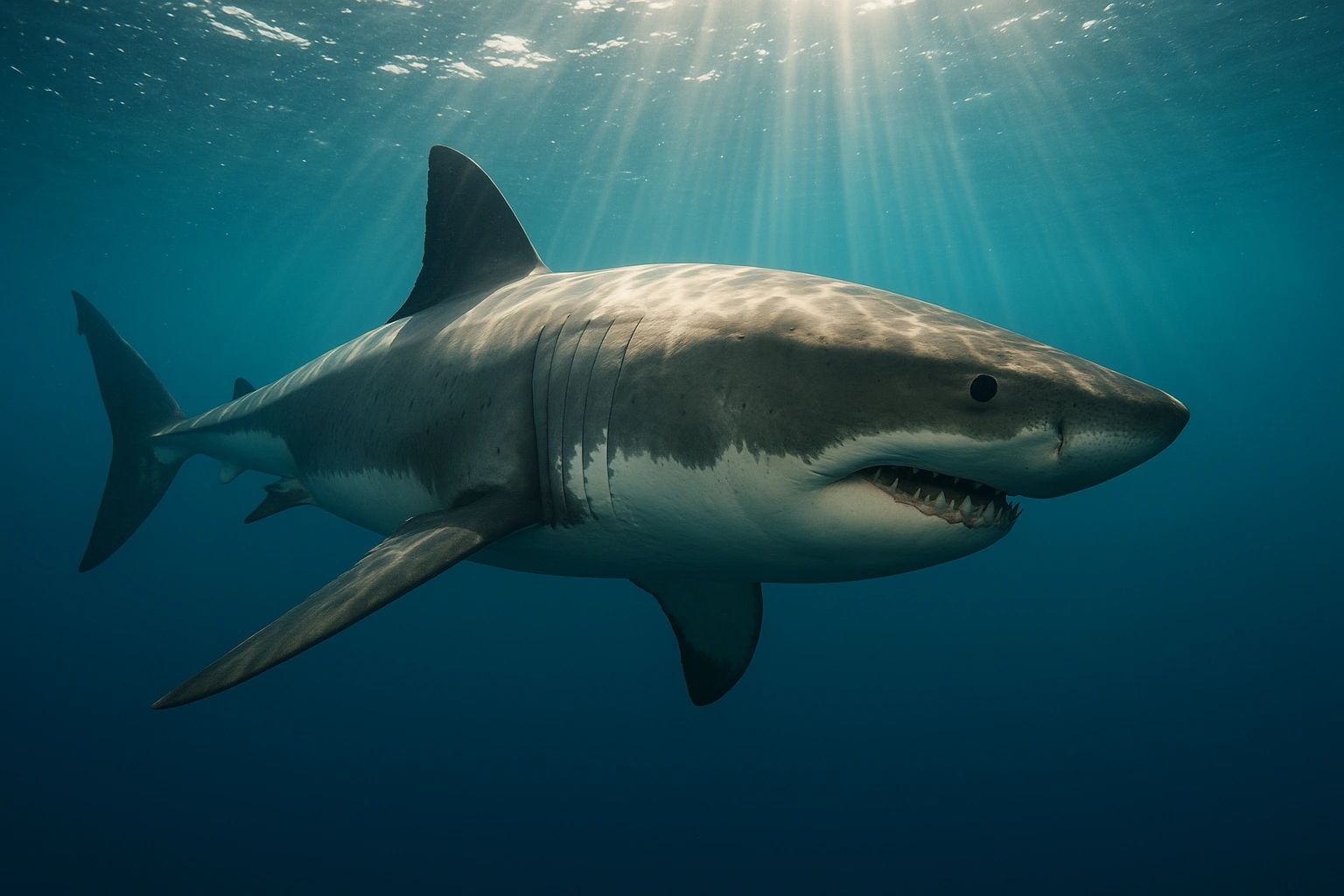
When people think of sharks, it’s often with a mix of awe, fear, and fascination. Thanks to blockbuster movies, dramatic headlines, and pop culture myths, sharks have earned a scary reputation. But are these ocean predators really the mindless man-eaters we’ve been led to believe?
Let’s set the record straight. Sharks are some of the most misunderstood creatures in the sea. And while they may look intimidating, most of what we think we know about them is based on fear—not fact. In this blog, we’ll explore the top myths about sharks, reveal the surprising truth, and help you see these apex predators in a whole new light.
Myth #1: Sharks Are Ruthless Man-Eaters
The Truth: Sharks do not hunt humans.
This is the most common and damaging myth of all. Movies like Jaws have created the false idea that sharks are lurking in the ocean just waiting for a human snack. But according to the International Shark Attack File (ISAF), the odds of being attacked by a shark are about 1 in 4 million—and most attacks are non-fatal (ISAF, 2024).
When sharks do bite, it’s usually a case of mistaken identity. Surfers on boards look like seals or sea turtles from below. Once the shark realizes its mistake, it usually lets go. Humans are simply not on a shark’s menu.
“Sharks don’t target humans—they just sometimes bump into us in their world,” says Dr. Gavin Naylor of the Florida Museum of Natural History.
Myth #2: All Sharks Are Dangerous
The Truth: Out of over 500 shark species, only a few are known to be dangerous.
There are more than 500 species of sharks in the ocean, from the tiny dwarf lanternshark (smaller than a pencil) to the massive whale shark. But only about a dozen species have ever been involved in unprovoked attacks on humans (Burgess et al., 2021).
The great white, tiger shark, and bull shark are the most commonly involved in such incidents—but even they are not the villains they’re made out to be. Many sharks are harmless to humans and prefer to avoid us altogether.
Species like the nurse shark, bonnethead, and whale shark are peaceful filter-feeders or bottom dwellers. In fact, you’re far more likely to be injured by a dog or even a cow than by a shark.
Myth #3: Sharks Are Mindless Killing Machines
The Truth: Sharks are intelligent and play key roles in ocean ecosystems.
Sharks have been around for over 400 million years—long before dinosaurs. That kind of evolutionary success doesn’t come from being mindless. Research shows that sharks have complex brains and behaviors. Some can learn patterns, solve problems, and even show signs of curiosity and playfulness (Jacobs et al., 2022).
Studies on reef sharks have shown social preferences and even alliances. Great whites are known to exhibit cautious, exploratory behavior before biting unfamiliar objects. And lemon sharks have demonstrated long-term memory and learning abilities in lab tests.
Sharks also play vital roles in keeping the ocean healthy. As apex predators, they regulate populations of prey species, which in turn helps balance coral reefs and seagrass beds (Ferretti et al., 2010). Without sharks, entire ecosystems can fall apart.
Myth #4: Shark Attacks Are Increasing Every Year
The Truth: Shark attacks remain rare, and numbers vary due to human activity.
While it’s true that global reports of shark bites fluctuate, there’s no clear evidence that sharks are becoming more aggressive. In fact, many “spikes” in shark bites are simply due to more people entering the water and better reporting methods.
For example, 2022 saw 57 unprovoked bites worldwide, down from the five-year average of 70 per year (ISAF, 2023). These numbers are small considering millions of people swim in the ocean each year.
Many shark scientists now emphasize that changes in shark bite data often reflect human behavior, not shark behavior. More surfers, swimmers, and beachgoers can naturally lead to more encounters.
Myth #5: If You See a Shark, It’s Going to Attack
The Truth: Most sharks are shy and want nothing to do with humans.
Just because you see a fin doesn’t mean you’re in danger. Many species of sharks are cautious and will avoid contact. In most situations, a shark might come close out of curiosity, then swim away.
In fact, divers and snorkelers around the world regularly swim near sharks without incident. Countries like the Bahamas and South Africa even offer shark diving tourism.
“The more you dive with sharks, the more you understand their body language and behavior,” says marine biologist Cristina Zenato. “They’re not aggressive—they’re just curious.”
Being calm and respectful in the water goes a long way. Splashing, panicking, or trying to touch a shark is far more likely to cause a problem.
Myth #6: Sharks Are Useless and Should Be Fished Out
The Truth: Sharks are critical to ocean health—and many are in danger.
Some people believe the ocean would be better off without sharks. This couldn’t be more wrong. Sharks are ecosystem managers. By feeding on the weak, sick, or old, they keep prey populations healthy and prevent overgrazing of vital habitats.
For instance, when tiger sharks patrol seagrass beds, sea turtles avoid overgrazing in one area. This allows the seagrass to thrive, which benefits countless marine creatures (Heithaus et al., 2008).
Yet despite their importance, sharks are disappearing. A 2021 global study found that oceanic shark and ray populations have declined by over 70% in just the last 50 years due to overfishing and bycatch (Pacoureau et al., 2021).
Many sharks are caught for their fins, meat, or even just out of fear. The truth is, sharks are worth far more alive—for ecosystems, tourism, and biodiversity—than dead.
Myth #7: Sharks Can’t Get Cancer
The Truth: Sharks can get cancer—but they have some unique biology.
You may have heard claims that sharks are immune to cancer. This idea spread widely in the 1990s, partly due to misleading marketing from supplement companies selling shark cartilage.
But science shows that sharks can, and do, develop cancer. Tumors have been found in both wild and captive sharks, including in the liver, intestines, and even brain (Harshbarger et al., 2002).
However, sharks may have a lower cancer rate due to their immune systems and specialized wound-healing abilities. Their biology is still being studied for medical insights—but that doesn’t mean they’re invincible.
Myth #8: Sharks Only Live in Deep Water
The Truth: Sharks live in all kinds of habitats—including shallow water.
While some sharks roam the deep sea, others live near the coast, in coral reefs, bays, estuaries, and even rivers. The bull shark is especially famous for its ability to live in both salt and freshwater.
Nurse sharks are often found napping in shallow lagoons. Lemon sharks use mangrove nurseries to raise their young. And blacktip reef sharks are a common sight near tropical beaches.
Sharks aren’t just creatures of the deep—they’re everywhere. And their presence often signals a healthy environment.
Myth #9: Killing Sharks Makes Beaches Safer
The Truth: Culling sharks doesn’t prevent attacks—and harms ecosystems.
Some regions have resorted to shark culling or installing nets to reduce bites. But the results show these efforts often do more harm than good. Killing sharks indiscriminately disrupts food chains and kills other marine animals like dolphins, turtles, and rays.
Australia’s Queensland shark net program has killed thousands of sharks and bycatch over the years—but it hasn’t eliminated shark incidents (Gibbs & Warren, 2015).
Modern alternatives like drone surveillance, personal shark deterrents, and public education are proving more effective. Prevention through understanding—not extermination—is the better path forward.
Myth #10: Sharks Are Always Solitary and Aggressive
The Truth: Some sharks show social behavior and even travel in groups.
While many sharks are solitary hunters, others show signs of social interaction. Hammerheads are known to form schools, especially during mating season. Lemon sharks return to the same coastal habitats year after year, and juveniles form nursery groups.
Studies have found that sharks can recognize familiar individuals and may prefer to associate with certain others—suggesting basic social preferences (Mourier et al., 2012).
Aggression isn’t the norm. In the shark world, avoiding conflict is often the smarter move.
Let’s Rethink the Shark Story
It’s time to shift the narrative around sharks. These fascinating creatures are not villains, monsters, or mindless killers. They are ancient survivors, ocean guardians, and key players in marine ecosystems.
Fear often comes from misunderstanding. And when we replace myths with facts, sharks start to look a lot less scary—and a lot more like the incredible animals they truly are.
So next time you see a dorsal fin, remember: it’s probably not hunting you. It’s just another misunderstood marvel of the sea, trying to survive in a changing world.
How You Can Help Sharks
Now that you know the truth, you can be part of the solution. Here’s how:
- Support sustainable seafood. Choose brands and fisheries that avoid shark bycatch.
- Say no to shark fin products. Even in cosmetics and pet food.
- Respect sharks in the wild. Don’t chase, touch, or harass them.
- Spread awareness. Share facts, not fear.
- Support shark conservation groups. Like Shark Trust, WildAid, or Project AWARE.
Together, we can turn the tide—for sharks and the ocean they protect.
Bibliography
Burgess, G. H., Naylor, G. J. P., & National Geographic Society. (2021). Shark attack: The science behind the bite. National Geographic.
Ferretti, F., Worm, B., Britten, G. L., Heithaus, M. R., & Lotze, H. K. (2010). Patterns and ecosystem consequences of shark declines in the ocean. Ecology Letters, 13(8), 1055–1071. https://doi.org/10.1111/j.1461-0248.2010.01489.x
Gibbs, L., & Warren, A. (2015). Transforming shark hazard policy: Learning from ocean-users and shark encounter in Western Australia. Marine Policy, 58, 116–124. https://doi.org/10.1016/j.marpol.2015.04.014
Harshbarger, J. C., Clark, J. B., & Chang, S. C. (2002). Tumors in sharks. Marine and Freshwater Behaviour and Physiology, 35(3), 225–238. https://doi.org/10.1080/1023624021000007416
Heithaus, M. R., Frid, A., Wirsing, A. J., & Worm, B. (2008). Predicting ecological consequences of marine top predator declines. Trends in Ecology & Evolution, 23(4), 202–210. https://doi.org/10.1016/j.tree.2008.01.003
International Shark Attack File (ISAF). (2023). Yearly worldwide shark attack summary. Florida Museum of Natural History. https://www.floridamuseum.ufl.edu/shark-attacks/yearly-worldwide-summary/
Jacobs, L., Mourier, J., Planes, S., & Clua, E. (2022). Cognitive abilities in sharks and rays: A review. Animal Cognition, 25, 469–482. https://doi.org/10.1007/s10071-022-01613-2
Mourier, J., Vercelloni, J., & Planes, S. (2012). Evidence of social communities in a spatially structured network of a free-ranging shark species. Animal Behaviour, 83(2), 389–401. https://doi.org/10.1016/j.anbehav.2011.11.008
Pacoureau, N., Rigby, C. L., Kyne, P. M., Sherley, R. B., Winker, H., Carlson, J. K., … & Dulvy, N. K. (2021). Half a century of global decline in oceanic sharks and rays. Nature, 589(7843), 567–571. https://doi.org/10.1038/s41586-020-03173-9
Originally published at the live site .