
Maritime ·
The Shared History Between Humans and Sharks: A 2500-Word Journey
Hello ocean lovers and curious minds! Get ready to dive deep—because today, we’re going on an incredible journey through history. We’re exploring the fascinating, tangled, and sometimes misunderstood relationship between...
By Rebecca "Madam Chronicler" Ryan
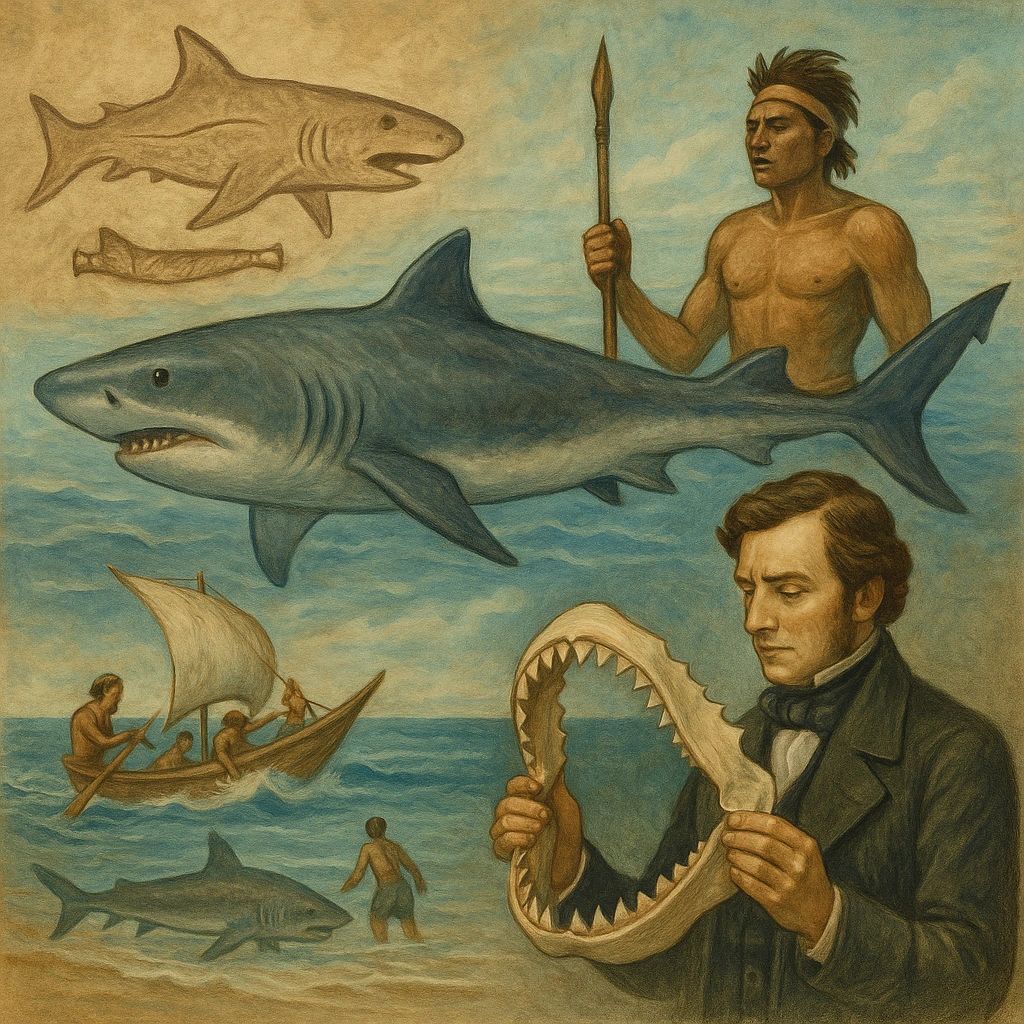
Hello ocean lovers and curious minds! Get ready to dive deep—because today, we’re going on an incredible journey through history. We’re exploring the fascinating, tangled, and sometimes misunderstood relationship between humans and sharks. Buckle up, because this blog post is packed with twists, turns, and plenty of surprises!
Humans and sharks have shared the oceans for thousands of years. From ancient cave paintings to modern conservation battles, sharks have always captured our imaginations. But while sharks have been around for over 400 million years—far longer than dinosaurs—our relationship with them has changed a lot over time.
Let’s swim through history and explore how humans and sharks became forever linked.
🦈 Ancient Encounters: Sharks in Early Human Culture
Long before science began studying sharks, humans were fascinated by these mysterious creatures of the sea. Archaeological evidence shows that humans have interacted with sharks for thousands of years.
Sharks in Ancient Art and Mythology
In Papua New Guinea, researchers found shark tooth weapons dating back over 1,000 years. These sharp, deadly tools were made by embedding shark teeth into wooden clubs and swords (Pawlik & Eerkens, 2017). Such weapons weren’t just practical; they also symbolized power and status in many island cultures.
Meanwhile, ancient Hawaiians honored the shark as a guardian spirit called aumakua. Some families believed a specific shark was their ancestor, and they offered it food in return for protection at sea (Titcomb, 1972).
In ancient Greece, historian Herodotus wrote about sea creatures resembling sharks, and their presence was feared by sailors. Across the Mediterranean, sharks became symbols of both danger and mystery.
Sharks in Ancient Trade and Fishing
Sharks were also hunted for food, skins, and tools. In Polynesia and the Philippines, shark fishing techniques using hooks made from shell and bone were recorded thousands of years ago (Orams, 2002). Fishermen developed special rituals before hunting sharks to honor their strength.
In Japan, sharks were an important part of coastal diets, with historical records of shark meat and shark fin consumption going back centuries.
🦈 Sharks in Early Science: From Monsters to Marvels
European Explorers and Shark Stories
As European explorers set sail across the globe in the 15th and 16th centuries, they often encountered sharks for the first time. Early sailors described sharks in their journals, often calling them “sea dogs” or “monsters.”
One of the first documented shark attacks occurred in 1749, when sailor Brook Watson was attacked by a shark in Havana, Cuba. He survived but lost a leg. The story was later made famous through art, with the painting Watson and the Shark by John Singleton Copley in 1778 (Dunlap, 2016).
The Rise of Scientific Study
In the 18th and 19th centuries, scientists began to study sharks more carefully. Swedish scientist Carl Linnaeus classified many shark species in his famous Systema Naturae in 1758, giving them Latin names and grouping them into taxonomic categories (Linnaeus, 1758).
By the late 1800s, naturalists were fascinated by sharks’ anatomy, especially their unique teeth and cartilage skeletons. Researchers began preserving shark specimens in museums, drawing detailed sketches, and studying their role in marine ecosystems.
🦈 Shark Folklore Around the World
Throughout history, sharks have also featured in folklore and storytelling.
Pacific Island Traditions
Many Pacific Island cultures told stories of shark gods and shark people. In Fiji, the shark god Dakuwaqa was believed to protect fishermen from sea dangers (Sims, 2000). Fijians would pray to Dakuwaqa before setting sail.
Sharks in Australian Aboriginal Lore
In Aboriginal Australian cultures, sharks are part of Dreamtime stories—the foundational myths of creation and law. For example, in parts of Northern Australia, the Rainbow Serpent and ancestral sharks are connected in legends about the origins of rivers and coastal features (McNiven & Feldman, 2003).
🦈 Sharks in Modern Popular Culture
In the 20th century, sharks became global icons—but not always in a good way.
The “Jaws Effect”
The biggest turning point in our modern relationship with sharks came in 1975, with the release of Jaws, directed by Steven Spielberg. This blockbuster movie told the story of a great white shark terrorizing a beach town.
The film sparked widespread fear of sharks, even though shark attacks on humans are extremely rare. Scientists have dubbed this phenomenon the “Jaws Effect,” where fear of sharks increased, and shark populations began declining due to trophy hunting and overfishing (Neff, 2015).
Sharks in Media and Marketing
Following Jaws, sharks became popular in movies, TV shows, and even toys. Shows like Shark Week, which started in 1988 on the Discovery Channel, fueled interest in shark behavior—but also often exaggerated their danger.
Sharks also became mascots for sports teams and brands, symbolizing toughness and power.
🦈 The Scientific Truth About Sharks
While movies made sharks seem like villains, scientists were quietly uncovering the truth.
Sharks as Apex Predators
Sharks play a vital role in ocean ecosystems. As apex predators, they keep populations of prey species in check and help maintain the balance of marine food webs (Ferretti et al., 2010).
Some species, like the hammerhead and tiger shark, feed on a variety of prey, while others specialize in certain foods. Sharks also remove weak or sick animals, helping prevent disease spread.
Shark Biology Breakthroughs
Researchers discovered that sharks have some amazing abilities:
- They can detect electric fields with special organs called ampullae of Lorenzini.
- Some species can travel thousands of miles across oceans.
- Certain sharks, like Greenland sharks, can live for over 400 years! (Nielsen et al., 2016).
🦈 Conservation and the Shark Crisis
Sadly, sharks are now among the most threatened species on the planet.
Overfishing and Shark Finning
Shark populations have declined dramatically in recent decades. One major reason is overfishing, especially for shark fins, which are used in shark fin soup—a delicacy in parts of Asia.
Each year, an estimated 63 to 273 million sharks are killed, mostly for their fins (Worm et al., 2013). This unsustainable practice has led to major declines in many shark species.
Bycatch and Habitat Loss
Sharks also face threats from bycatch (being caught unintentionally in fishing gear) and habitat loss. Many coastal species are affected by pollution and the destruction of important habitats like coral reefs and mangroves.
Climate Change Effects
Climate change is another growing threat. Warmer ocean temperatures affect shark migration, behavior, and breeding patterns. Some species are being pushed into new regions where they’ve never been seen before (Payne et al., 2018).
🦈 Humans Fighting to Save Sharks
Despite these challenges, humans are now working hard to protect sharks.
Marine Protected Areas
Many countries have established marine protected areas (MPAs) where shark fishing is banned or restricted. Studies show that MPAs can significantly boost shark populations in certain regions (White et al., 2017).
Shark Tourism
In some places, sharks are worth far more alive than dead. Shark tourism—such as cage diving with great whites or snorkeling with whale sharks—generates millions of dollars annually and supports local economies (Gallagher & Hammerschlag, 2011).
Public Awareness Campaigns
Groups like Shark Trust, WildAid, and Oceana are raising awareness about shark conservation. Social media campaigns have helped people see sharks in a new light—not as monsters, but as important animals that need protection.
Many celebrities and influencers now use their platforms to speak out for sharks.
🦈 Coexisting With Sharks: A Hopeful Future
Our relationship with sharks has come full circle. From ancient respect to modern fear—and now to conservation—humans are realizing that sharks are not our enemies. They are fascinating, ancient creatures that deserve our respect.
How You Can Help Sharks
Want to be part of the solution? Here are some easy ways to help sharks:
- Avoid products containing shark parts, such as shark fin soup or liver oil (squalene).
- Support sustainable seafood choices by checking certifications like the Marine Stewardship Council (MSC).
- Donate to shark conservation organizations.
- Learn more about sharks and share their importance with others!
Final Thoughts
Sharks have been around for hundreds of millions of years—and with our help, they’ll continue swimming for many more. Our shared history with sharks shows that humans are capable of both harming and protecting these incredible animals.
By replacing fear with understanding, we can create a future where sharks thrive and continue to inspire awe in generations to come.
Thanks for swimming through history with me today! Stay curious, and remember—sharks aren’t monsters. They’re misunderstood marvels of the ocean.
📚 Bibliography
Dunlap, T. R. (2016). In the Field, Among the Feathered: A History of Birders and Their Guides. Oxford University Press.
Ferretti, F., Worm, B., Britten, G. L., Heithaus, M. R., & Lotze, H. K. (2010). Patterns and ecosystem consequences of shark declines in the ocean. Ecology Letters, 13(8), 1055-1071. https://doi.org/10.1111/j.1461-0248.2010.01489.x
Gallagher, A. J., & Hammerschlag, N. (2011). Global shark currency: The distribution, frequency, and economic value of shark ecotourism. Current Issues in Tourism, 14(8), 797–812. https://doi.org/10.1080/13683500.2011.585227
Linnaeus, C. (1758). Systema Naturae. Stockholm: Laurentii Salvii.
McNiven, I. J., & Feldman, R. (2003). Ritualized Seascapes: Marine Shellfish Use and Ritual Behavior in Coastal Australia. Journal of Anthropological Archaeology, 22(4), 379–396. https://doi.org/10.1016/S0278-4165(03)00038-8
Neff, C. (2015). The Jaws Effect: How movie narratives are used to influence policy responses to shark bites in Western Australia. Australian Journal of Political Science, 50(1), 114–127. https://doi.org/10.1080/10361146.2014.989385
Nielsen, J., Hedeholm, R. B., Heinemeier, J., Bushnell, P. G., Christiansen, J. S., Olsen, J., … & Steffensen, J. F. (2016). Eye lens radiocarbon reveals centuries of longevity in the Greenland shark (Somniosus microcephalus). Science, 353(6300), 702-704. https://doi.org/10.1126/science.aaf1703
Orams, M. B. (2002). Feeding wildlife as a tourism attraction: A review of issues and impacts. Tourism Management, 23(3), 281–293. https://doi.org/10.1016/S0261-5177(01)00080-2
Pawlik, A. F., & Eerkens, J. W. (2017). Shark Teeth in Prehistoric Philippine and Pacific Island Contexts. Archaeology in Oceania, 52(2), 117–131. https://doi.org/10.1002/arco.5121
Payne, N. L., et al. (2018). Temperature dependence of fish performance in the wild: links with species biogeography and physiological thermal tolerance. Functional Ecology, 32(3), 657–669. https://doi.org/10.1111/1365-2435.13022
Sims, N. (2000). When the Shark Bites: Shark Gods and Spirit Beings in the Pacific. University of Hawaii Press.
Titcomb, M. (1972). Native Use of Fish in Hawaii. University of Hawaii Press.
White, T. D., et al. (2017). Assessing the effectiveness of a large marine protected area for reef shark conservation. Biological Conservation, 207, 64–71. https://doi.org/10.1016/j.biocon.2017.01.009
Worm, B., Davis, B., Kettemer, L., Ward-Paige, C. A., Chapman, D., Heithaus, M. R., … & Gruber, S. H. (2013). Global catches, exploitation rates, and rebuilding options for sharks. Marine Policy, 40, 194–204. https://doi.org/10.1016/j.marpol.2012.12.034
Originally published at the live site .