
Places ·
The Sharks of Malpelo Island: Nature’s Secret Stronghold in the P
Hidden in the wide, blue waters of the eastern Pacific Ocean is a rocky island bursting with life. It’s called Malpelo Island, and though it's tiny and tough to reach, it's one of the best places in the world to see shar...
By Rebecca "Madam Chronicler" Ryan
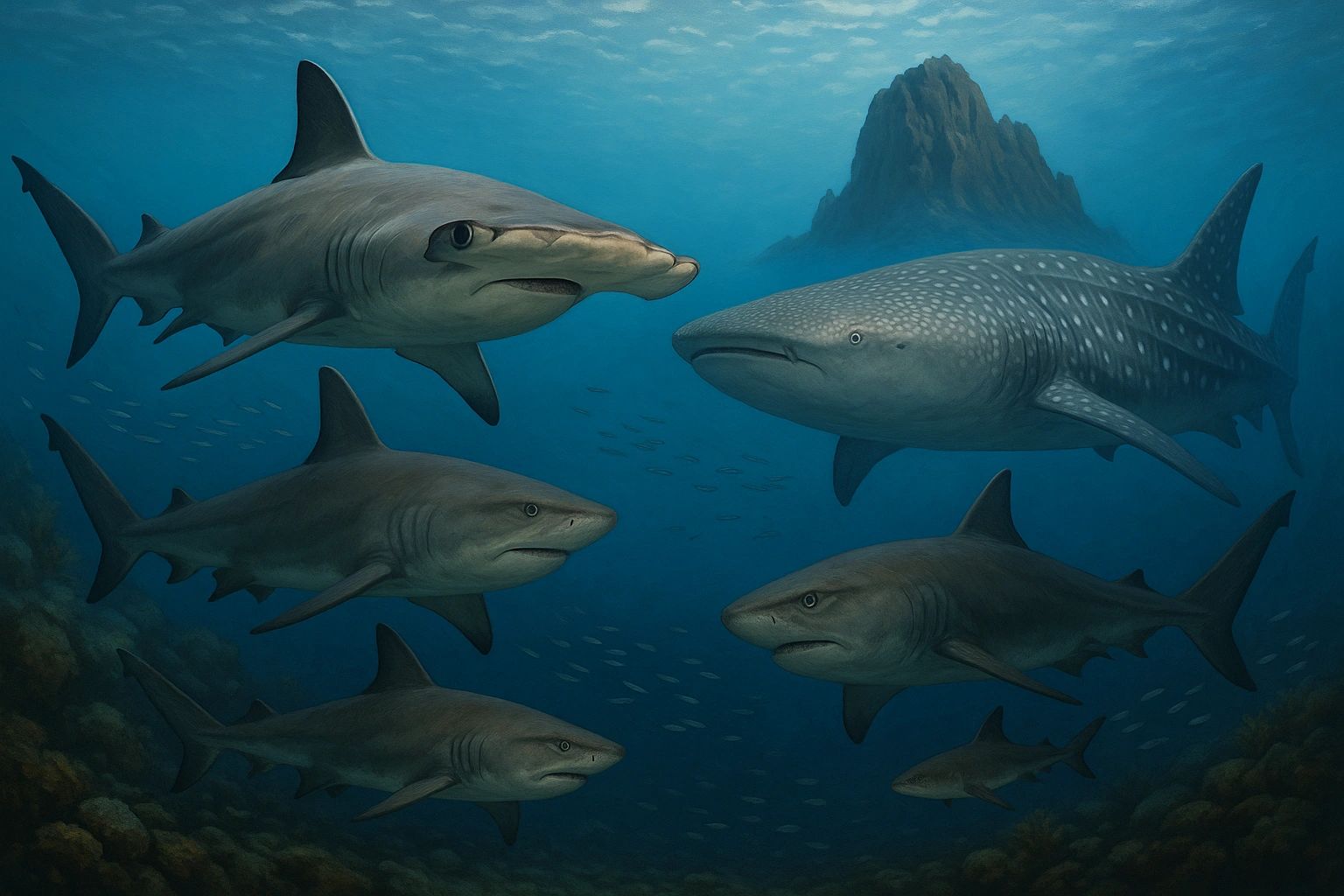
Hidden in the wide, blue waters of the eastern Pacific Ocean is a rocky island bursting with life. It’s called Malpelo Island, and though it’s tiny and tough to reach, it’s one of the best places in the world to see sharks. Big sharks. Lots of them. Scientists call it a “shark haven,” and for good reason. Around Malpelo, you can see hammerheads, silkies, Galápagos sharks, and even the massive whale shark. It’s like nature’s underwater stadium—and the stars of the show are all teeth, speed, and mystery.
So grab your snorkel (okay, maybe your scuba tank too), and let’s dive into the incredible world of the sharks of Malpelo!
Where in the World Is Malpelo Island?
First things first: where is this place?
Malpelo Island is located about 310 miles (500 kilometers) off the Pacific coast of Colombia. It’s a lonely piece of rock rising out of the sea, about a mile long and barely half a mile wide. There are no sandy beaches, palm trees, or cozy resorts. It’s just steep cliffs, crashing waves, and seabirds circling overhead.
But underwater? That’s where the magic happens.
Malpelo lies in the Tropical Eastern Pacific, an area known for strong ocean currents and nutrient-rich waters. These currents carry food from the deep sea to the surface, attracting all kinds of fish, rays, and—most importantly—sharks.
A Shark Sanctuary Like No Other
Malpelo is part of a larger underwater mountain range called the Malpelo Ridge. These underwater peaks and slopes provide the perfect environment for schooling fish and large predators.
In 2006, the Colombian government declared Malpelo and its surrounding waters a marine sanctuary. That means fishing, mining, and other harmful activities are banned. This protection has allowed shark populations here to grow and thrive—something rare in a world where sharks are often hunted for their fins, meat, or by accident (known as bycatch).
In fact, researchers have recorded some of the highest shark biomass (that means “total weight of sharks in an area”) in the world at Malpelo—up to 14.4 tons of shark per hectare in some locations! That’s like having a whole school bus full of sharks swimming every 2.5 acres .
Meet the Shark Superstars of Malpelo
So who lives in this underwater paradise? Let’s meet the top shark stars of Malpelo Island.
1. Scalloped Hammerhead Sharks (Sphyrna lewini)
Hammerheads are the poster sharks of Malpelo. Especially the scalloped hammerhead, which can grow over 10 feet long and travel in massive schools. Picture hundreds of sleek, silvery bodies swimming in tight formation, their wide hammer-shaped heads swaying in unison. It’s like watching a living cloud of sharks.
Scalloped hammerheads use Malpelo as a cleaning station and rest stop. During the day, they gather in schools near the island’s steep walls. At night, they head out into the deep ocean to hunt squid and fish.
Sadly, this species is endangered due to overfishing and finning. But in the safety of Malpelo’s protected waters, they can thrive and even be tagged for research.
2. Silky Sharks (Carcharhinus falciformis)
Silky sharks are sleek, fast, and curious. They get their name from their smooth, silky skin and are often seen cruising in groups near the surface. Silky sharks love hanging out in blue water and are known to follow boats.
They’re especially important to the ecosystem at Malpelo because they help keep populations of smaller fish in check. Unfortunately, silky sharks are also vulnerable to fishing because they often swim near tuna schools—and tuna fishing boats use gear that accidentally catches them.
At Malpelo, divers regularly see them patrolling near hammerhead schools or darting around looking for prey.
3. Galápagos Sharks (Carcharhinus galapagensis)
These beefy, powerful sharks are usually found near rocky islands—hence the name. Galápagos sharks are bold and territorial. At Malpelo, they often patrol deeper reef edges and steep drop-offs.
They grow over 10 feet long and have been known to show interest in divers (don’t worry, they’re curious, not aggressive). Researchers have studied them to learn how different shark species share the same space without fighting over food.
In Malpelo’s clear waters, Galápagos sharks play the role of bouncers—cruising the reef edges like they own the place.
4. Whale Sharks (Rhincodon typus)
While not seen as often as the other species, whale sharks occasionally make appearances at Malpelo. And when they do, they make a BIG impression. These gentle giants are the largest fish in the world, growing over 40 feet long!
Whale sharks eat plankton and tiny fish, not other sharks, so they’re not a threat to their neighbors. But when one swims by, even the bold Galápagos sharks seem to step aside.
Researchers believe Malpelo is part of the migratory route for whale sharks that travel across the Pacific. Satellite tags have shown they pass through this area while searching for food .
5. Tiger Sharks and Blacktip Sharks
Though less commonly seen, tiger sharks (Galeocerdo cuvier) and blacktip sharks (Carcharhinus limbatus) have also been recorded around Malpelo. These sightings show that the waters here are still full of surprises.
Tiger sharks, in particular, are apex predators known for their broad diet. Spotting one in Malpelo is rare but thrilling.
Why Are There So Many Sharks Here?
Scientists believe that Malpelo’s underwater structure plays a big role. The island rises steeply from deep water, meaning you can go from thousands of feet deep to just a few in no time. This makes it perfect for upwelling—when cold, nutrient-rich water rises from the deep. That water feeds plankton, which feeds fish, which attracts bigger fish… and then the sharks show up.
It’s a classic food web in action!
The isolation of the island also helps. Because it’s so far from land and protected by law, there are fewer human pressures like fishing or pollution.
Finally, Malpelo may also serve as a “stepping stone” between other shark hotspots like Cocos Island in Costa Rica and the Galápagos in Ecuador. These islands form what scientists call the “Eastern Tropical Pacific Marine Corridor,” or CMAR, and tracking studies show that sharks use these islands like rest stops on a long road trip .
Science at Sea: Tracking Sharks at Malpelo
Over the past two decades, researchers have placed electronic tags on many sharks around Malpelo. These tags help track where sharks go, how deep they dive, and when they move between islands.
One surprising finding? Many scalloped hammerheads dive way deeper than anyone expected—sometimes over 3,000 feet! Scientists think they may be hunting deep-sea squid or cooling off in colder water .
Tagging also helps conservationists prove that sharks cross borders—and need international protection. That’s why Colombia, Costa Rica, Panama, and Ecuador are working together to protect this whole region.
Threats from Outside the Sanctuary
Even though Malpelo itself is protected, sharks don’t always stay put. Many species, like hammerheads and silkies, leave the safe zone to migrate or hunt. That’s when they become vulnerable.
Illegal fishing vessels sometimes sneak into protected areas, and enforcement can be tough in such a remote location. Longline fishing (a method that uses lines with thousands of hooks) is especially dangerous for sharks, which often get caught by accident.
There’s also the global issue of shark finning. Despite bans in many countries, the high price of shark fins continues to drive illegal hunting. One hammerhead fin can sell for over $100 in some markets.
That’s why scientists and divers work hard to keep watch, report violations, and spread awareness.
Diving with Sharks: A Once-in-a-Lifetime Adventure
Because of its protected status and remote location, diving at Malpelo is only allowed through authorized tours, usually on liveaboard boats. You’ll need a permit, and the ride from mainland Colombia can take 36 hours or more. But if you make it, the reward is unreal.
Divers report seeing hundreds of sharks in a single dive. Schools of hammerheads move like silver clouds, while Galápagos sharks glide past. Silky sharks flash in and out of view, and sometimes you’ll even spot a whale shark lumbering by.
The dive sites have names like “El Bajo del Monstruo” (The Monster’s Drop) and “La Nevera” (The Refrigerator), hinting at the thrill of swimming in such wild waters.
But remember: Malpelo isn’t for beginners. The currents can be strong, and the dives are deep. Still, for experienced divers and ocean lovers, it’s one of the best shark destinations in the world.
Protecting Malpelo’s Sharks for the Future
Even though Malpelo is already a UNESCO World Heritage Site and a Marine Protected Area (MPA), experts say we need to do more.
Here are a few key steps being taken:
- Expanding Protected Zones: Colombia has been working to increase the size of the sanctuary and push for stricter no-fishing rules in surrounding waters .
- Tagging and Tracking: Scientists continue to tag sharks to understand their movement patterns and improve protection across borders.
- Public Awareness: Documentaries, research papers, and dive groups help raise awareness about why sharks matter—and why places like Malpelo are worth protecting.
- International Cooperation: Malpelo is part of the CMAR initiative, where Colombia works with other nations to create a “swimway” for migratory species like sharks.
The more we learn about sharks, the more we understand just how important they are for keeping our oceans healthy. And places like Malpelo—where sharks can swim freely—give us hope for the future.
Final Thoughts: Why Malpelo Matters
Sharks have been swimming the oceans for over 400 million years—long before dinosaurs ever stomped on land. But today, many species are at risk. Places like Malpelo Island remind us that with care, science, and cooperation, we can still protect our wild oceans.
Whether it’s the shadow of a hammerhead passing above you or the graceful curve of a Galápagos shark below, the sharks of Malpelo inspire awe and respect. They’re not monsters—they’re masterpieces of evolution, perfectly tuned for life in the blue.
So let’s celebrate them, protect them, and make sure they’re still swimming in places like Malpelo for centuries to come.
Bibliography
- Nalesso, E., et al. (2019). High biomass of reef sharks in the Malpelo Island Marine Protected Area (Colombia) reveals the importance of remote marine areas for shark conservation. Scientific Reports, 9(1), 13842. https://doi.org/10.1038/s41598-019-50427-6
- Ketchum, J. T., et al. (2014). Inter-island movements of scalloped hammerhead sharks (Sphyrna lewini) and implications for the design of marine reserves in the Eastern Tropical Pacific. Marine Biology, 161(4), 939–951. https://doi.org/10.1007/s00227-014-2393-y
- Hearn, A., et al. (2010). Hotspots within hotspots? Hammerhead shark movements around Wolf Island, Galápagos Marine Reserve. Marine Biology, 157(9), 1899–1915. https://doi.org/10.1007/s00227-010-1444-1
- Gallagher, A. J., & Klimley, A. P. (2018). The biology and conservation status of the large hammerhead sharks. Reviews in Fish Biology and Fisheries, 28(3), 567–586. https://doi.org/10.1007/s11160-018-9520-1
- Ministerio de Ambiente y Desarrollo Sostenible de Colombia. (2022). Plan de Manejo del Santuario de Fauna y Flora de Malpelo. Bogotá, Colombia.
Originally published at the live site .