
Rivers ·
The Suwannee River: Florida’s Timeless Waterway
Few rivers capture the imagination quite like the Suwannee. Winding its way from the quiet swamps of southern Georgia through the sandy soils of Florida, the Suwannee River is more than just a waterway—it’s a living thre...
By Rebecca "Madam Chronicler" Ryan
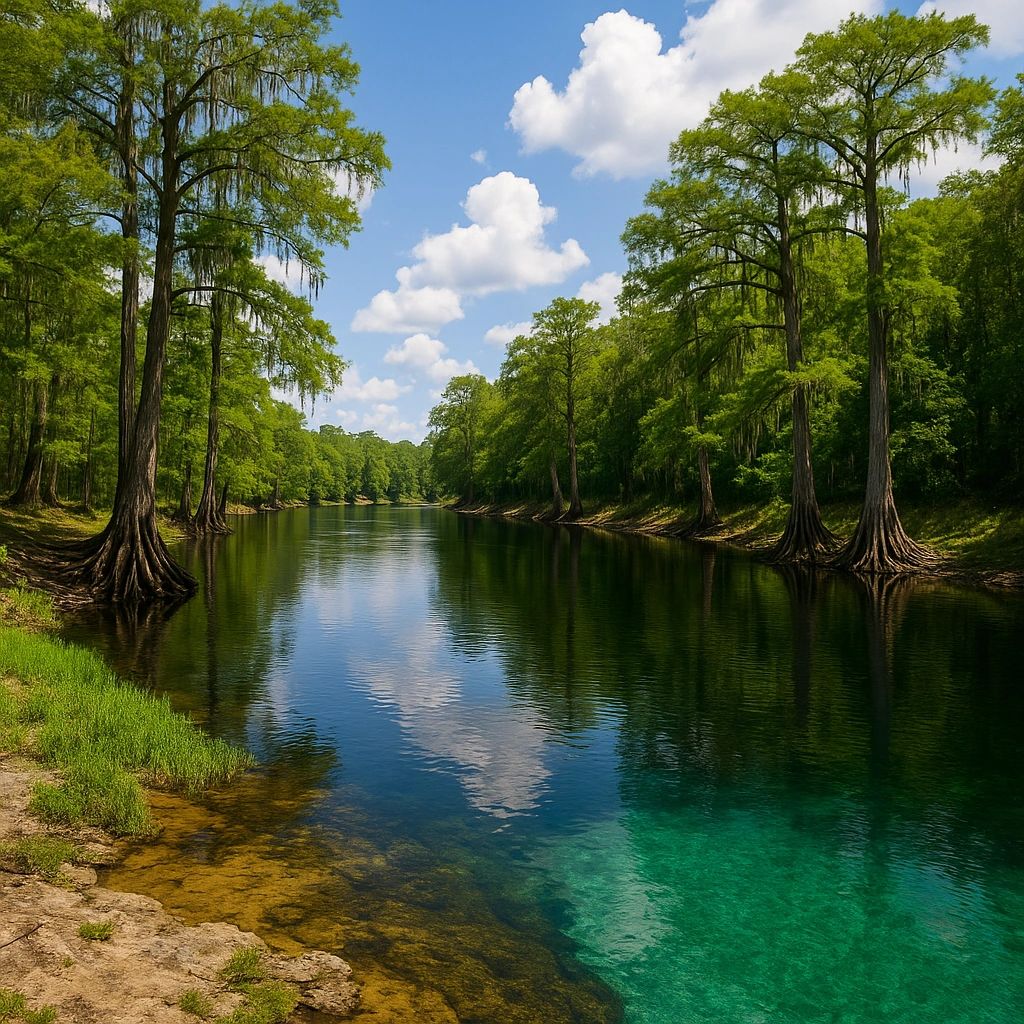
Few rivers capture the imagination quite like the Suwannee. Winding its way from the quiet swamps of southern Georgia through the sandy soils of Florida, the Suwannee River is more than just a waterway—it’s a living thread connecting ecosystems, cultures, and history across the southeastern United States. Known for its scenic beauty, unique geology, and rich biodiversity, this river is also deeply rooted in American folklore and music, celebrated in songs, stories, and traditions that keep its name alive worldwide.
In this post, we’ll take a long, meandering journey down the Suwannee River—exploring its origins, its natural wonders, the people who have called its banks home, and the challenges it faces today. By the end, you’ll see why the Suwannee isn’t just a river, but a symbol of wild Florida.
Origins of the Suwannee
The Suwannee River begins humbly in the Okefenokee Swamp in southern Georgia, one of the largest blackwater swamps in North America. From there, it flows southwest for about 246 miles (396 kilometers) before emptying into the Gulf of Mexico near Cedar Key, Florida[^1].
What makes the Suwannee particularly fascinating is its geology. Much of its course winds through karst limestone formations, meaning the river disappears underground in several places, only to resurface miles later. This “disappearing river” phenomenon is unique and contributes to the formation of Florida’s famous freshwater springs, some of which feed directly into the Suwannee[^2].
Along the way, the river carves out high bluffs, sinks, and floodplains, creating a mosaic of habitats that support everything from towering cypress trees to endangered sturgeon.
The River’s Cultural Echo: “Old Folks at Home”
For many people around the world, the Suwannee River is known less for its natural beauty and more for a song. In 1851, American composer Stephen Foster wrote “Old Folks at Home,” also known simply as “Swanee River.” Although Foster himself had never visited the river, he chose its name because it sounded musical and exotic. The song quickly became one of America’s most enduring folk tunes, later adopted as Florida’s official state song in 1935[^3].
While the lyrics have been updated over time to remove offensive stereotypes, the tune continues to evoke nostalgia and has immortalized the Suwannee in popular culture. It’s a reminder of how rivers are not only physical landmarks but also cultural symbols that shape identity.
Indigenous Roots of the Suwannee
Long before European explorers ever set eyes on the Suwannee, it was home to Indigenous peoples. Archaeological evidence shows that the Timucua and other Native groups thrived along its banks for thousands of years, relying on the river for food, transportation, and spiritual practices[^4]. Shell middens (ancient refuse heaps) found along the riverbanks reveal diets rich in fish, shellfish, and wild plants.
The Suwannee also held ceremonial significance. Many springs along the river were considered sacred, with crystal-clear waters viewed as portals to the spirit world. Even today, several Native groups, including Seminole descendants, hold cultural ties to the river.
Ecology: A Biodiversity Hotspot
The Suwannee River supports one of the richest ecosystems in the southeastern U.S. Because it flows through diverse landscapes—swamp, pine flatwoods, hardwood forests, and estuarine marshes—it provides habitats for countless species.
Fish and Wildlife
The river is especially famous for its sturgeon (Acipenser oxyrinchus), a prehistoric fish that can grow up to 8 feet long and weigh over 200 pounds. Each summer, these massive fish leap spectacularly out of the water, sometimes startling boaters[^5].
Other aquatic species include largemouth bass, catfish, bream, and sunfish, making the Suwannee a popular fishing destination. The floodplain forests are home to white-tailed deer, black bears, bobcats, and river otters. Birdwatchers can spot bald eagles, osprey, wood storks, and migratory songbirds along its banks[^6].
Springs: Jewels of the River
More than 200 freshwater springs feed into the Suwannee, making it one of the most spring-rich river systems in the world[^7]. These springs, such as Fanning Springs, Manatee Springs, and Ichetucknee Springs, create stunning turquoise-blue pools that attract swimmers, divers, and manatees alike. The constant 72°F water also provides critical winter habitat for manatees when colder Gulf waters become too chilly.
Plants and Wetlands
Cypress swamps dominate many parts of the river, with their knobby knees and moss-draped branches creating an otherworldly landscape. Floodplain forests, full of tupelo and oak, store floodwaters and provide nutrients to the river system. Aquatic plants like pickerelweed and water lilies shelter fish and stabilize banks against erosion.
Human History Along the Suwannee
Early Settlers and Industry
During the 1800s, the Suwannee became a vital transportation corridor for settlers moving into Florida. Steamboats once plied its waters, carrying lumber, cotton, and naval stores. Logging was especially intense, with vast cypress and pine forests cut and floated downstream to markets. Unfortunately, this exploitation drastically altered the ecosystem, leaving scars that are still visible today[^8].
Civil War and Beyond
The Suwannee also played a role in the Civil War, serving as a natural barrier and supply line. Confederate troops built fortifications along its banks to protect against Union advances. After the war, communities along the river turned to farming and small-scale industry, though many towns remained rural and isolated.
Modern Recreation
Today, the Suwannee is better known as a playground for outdoor enthusiasts. Canoeing and kayaking are popular activities, with the Suwannee River Wilderness Trail offering campsites and river camps along the way. Fishing tournaments, swimming holes, and music festivals at the Spirit of the Suwannee Music Park draw visitors from all over the country.
Conservation Challenges
Despite its beauty and cultural importance, the Suwannee River faces serious environmental challenges.
Pollution and Nutrient Loading
Agricultural runoff, particularly from fertilizers and animal waste, has led to nutrient pollution in the river and its springs. This can cause harmful algal blooms, reduce water clarity, and threaten aquatic life[^9].
Water Withdrawals
As Florida and Georgia’s populations grow, demands on groundwater have increased. Because the Suwannee depends on aquifers that feed its springs, excessive pumping for irrigation and drinking water reduces flow levels and stresses ecosystems[^10].
Climate Change
Rising sea levels and shifting rainfall patterns pose additional risks. Saltwater intrusion threatens the estuary where the Suwannee meets the Gulf, while increased flooding and drought cycles challenge both wildlife and communities along the river[^11].
The Suwannee River Wilderness Trail
One of the most exciting modern efforts to celebrate and protect the river is the Suwannee River Wilderness Trail, a 170-mile-long system of public lands, state parks, and river camps. Paddlers can explore the river from White Springs to the Gulf of Mexico, camping along platforms and rustic cabins along the way[^12].
This trail highlights the river’s recreational value while promoting conservation, ensuring that future generations can experience its beauty.
The Suwannee in Folklore and Memory
Beyond science and history, the Suwannee lives on in stories. Local legends speak of ghost lights along the banks, mysterious whirlpools, and sturgeon so large they could overturn boats. Folk festivals celebrate its music, while storytellers pass down tales of life along the river.
In this way, the Suwannee is not just water flowing through land—it’s memory flowing through people.
Why the Suwannee Still Matters
The Suwannee River matters because it embodies the intersection of nature and culture. It is home to rare species, a source of recreation and livelihoods, and a symbol of Florida’s heritage. Protecting the river means safeguarding not just an ecosystem but also a living story that continues to inspire.
Standing on its banks, listening to the flow, you can almost hear the echoes of history—the paddles of Indigenous canoes, the hum of steamboats, the strum of a banjo playing “Swanee River.” The river connects past and present, people and nature, in a way few other waterways can.
Conclusion
The Suwannee River is more than a geographical feature—it is a testament to resilience, beauty, and cultural identity. From its mysterious beginnings in the Okefenokee Swamp to its wide embrace at the Gulf of Mexico, the river is a lifeline for wildlife, a stage for history, and a muse for art and song.
As we look to the future, caring for the Suwannee means recognizing its importance not just as a water source, but as a living legacy. Whether you paddle its winding path, swim in its springs, or simply hum along to Foster’s tune, the Suwannee River has a way of flowing into your heart.
Bibliography
- Couch, C. A., Hopkins, E. H., & Hardy, P. S. (1996). Influences of environmental settings on aquatic ecosystems in the Apalachicola-Chattahoochee-Flint River Basin. U.S. Geological Survey.
- Dodd, C. K., & Barichivich, W. J. (2007). Establishment of a baseline for monitoring amphibians of the Suwannee River drainage, Florida. Florida Scientist, 70(2), 147–161.
- FDEP (Florida Department of Environmental Protection). (2018). Suwannee River Basin Management Action Plan. Tallahassee, FL.
- Foster, S. (1851). Old Folks at Home (Swanee River). Sheet music. New York: Firth, Pond & Co.
- Hoyer, M. V., & Canfield, D. E. (1994). Aquatic macrophyte distribution in relation to water chemistry in Florida lakes. Journal of Aquatic Plant Management, 32, 66–76.
- Knight, R. L. (2015). Silenced Springs: Moving from Tragedy to Hope. Florida Springs Institute.
- Livingston, R. J. (2001). Eutrophication processes in coastal systems: Origin and succession of plankton blooms and effects on secondary production in Gulf Coast estuaries. CRC Press.
- Means, D. B. (1992). Rare fauna of karstlands: Swimming through time and space. Florida Geological Survey Special Publication.
- Scudder, B. C., Fitzpatrick, F. A., Waite, I. R., & Sullivan, D. J. (1996). Environmental characteristics and water quality of the Suwannee River Basin, Florida and Georgia. U.S. Geological Survey.
- Walsh, S. J., & Williams, J. D. (2003). Inventory of freshwater fishes of the Suwannee River Basin, Florida, with descriptions of new species of Etheostoma (Percidae). Bulletin of the Florida Museum of Natural History, 43(1), 1–77.
Originally published at the live site .