
Maritime ·
Tracking Zipper: How a Tagged Great Hammerhead Shark Is Changing
In the vast blue expanse of the Atlantic Ocean, one apex predator is making waves—not just through the water, but in the scientific world as well. Her name is Zipper, and she’s not your typical shark. As a tagged great h...
By Rebecca "Madam Chronicler" Ryan
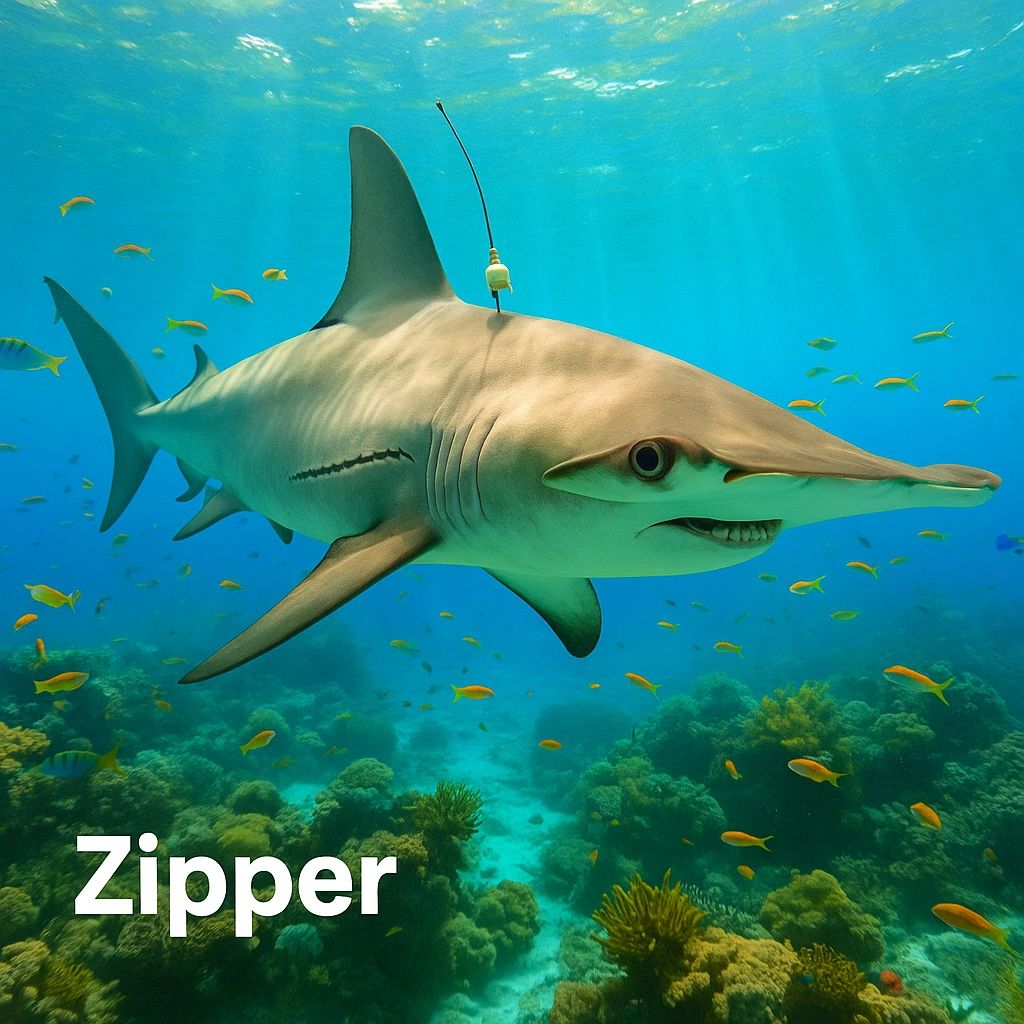
In the vast blue expanse of the Atlantic Ocean, one apex predator is making waves—not just through the water, but in the scientific world as well. Her name is Zipper, and she’s not your typical shark. As a tagged great hammerhead (Sphyrna mokarran), Zipper is part of an advanced research initiative aimed at unraveling the mysteries of one of the ocean’s most elusive and endangered predators. Her movements are being monitored in real time, providing groundbreaking insights into the behavior, migration, and conservation needs of great hammerhead sharks.
A Shark with a Mission
Zipper was named by researchers who noticed a scar on her side that resembles the teeth of a zipper. Her unique marking made her easy to identify even before she was fitted with a satellite transmitter. But Zipper isn’t just notable for her appearance. She is one of the few great hammerheads ever to be successfully satellite-tagged, a difficult feat considering the species’ shy and skittish nature (Hammerschlag et al., 2011).
The shark was tagged near the Florida Keys by marine scientists from the Bimini Biological Field Station Foundation (Shark Lab). Using a minimally invasive technique, researchers secured a satellite transmitter to her dorsal fin. This device collects data on her location, depth, and ambient water temperature, transmitting information to satellites each time she surfaces. Through Zipper, scientists are unlocking new knowledge about a species that has long remained enigmatic.
The Biology and Ecology of the Great Hammerhead
Great hammerhead sharks are the largest of the nine hammerhead species, reaching lengths of up to 20 feet and weighing over 900 pounds. They are characterized by their distinctive cephalofoil—the flattened, hammer-shaped head that enhances sensory reception and maneuverability. This structure increases the shark’s ability to detect prey buried in the seafloor, particularly stingrays, which form a significant portion of its diet (Chapman & Gruber, 2002).
As apex predators, great hammerheads play a critical role in regulating marine ecosystems. However, they are particularly vulnerable to anthropogenic threats due to their large size, late sexual maturity, and low reproductive rates. The International Union for Conservation of Nature (IUCN) has listed the species as Critically Endangered, citing overfishing and bycatch as primary causes of their population decline (Rigby et al., 2019).
The Science of Tagging and Tracking
Satellite tagging has become an indispensable tool in marine biology. For large pelagic species like the great hammerhead, traditional methods of observation—such as underwater visual surveys—are often insufficient due to their broad migratory ranges and deep-diving behavior. The use of satellite tags allows researchers to gather long-term data on movement patterns, habitat use, and environmental preferences.
In Zipper’s case, her tag records spatial and temporal data, allowing scientists to track her migratory routes, vertical movements, and temperature preferences. Preliminary data indicates that Zipper has traveled thousands of kilometers across the western Atlantic, frequenting coastal waters off Florida, the Bahamas, and as far north as the Carolinas. Her movements appear to follow seasonal temperature gradients, consistent with prior findings on hammerhead migrations (Andrzejaczek et al., 2018).
Behavioral Insights from Zipper
Zipper’s data has already led to several significant findings:
- Seasonal migration: Zipper migrates in accordance with changing sea surface temperatures, preferring subtropical and tropical waters during the winter months and more temperate zones in summer.
- Diurnal vertical movement: Like other great hammerheads, Zipper appears to engage in diel vertical migration—remaining near the surface during daylight hours and descending to deeper waters at night, likely in search of prey (Cappo et al., 2004).
- Site fidelity: Despite her long-range travel, Zipper shows signs of returning to specific habitats, such as shallow seagrass beds and coral reefs, which may serve as important foraging grounds or mating areas.
These behaviors underscore the importance of preserving a network of interconnected marine habitats across geopolitical boundaries.
Conservation Challenges
The information gathered from Zipper is critical in the context of rising threats to shark populations globally. The great hammerhead is a frequent victim of both targeted and incidental capture in commercial and artisanal fisheries. Its large fin size makes it particularly attractive for the international shark fin trade, despite global outcry and increasing regulation (Clarke et al., 2006).
Habitat degradation poses an additional challenge. Coastal development, pollution, and climate change are altering nearshore ecosystems such as mangroves, seagrass beds, and coral reefs—key habitats for juvenile and adult hammerheads alike (Heupel et al., 2007).
Efforts to mitigate these threats include the establishment of marine protected areas (MPAs), enforcement of catch limits, and public education campaigns. However, effective conservation strategies require detailed ecological data—precisely the kind of data Zipper is helping to provide.
The Broader Impact of Shark Tracking
Zipper’s journey is emblematic of a larger movement in marine science that harnesses technology to inform policy. Data from shark tagging studies have already influenced marine conservation efforts worldwide. For instance, satellite tracking contributed to the creation of shark sanctuaries in The Bahamas and Palau by demonstrating the frequent presence of endangered shark species in those waters (Ward-Paige et al., 2013).
Moreover, public engagement initiatives that share real-time tracking of tagged sharks have proven effective at raising awareness and support for shark conservation. Platforms like OCEARCH and the Shark Lab publish interactive maps and species profiles that allow the public to “follow” sharks like Zipper as they travel the ocean.
Why Zipper Matters
Zipper is more than just a research subject—she’s a living ambassador for her species. Through her, scientists are beginning to piece together the puzzle of great hammerhead ecology. Her movements illustrate the importance of transboundary conservation, the need for international cooperation, and the critical role that apex predators play in marine ecosystems.
Her story also illustrates the ethical evolution of shark research. Tagging techniques have become more humane and precise, reducing stress on animals and increasing the quality of collected data. This ethical commitment enhances the legitimacy and public trust in marine research.
Conclusion: Toward a Future Where Sharks Thrive
The fate of Zipper and her kind hangs in a delicate balance. While great hammerheads remain critically endangered, innovations in tracking and data collection offer a path forward. As scientists, policymakers, and the public continue to collaborate, we edge closer to a future where sharks are not feared, but respected and protected.
Through her silent, powerful glides across the ocean, Zipper is helping humanity see sharks differently—not as mindless predators, but as complex, vulnerable, and vital components of the marine world. Her story is a call to action, inviting us to think critically about how we interact with the ocean and what we can do to preserve its majestic inhabitants.
References
Andrzejaczek, S., Gleiss, A. C., Jordan, L. K. B., Pattiaratchi, C. B., Howey, L. A., Brooks, E. J., … & Meekan, M. G. (2018). Thermal and trophic ecology of the ocean’s largest fish: Implications for movement, migrations and conservation. Journal of Experimental Biology, 221(1), jeb170304. https://doi.org/10.1242/jeb.170304
Cappo, M., Speare, P., & De’ath, G. (2004). Comparison of baited remote underwater video stations (BRUVS) and prawn (shrimp) trawls for assessments of fish biodiversity in inter-reefal areas of the Great Barrier Reef Marine Park. Journal of Experimental Marine Biology and Ecology, 302(2), 123–152. https://doi.org/10.1016/j.jembe.2003.10.006
Chapman, D. D., & Gruber, S. H. (2002). A further observation of the prey-handling behavior of the great hammerhead shark, Sphyrna mokarran: Predation upon a stingray. Bulletin of Marine Science, 70(3), 947–952.
Clarke, S. C., Milner-Gulland, E. J., & Bjørndal, T. (2006). Social, economic, and regulatory drivers of the shark fin trade. Marine Resource Economics, 22(3), 305–327. https://doi.org/10.1086/mre.22.3.42629525
Hammerschlag, N., Gallagher, A. J., Wester, J., Luo, J., & Ault, J. S. (2011). Don’t bite the hand that feeds: Assessing ecological impacts of provisioning ecotourism on an apex marine predator. Functional Ecology, 26(3), 567–576. https://doi.org/10.1111/j.1365-2435.2012.01973.x
Heupel, M. R., Carlson, J. K., & Simpfendorfer, C. A. (2007). Shark nursery areas: Concepts, definition, characterization and assumptions. Marine Ecology Progress Series, 337, 287–297. https://doi.org/10.3354/meps337287
Rigby, C. L., Barreto, R., Carlson, J., Fernando, D., Fordham, S., Francis, M. P., … & Simpfendorfer, C. (2019). Sphyrna mokarran. The IUCN Red List of Threatened Species 2019: e.T39386A2918526. https://doi.org/10.2305/IUCN.UK.2019-3.RLTS.T39386A2918526.en
Ward-Paige, C. A., Davis, B., & Worm, B. (2013). Global population trends and human use patterns of Manta and Mobula rays. PLOS ONE, 8(9), e74835. https://doi.org/10.1371/journal.pone.0074835
Originally published at the live site .