
Maritime ·
Two Silent Hunters Above the Wetlands
Figure 1. A great blue heron (Ardea herodias) and a great egret (Ardea alba) roost together above a wetland. Shared roosting sites like this often indicate productive habitats capable of supporting multiple keystone pr...
By Rebecca "Madam Chronicler" Ryan
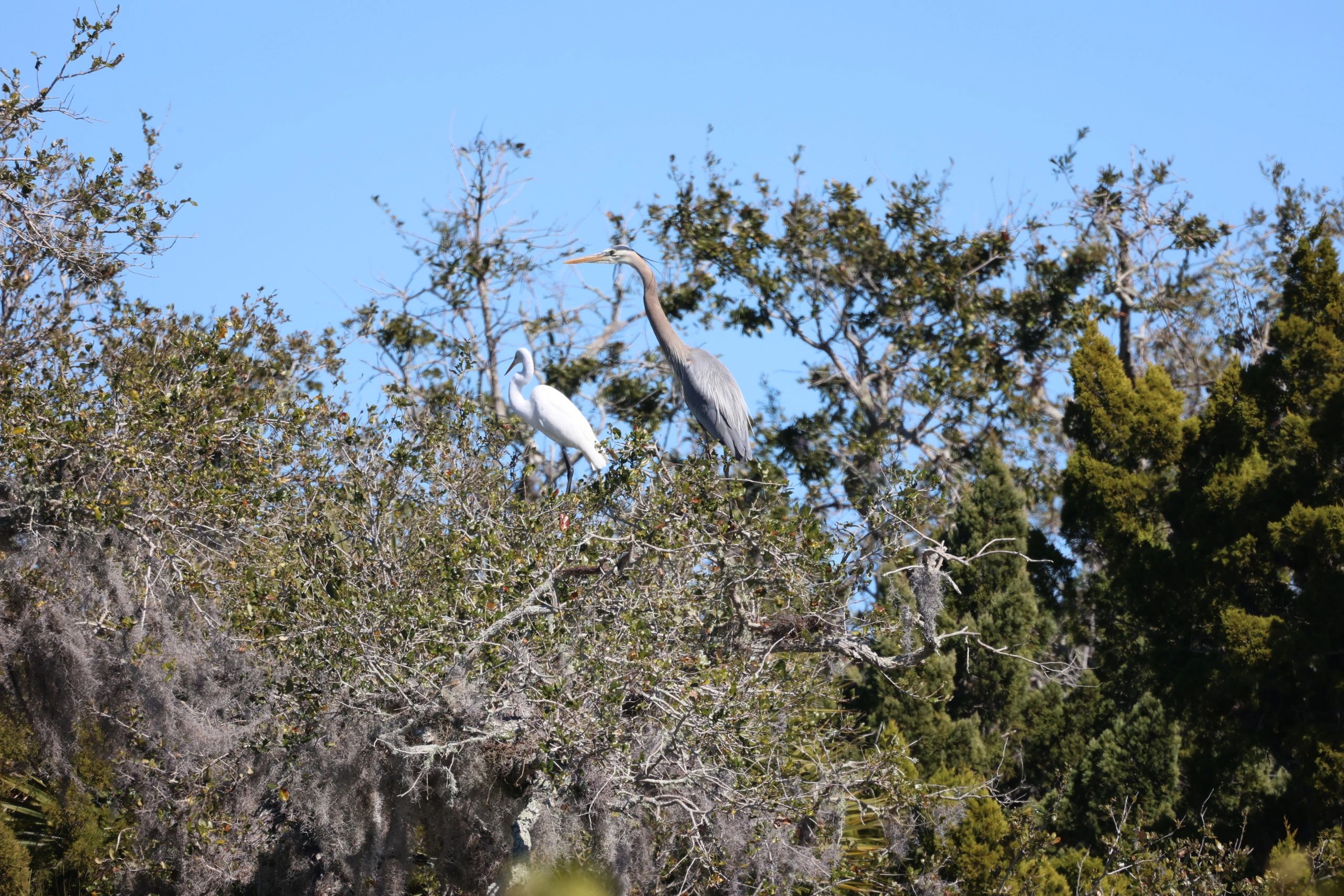
Figure 1. A great blue heron (Ardea herodias) and a great egret (Ardea alba) roost together above a wetland. Shared roosting sites like this often indicate productive habitats capable of supporting multiple keystone predators.
Two large birds rest high in the trees, balanced against the sky. One is tall and gray-blue, with an elongated, curved neck folded close to its body. The other is bright white, almost glowing against the leaves. They are still. Watching. Waiting.
These birds, a great blue heron and a great egret, reveal a deeper story than meets the eye. Their presence in these silent, unassuming moments signals a thriving, functioning wetland. They are more than just scenery; they are keystone predators, profoundly shaping the ecosystem in ways that extend far beyond our immediate view.
Reading the Wetland From the Treetops
Herons and egrets frequently roost in trees near the waters they hunt in. This behavior provides them with safety, a clear view of their surroundings, and easy access to feeding grounds. When two different species share the same resting place, it often indicates that the habitat below can support multiple top predators simultaneously.
Ecologists pay close attention to moments like this. Predators only stay in areas where food is reliable, water quality is stable, and seasonal patterns are intact. When herons and egrets disappear from an area, it’s usually not a random occurrence. It’s often one of the first visible signs that something is amiss.
What Makes a Keystone Predator
The term “keystone species” was introduced by ecologist Robert Paine, who found that removing a single predator could cause an entire ecosystem to collapse. Keystone predators regulate prey populations and help maintain balance across food webs, even with small populations.
Herons and egrets fulfill this role in wetlands. They consume fish, frogs, insects, and small reptiles, but their influence extends beyond what they eat. Their mere presence alters the behavior, movement patterns, and landscape usage of other animals.
The Power of Stillness
Watching a heron hunt can be hypnotic. It may stand motionless for minutes, barely moving as water flows around its legs. Then, in a flash, its bill strikes.
This hunting strategy, known as sit-and-wait predation, is highly effective. Rather than chasing prey, herons and egrets allow prey to come to them. Research indicates that this method tends to remove weaker or slower individuals first, which can strengthen prey populations over time (Kushlan, 1976).
When faced with the constant threat from wading birds, fish alter their behavior. They avoid shallow areas at specific times, adjust their feeding schedules, and distribute themselves more evenly throughout the wetland. These adaptations safeguard aquatic plants from overgrazing and contribute to clearer water, ultimately promoting a healthier ecosystem (Power et al., 1985).
Keeping Fish Populations in Balance
Fish are a significant part of the great blue heron and great egret diet. By consuming small to medium-sized fish, these birds prevent any single species from overpopulating. Uncontrolled fish populations can stir up sediment, decrease oxygen levels, and cause algal blooms that block sunlight.
Studies of wetlands where wading birds are present consistently show healthier vegetation and better water clarity. In contrast, areas where herons are excluded or decline often experience uneven fish populations and subsequent water quality issues (Kushlan, 1976).
Amphibians, Reptiles, and Seasonal Stability
Wetlands are crucial breeding grounds for amphibians. Frogs and salamanders often lay thousands of eggs in shallow waters, which can lead to rapid population increases. Without predators, these populations can decline later due to disease or lack of food.
Herons and egrets help to moderate these fluctuations. Their consistent feeding throughout the season reduces overcrowding and contributes to stable amphibian populations. Research indicates that this type of predation is crucial for maintaining balance within wetland ecosystems (Werner & McPeek, 1994).
Quiet Control of Insects
While fish and frogs often grab the spotlight, herons and egrets also consume vast quantities of aquatic insects and invertebrates. Crayfish, insect larvae, and other small animals are a significant part of their diet.
This is more significant than most people understand. Aquatic insects are strongly linked to mosquito populations and disease transmission. By controlling these insects at the source, wading birds indirectly benefit nearby human communities (Batzer & Wissinger, 1996).
Sharing Space Without Competing
While it may seem unusual to see two similar predators sharing the same roost, herons and egrets have actually developed effective strategies for coexistence without intense competition.
They often hunt at slightly different water depths, focus on different prey sizes, or feed at different times of the day. This subtle separation allows wetlands to support multiple predators simultaneously, strengthening the food web rather than stressing it.
Moving Nutrients From Water to Land
When herons and egrets feed in wetlands and subsequently roost or nest in trees, they facilitate the movement of nutrients across ecosystem boundaries. Their droppings enrich the soil with nitrogen and phosphorus, thereby supporting plant growth in wetland areas.
Studies of bird rookeries demonstrate a direct link between nutrient transfer and increased plant productivity. Over time, this process enhances biodiversity and connects aquatic and terrestrial ecosystems (Mizutani et al., 1992).
Living Indicators of Wetland Health
Because herons and egrets are top predators, they are highly sensitive to pollution and habitat disruption. Scientists often monitor these birds to track ecosystem health, studying nesting success and contaminant levels in their feathers and eggs.
Declines in wading bird populations have been repeatedly linked to water pollution, altered water flow, and habitat loss. In many cases, these bird declines appear before visible ecosystem collapse, making them valuable early warning signals (Frederick & Ogden, 2001).
Lessons From the Everglades
The Florida Everglades offer a stark illustration of the strong connection between herons, egrets, and wetland health. An alteration to the water flow in the 20th century resulted in fish no longer concentrating in shallow areas as they should have. As a result, wading bird populations plummeted, declining by over 90%.
As restoration efforts began to return natural water patterns, fish returned. Soon after, herons and egrets followed. Their recovery helped scientists confirm that predator success depends on precise timing between water levels and prey availability (Ogden, 2005).
What This Photo Really Shows
This image reveals more than just two birds in a tree; it showcases a wetland that maintains sufficient life, balance, and structure to support top predators, preserving a thriving food web.
These moments are easy to overlook, but for ecologists, they’re powerful signals.
Final Thoughts
Herons and egrets do not dominate wetlands through force or speed; they dominate through patience. Their stillness shapes fish behavior, stabilizes amphibian populations, moves nutrients, and reflects the health of entire ecosystems. When you see them together—silent above the water—you are witnessing balance in action.
References
Batzer, D. P., & Wissinger, S. A. (1996). Ecology of insect communities in nontidal wetlands. Annual Review of Entomology, 41, 75–100. Frederick, P. C., & Ogden, J. C. (2001). Pulsed breeding of long-legged wading birds and drought in the Everglades. Wetlands, 21(4), 484–491. Kushlan, J. A. (1976). Feeding behavior of North American herons. The Auk, 93(1), 86–94. Mizutani, H., Kabaya, Y., & Wada, E. (1992). Bird-mediated nutrient transfer. Isotopes in Environmental and Health Studies, 28(3–4), 173–178. Ogden, J. C. (2005). Everglades ridge and slough ecological model. Wetlands, 25(4), 810–820. Paine, R. T. (1969). Trophic complexity and community stability. The American Naturalist, 103(929), 91–93. Power, M. E., et al. (1985). Grazing fish and stream algae. Ecology, 66(5), 1448–1456. Werner, E. E., & McPeek, M. A. (1994). Predation risk and amphibian habitat use. Ecology, 75(5), 1368–1382.
Originally published at the live site .