
Maritime ·
What Fish Are in the Shark Family?
Sharks are some of the coolest and most mysterious creatures in the ocean. With their sleek bodies, sharp teeth, and powerful senses, they’ve fascinated people for centuries. But did you know that there’s more to sharks ...
By Rebecca "Madam Chronicler" Ryan
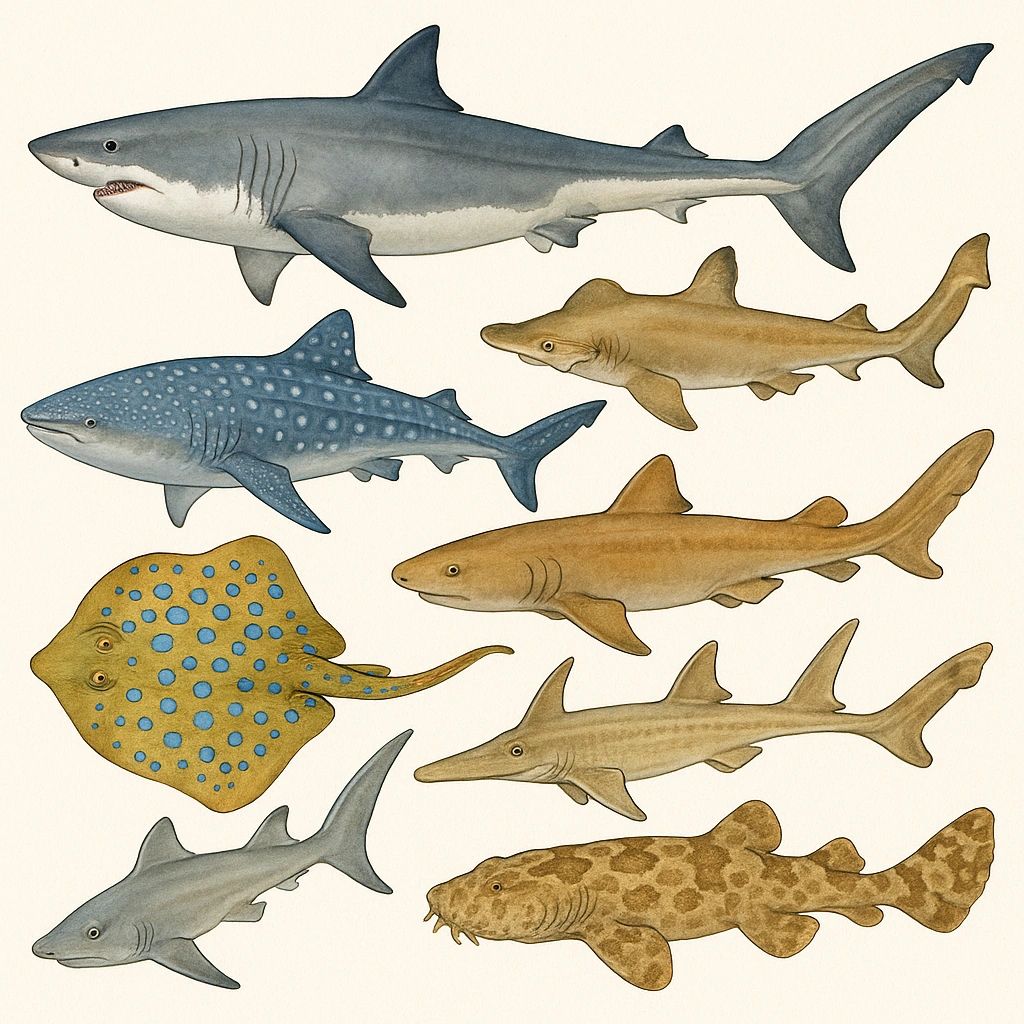
Sharks are some of the coolest and most mysterious creatures in the ocean. With their sleek bodies, sharp teeth, and powerful senses, they’ve fascinated people for centuries. But did you know that there’s more to sharks than just the famous Great White or the fearsome Tiger Shark? There’s actually a whole family of fish that sharks belong to—called elasmobranchs—and they come in all shapes and sizes!
In this blog post, we’re going to dive deep into the underwater world of sharks and learn all about the fish that belong in their family. You’ll meet some popular sharks, find out which fish are their cousins, and discover just how diverse this ancient group really is.
What Makes a Fish a Shark?
First, let’s talk about what makes a shark a shark.
Sharks are part of a bigger group called cartilaginous fish. That means their skeletons are made of cartilage—the same stuff in your nose and ears—instead of hard bone. This group is called Chondrichthyes (say it like: kon-DRIK-thees).
Within this group, sharks belong to a class called Elasmobranchii, which also includes rays, skates, and sawfish. These fish share some key features:
- Cartilage skeletons instead of bones
- Five to seven gill slits on the sides of their heads
- Rough skin covered in tiny tooth-like scales called dermal denticles
- No swim bladder (they rely on oil in their liver and constant swimming to stay afloat)
So, while rays and skates may not look like sharks, they’re actually part of the same family tree!
The Main Families of Sharks
Now that we know what makes a shark a shark, let’s look at the different types of sharks. There are over 500 species of sharks, and scientists group them into nine main orders based on their body shapes, teeth, gill structure, and other features. Here are some of the most common shark orders:
1. Carcharhiniformes – The Ground Sharks
This is the largest order of sharks and includes many well-known species.
Examples:
- Tiger Shark – Known for its stripes and wide diet
- Bull Shark – Famous for swimming in both salt and fresh water
- Hammerhead Shark – Recognizable by its hammer-shaped head
- Blacktip and Whitetip Reef Sharks – Common around coral reefs
These sharks usually have five gill slits, a wide mouth, and a nictitating membrane, which is a special eyelid that protects their eyes while hunting.
2. Lamniformes – The Mackerel Sharks
These sharks are built for speed and power.
Examples:
- Great White Shark – One of the most famous and feared sharks
- Mako Shark – The fastest shark in the sea
- Goblin Shark – A weird-looking deep-sea shark with a long snout
Lamniform sharks often have large eyes and live in open water.
3. Orectolobiformes – The Carpet Sharks
These are bottom-dwelling sharks that often blend in with their surroundings.
Examples:
- Whale Shark – The largest fish in the world, but completely harmless
- Nurse Shark – Slow-moving and often resting on the ocean floor
- Wobbegong – A master of camouflage
Carpet sharks have small mouths and are usually not aggressive.
4. Hexanchiformes – The Frilled and Cow Sharks
These are some of the oldest types of sharks, with prehistoric features.
Examples:
- Frilled Shark – Looks like an eel with gills that stick out like frills
- Cow Shark – Has six or seven gill slits instead of the usual five
These sharks are rarely seen and mostly live in deep waters.
5. Squaliformes – The Dogfish Sharks
These small to medium-sized sharks live in deep oceans.
Examples:
- Spiny Dogfish – A common shark in colder waters
- Cookiecutter Shark – Takes round bites out of larger animals
Dogfish sharks often have spines in front of their dorsal fins.
6. Heterodontiformes – The Bullhead Sharks
These sharks have unique teeth—sharp in the front and flat in the back—for crunching shellfish.
Examples:
- Horn Shark – Found near the coast and active at night
- Port Jackson Shark – Has a spiral egg case that looks like a corkscrew
They’re usually small and harmless to humans.
7. Pristiophoriformes – The Sawsharks
These sharks have long, flat snouts lined with teeth—like a saw!
Examples:
- Japanese Sawshark
- Longnose Sawshark
They use their saw-like snouts to slash through schools of fish.
8. Squatiniformes – The Angel Sharks
Angel sharks look more like rays than sharks, with flat bodies and wing-like fins.
Examples:
- Angel Shark
- Australian Angel Shark
They hide in the sand and ambush prey with a lightning-fast bite.
9. Echinorhiniformes – The Bramble Sharks
These rare deep-sea sharks are covered in large thorny scales.
Example:
- Bramble Shark
They’re not well-known because they live in very deep parts of the ocean.
Ray and Skate Cousins: Still Shark Family!
Even though rays, skates, and sawfish don’t look like the sharks we usually think of, they are part of the shark family. That’s because they also have cartilage skeletons, gill slits, and similar features.
Rays
Rays have wide, flat bodies and swim by flapping their “wings.”
Examples:
- Manta Ray – Giant and gentle, glides through open ocean
- Stingray – Has a venomous tail spine for defense
- Eagle Ray – Known for jumping out of the water!
Skates
Skates look like rays, but they lay egg cases (called mermaid’s purses) instead of giving birth to live young.
Examples:
- Common Skate
- Little Skate
They’re usually smaller and found on sandy or muddy sea floors.
Sawfish
Sawfish are like sawsharks but are more closely related to rays.
Examples:
- Smalltooth Sawfish
- Largetooth Sawfish
These are critically endangered and often get caught in fishing nets because of their long, toothy snouts.
Fun Facts About Shark Relatives
Here are some cool things you might not know about the fish in the shark family:
- Whale sharks are the largest fish on Earth and can grow up to 40 feet long—but they only eat tiny plankton!
- Greenland sharks can live for over 400 years, making them the longest-living vertebrates in the world.
- Hammerhead sharks have 360-degree vision, so they can see all around their bodies at once.
- Electric rays can shock their prey with jolts of electricity.
- Skates have thorny backs and tails but no venom.
Sharks Have Been Around for a Long Time
Sharks and their relatives have been swimming in the oceans for over 400 million years—that’s older than dinosaurs! Their bodies haven’t changed much because they were already so well designed for survival. They have super senses, including the ability to detect tiny movements, electric fields, and even blood from miles away.
Their family tree is huge and full of amazing creatures. From giant whale sharks to tiny lanternsharks, from flat stingrays to deep-sea goblin sharks, this ancient group has something for everyone.
Final Thoughts
So, what fish are in the shark family? The answer is: a lot more than you might think! Sharks are part of a big group of cartilaginous fish that includes rays, skates, and sawfish. Inside the shark branch alone, there are nine main types, from hammerheads to carpet sharks. And let’s not forget their flattened cousins—the graceful rays, sneaky skates, and sword-faced sawfish.
The shark family is incredibly diverse. Some sharks are fast and fierce, others are slow and gentle. Some live near the surface, others hide in the deep sea. But they all share a common link: they’re part of one of the most ancient and fascinating families in the ocean.
Next time you go to the beach or visit an aquarium, keep an eye out for these incredible creatures. Whether it’s a big shark or a shy stingray, you’re looking at a member of one of nature’s coolest underwater clans.
Bibliography
- Compagno, L. J. V. (2005). Sharks of the World. Princeton University Press.
- Ebert, D. A., Fowler, S., & Compagno, L. J. V. (2013). Sharks of the World: A Fully Illustrated Guide. Wild Nature Press.
- Froese, R., & Pauly, D. (Eds.). (2024). FishBase. Retrieved from https://www.fishbase.se
- MarineBio Conservation Society. (2024). Shark Species. Retrieved from https://www.marinebio.org
- National Oceanic and Atmospheric Administration (NOAA). (2024). Shark Facts. Retrieved from https://www.fisheries.noaa.gov
- Smithsonian Ocean Portal. (2024). Sharks and Their Relatives. Retrieved from https://ocean.si.edu/ocean-life/sharks-rays/sharks-and-their-relatives
Originally published at the live site .