
Maritime ·
What Marine Mammals Are in Florida?
Florida isn’t just famous for its beaches, sunshine, and oranges—it’s also home to an amazing variety of marine mammals! From the gentle manatee to the powerful bottlenose dolphin, Florida’s waters are alive with fascina...
By Rebecca "Madam Chronicler" Ryan
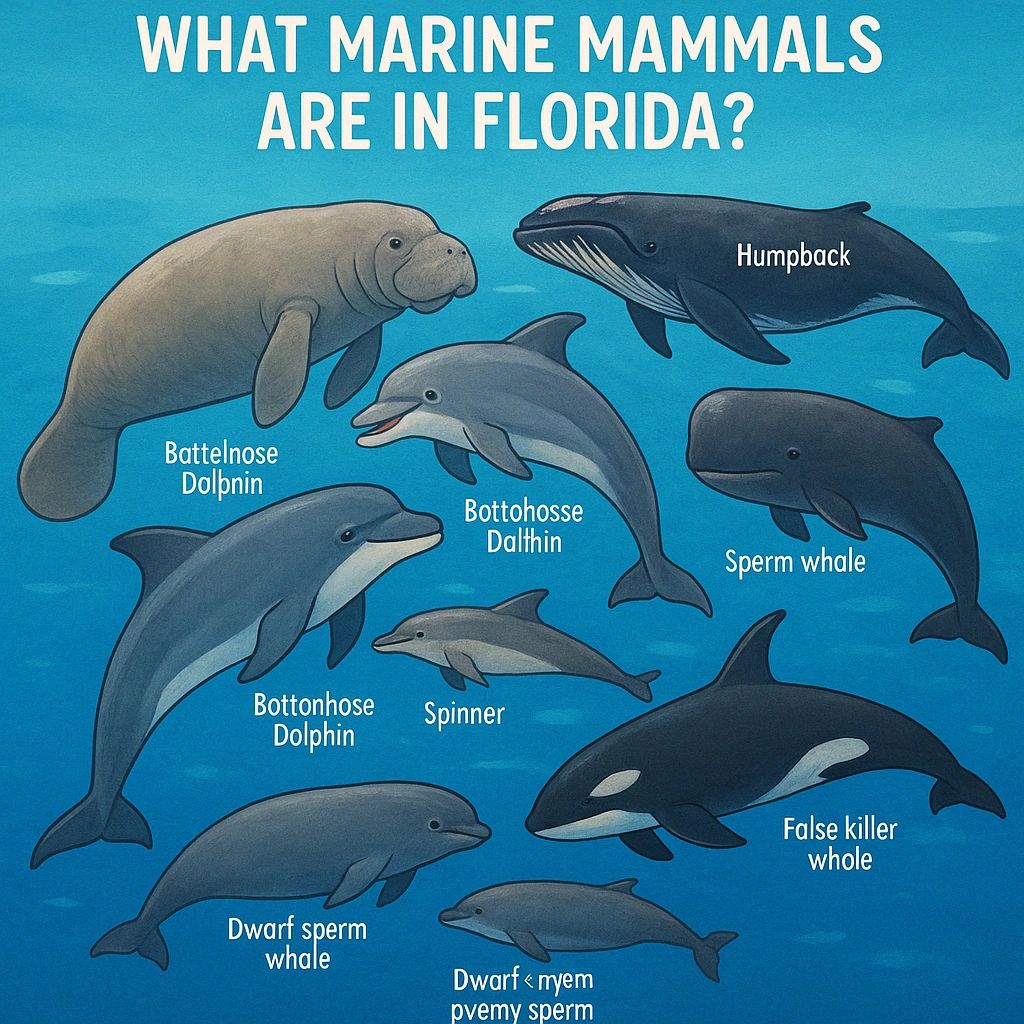
Florida isn’t just famous for its beaches, sunshine, and oranges—it’s also home to an amazing variety of marine mammals! From the gentle manatee to the powerful bottlenose dolphin, Florida’s waters are alive with fascinating creatures. Whether you’re on the Atlantic Coast, the Gulf of Mexico, or even in the state’s warm rivers and springs, there’s always something incredible to discover in the marine mammal world.
In this post, we’ll dive into what makes a marine mammal, introduce you to the species found in Florida, and talk about where to see them and how we can protect them. Let’s explore the wild and wonderful world of Florida’s marine mammals!
What Is a Marine Mammal?
Before we explore who’s living in Florida’s waters, let’s take a moment to explain what a marine mammal actually is.
A marine mammal is a type of mammal that lives in or around the ocean. These animals:
- Breathe air through lungs
- Give birth to live young
- Have hair (at least at some point in their life)
- Nurse their babies with milk
Unlike fish, marine mammals need to come up to the surface to breathe. Even though they live in water, they share more in common with land animals like us than they do with sea creatures like sharks or stingrays.
Now let’s meet the marine mammals that call Florida home!
1. Manatees – The Gentle Giants 🐘
Probably the most famous marine mammal in Florida is the West Indian manatee (Trichechus manatus), sometimes called a “sea cow.”
What Makes Them Special?
Manatees are slow-moving, friendly animals that can weigh up to 1,300 pounds! They eat only plants, making them herbivores, and they spend most of their day grazing on seagrass or floating around peacefully.
Where Are They Found?
You can find manatees in Florida’s rivers, canals, and coastal waters—especially in the winter months. When the weather gets cold, manatees move into warm springs to stay cozy. Crystal River, Blue Spring, and Homosassa Springs are top spots to see them!
Fun Fact
Manatees have no natural predators. Their biggest threat? Humans. Boat strikes, pollution, and habitat loss are the main reasons why manatees are considered threatened.
2. Bottlenose Dolphins – The Superstars 🐬
If you’ve ever taken a boat tour off the Florida coast, you’ve probably seen these playful creatures jumping in the waves. The bottlenose dolphin (Tursiops truncatus) is one of the smartest and most social marine mammals out there.
What Makes Them Special?
Bottlenose dolphins are known for their curved mouths that look like a permanent smile. They live in groups called pods and use special sounds to “talk” to each other. They can even recognize themselves in mirrors—a sign of high intelligence!
Where Are They Found?
These dolphins live all around Florida—in bays, estuaries, and the open ocean. Sarasota Bay is one of the most famous dolphin-watching spots in the country.
Fun Fact
Bottlenose dolphins can swim up to 20 miles per hour and leap as high as 15 feet in the air!
3. North Atlantic Right Whales – The Visitors 🐋
Florida’s coasts are not just home to year-round marine mammals. They also host some special seasonal guests like the North Atlantic right whale (Eubalaena glacialis).
What Makes Them Special?
These whales are critically endangered, with fewer than 350 individuals left in the wild. They migrate every winter from the cold waters of the northeast U.S. to Florida’s warmer shores to give birth.
Where Are They Found?
From November to April, right whales can sometimes be spotted off the coast of northeast Florida, especially near Jacksonville and St. Augustine.
Fun Fact
Right whales are called the “right” whales because they were considered the right whales to hunt—slow-moving and full of blubber. Sadly, this made them easy targets in the past.
4. Humpback Whales – The Singers 🎶
Another seasonal visitor to Florida’s waters is the majestic humpback whale (Megaptera novaeangliae), famous for its haunting underwater songs and acrobatic leaps.
What Makes Them Special?
Humpbacks can grow up to 60 feet long and weigh 40 tons! They’re famous for breaching—jumping out of the water and making a big splash. Males also sing long, complex songs that can be heard for miles.
Where Are They Found?
They’re sometimes spotted off the east coast of Florida during migration season, though they’re not as common as right whales.
Fun Fact
Each humpback whale’s tail, or fluke, is unique—like a fingerprint! Scientists use photos of their tails to tell them apart.
5. Sperm Whales – The Deep Divers 🧠
Another rare but awe-inspiring whale species that visits Florida’s deeper waters is the sperm whale (Physeter macrocephalus), the largest toothed predator on Earth.
What Makes Them Special?
Sperm whales have the biggest brains of any animal. They dive thousands of feet down into the ocean to hunt for giant squid using echolocation—like a biological sonar.
Where Are They Found?
Sperm whales are found in deeper waters off the continental shelf, mainly in the Gulf of Mexico and the Atlantic Ocean.
Fun Fact
Herman Melville’s classic novel Moby-Dick is about a sperm whale!
6. Spinner Dolphins – The Acrobats 🎪
Florida is also home to the spinner dolphin (Stenella longirostris), a smaller and more energetic cousin of the bottlenose dolphin.
What Makes Them Special?
Spinner dolphins are known for—you guessed it—spinning! They leap into the air and twist their bodies, often spinning multiple times before splashing down.
Where Are They Found?
These dolphins tend to hang out in deeper offshore waters, especially in the Gulf of Mexico.
Fun Fact
Spinner dolphins travel in large groups—sometimes with hundreds of individuals all swimming together!
7. Short-Finned Pilot Whales – The Family Travelers 🛥️
The short-finned pilot whale (Globicephala macrorhynchus) may not look like a typical whale—they’re smaller and more dolphin-shaped—but they’re still part of the whale family.
What Makes Them Special?
Pilot whales are highly social and always travel in close-knit family pods. They’re also known for mass strandings, where entire pods beach themselves.
Where Are They Found?
They prefer deep waters offshore and can sometimes be spotted off the Florida Keys.
Fun Fact
Pilot whales get their name because it was once thought that each pod was “piloted” by a leader whale.
8. Dwarf and Pygmy Sperm Whales – The Tiny Giants 🐳
Florida’s waters are also home to two lesser-known species: the dwarf sperm whale (Kogia sima) and the pygmy sperm whale (Kogia breviceps).
What Makes Them Special?
Though they belong to the same family as the mighty sperm whale, these creatures are much smaller—only about 9 to 11 feet long.
Where Are They Found?
They live in deep offshore waters but are rarely seen alive. Most of what we know comes from stranded individuals found on beaches.
Fun Fact
These whales can release a dark, ink-like substance (similar to squid!) when they’re scared. It helps them escape predators.
9. False Killer Whales – The Misunderstood 🖤
Despite the spooky name, false killer whales (Pseudorca crassidens) aren’t killers at all!
What Makes Them Special?
These sleek black dolphins are part of the oceanic dolphin family, just like orcas. They’re playful, fast, and social, often hunting in packs and even sharing food.
Where Are They Found?
They live in deep offshore waters and are sometimes spotted near the Florida Keys or in the Gulf Stream.
Fun Fact
False killer whales sometimes strand in large numbers, which can be tragic but also provides rare chances for researchers to study them.
Why Florida Is a Marine Mammal Hotspot 🌞
There’s a reason so many marine mammals call Florida home or stop by during their travels:
- Warm waters: Florida’s tropical and subtropical climate keeps water temperatures comfortable year-round.
- Diverse habitats: From coral reefs to rivers, mangroves, estuaries, and deep ocean trenches, Florida has something for every type of marine mammal.
- Location: Sitting between the Atlantic Ocean and the Gulf of Mexico, Florida is like a crossroads for migrating species.
Protecting Florida’s Marine Mammals 💙
These incredible animals face many challenges. Here’s how we can help protect them:
1. Watch Your Speed
Many manatees and dolphins are hurt by boat propellers. Follow speed zones, especially in manatee protection areas.
2. Don’t Feed or Touch
Feeding dolphins or manatees is illegal and dangerous—it can make them lose their natural fear of boats or people.
3. Keep the Water Clean
Trash, chemicals, and plastic can seriously hurt marine mammals. Always throw garbage away properly and avoid using harmful chemicals near the water.
4. Report Strandings
If you see a stranded or injured marine mammal, contact a local wildlife agency or the Florida Fish and Wildlife Conservation Commission (FWC) at 1-888-404-3922.
Where to See Marine Mammals in Florida 🐾
Here are some top places to safely view marine mammals in the wild or in conservation centers:
- Crystal River and Blue Spring State Park – Best for winter manatee viewing
- Sarasota Bay – Famous for bottlenose dolphins
- Florida Keys National Marine Sanctuary – Good for dolphins and occasional whales
- Clearwater Marine Aquarium – Home to rescued marine animals
- Gulf World in Panama City Beach – Educational marine mammal shows and rescue center
Final Splash 🌊
Florida’s marine mammals are some of the coolest animals in the world. From playful dolphins to gentle manatees and mysterious whales, there’s always something wild to discover beneath the waves. Whether you’re visiting the coast or live here year-round, keep your eyes open—you never know when you’ll spot a tail, a splash, or a fin on the horizon!
Let’s do our part to protect these amazing creatures so future generations can enjoy them too.
Bibliography (APA Format)
- Florida Fish and Wildlife Conservation Commission. (2024). Manatees in Florida. Retrieved from https://myfwc.com/wildlifehabitats/wildlife/manatee/
- National Oceanic and Atmospheric Administration. (2024). Marine Mammals. Retrieved from https://www.fisheries.noaa.gov/topic/marine-mammals
- Marine Mammal Commission. (2023). Marine Mammals of the United States. Retrieved from https://www.mmc.gov
- Clearwater Marine Aquarium. (2024). Marine Animal Education. Retrieved from https://www.cmaquarium.org
- World Wildlife Fund. (2023). North Atlantic Right Whale. Retrieved from https://www.worldwildlife.org/species/north-atlantic-right-whale
- Whale and Dolphin Conservation. (2024). Species Guide. Retrieved from https://us.whales.org/whales-dolphins/species-guide/
Originally published at the live site .