
Maritime ·
Where Is the Shark Bite Capital of the World? The Surprising Trut
If you’ve ever flipped on Shark Week or read sensational headlines like “Shark Attack at Popular Beach!” you’ve probably asked yourself: Where do most shark bites happen? It’s a question that sparks equal parts curiosity...
By Rebecca "Madam Chronicler" Ryan
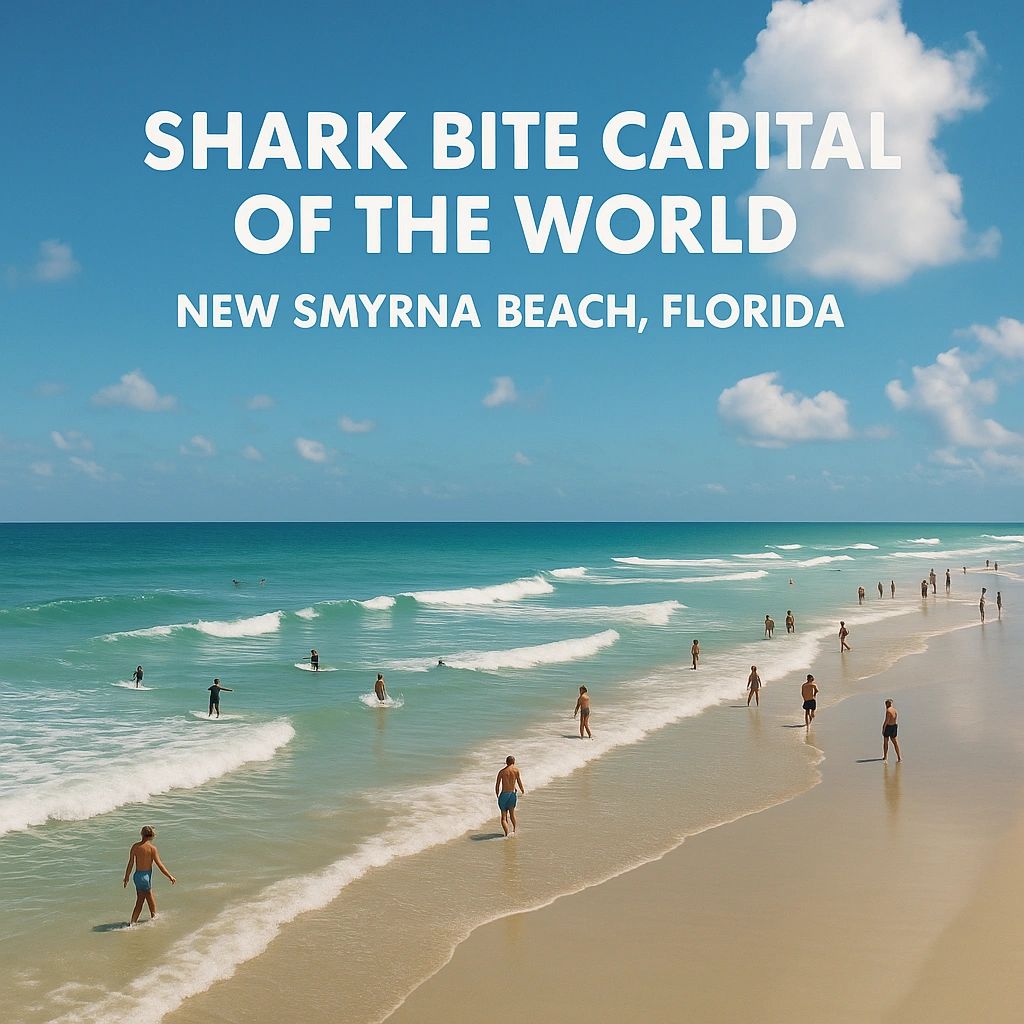
If you’ve ever flipped on Shark Week or read sensational headlines like “Shark Attack at Popular Beach!” you’ve probably asked yourself: Where do most shark bites happen? It’s a question that sparks equal parts curiosity and fear. But the answer is far more fascinating—and nuanced—than most people expect.
So, where is the shark bite capital of the world?
Welcome to Volusia County, Florida. This coastal region, home to the city of New Smyrna Beach, consistently ranks as the global hotspot for unprovoked shark bites. But don’t let the nickname fool you—while bites are frequent here, they are rarely serious or fatal. In fact, this “title” tells us more about people than it does about sharks.
In this blog, we’ll explore the history, science, and social dynamics behind New Smyrna Beach’s reputation. We’ll also take a deep dive into shark behavior, bite statistics, and how we can safely coexist with one of the ocean’s most iconic predators.
New Smyrna Beach: The Shark Bite Capital Explained
New Smyrna Beach is located along Florida’s Atlantic coast, just south of Daytona Beach in Volusia County. Known for its excellent surfing, sandy shoreline, and vibrant coastal community, the beach draws hundreds of thousands of tourists, swimmers, surfers, and anglers every year.
According to data from the International Shark Attack File (ISAF), Volusia County has reported more unprovoked shark bites than any other single place on Earth (ISAF, 2023). In some years, this region alone accounts for over 10% of the world’s total shark bites.
Why so many bites here? The answer comes down to a unique mix of geography, surf culture, and shark behavior.
Why So Many Bites Happen in Volusia County
Several key factors help explain why this sunny stretch of coastline is the world leader in shark encounters.
1. Ideal Surf Conditions—For People and Sharks
New Smyrna Beach sits near Ponce de Leon Inlet, a narrow channel where the Indian River meets the Atlantic Ocean. This area creates dynamic sandbars, tidal flows, and baitfish aggregations—ideal for surfing and for hunting sharks.
Small sharks, especially juvenile blacktips and spinners, often feed close to shore where the waves break—right where surfers tend to be.
2. High Human Activity
The region draws huge numbers of ocean-goers each year. More people in the water means more chances for encounters. Unlike remote coasts with plenty of sharks but few swimmers, Volusia County sees high overlap between humans and sharks.
It’s a numbers game: more humans + more sharks = more bites.
3. Murky Waters and Mistaken Identity
Nearshore waters in Florida are often murky due to sand churn and tidal movement. In these low-visibility conditions, sharks rely more on vibrations and scent than sight. A shark may strike a hand, foot, or ankle by mistake, believing it’s a fish.
Most bites are quick, exploratory nips. Sharks usually release immediately once they realize the prey isn’t what they expected (Neff & Hueter, 2013).
What Kind of Sharks Are Involved?
Most bites in New Smyrna Beach are attributed to blacktip sharks (Carcharhinus limbatus), followed by spinner sharks and occasionally Atlantic sharpnose or bull sharks. These species are relatively small—typically under 6 feet—and do not seek humans as prey.
Great white sharks, despite their media infamy, are rare in this region and not typically responsible for bites.
Blacktip sharks, especially juveniles, come into shallow waters during seasonal migrations, often feeding on schools of mullet or sardines. When swimmers or surfers are nearby, mistaken identity becomes a real risk (Kajiura & Tellman, 2016).
What Does “Unprovoked Shark Bite” Mean?
When discussing shark bites, the ISAF categorizes them into three types:
- Unprovoked bites: When a shark bites a human without provocation in its natural habitat.
- Provoked bites: When a human initiates contact (e.g., grabbing a shark, spearfishing, or feeding it).
- Boat bites: When people are bitten near or on boats.
The term “unprovoked” is used carefully. These are natural interactions—not attacks in the traditional sense. Most unprovoked bites are superficial and happen near the ankle or hand.
In Volusia County, bites are almost always unprovoked and non-fatal. In fact, over the past 100 years, only a handful of fatalities have ever been recorded in all of Florida (ISAF, 2023).
How Dangerous Are Shark Bites in New Smyrna Beach?
Let’s put the numbers in perspective.
In 2023, Volusia County reported 16 unprovoked shark bites—more than any other county globally. But none were fatal. Most required minimal medical attention.
In contrast:
- Florida reports over 80 drowning deaths per year.
- You’re more likely to be injured by beach chairs, stingrays, or even jellyfish than a shark.
The odds of being bitten by a shark in Florida are about 1 in 3.75 million (Florida Museum, 2022).
Shark Behavior: Why They Bite and What They Don’t Do
Despite the “bite capital” moniker, sharks in Volusia County are not lurking with intent to kill. They are opportunistic predators reacting to environmental cues.
Sharks bite for several reasons:
- Mistaken identity: Surfers resemble injured fish from below.
- Territorial defense: Juvenile sharks may nip at intruders.
- Exploratory behavior: Sharks test unfamiliar objects with their mouths.
They do not:
- Hunt humans as prey
- Seek revenge
- Exhibit serial “rogue” behavior, as dramatized in Jaws
Most bites are one-and-done incidents where the shark swims off immediately.
Shark Bite Data Around the World
While New Smyrna Beach claims the highest annual number of shark bites, it’s not the only hotspot. Here’s how it compares globally:
RegionAvg. Annual Unprovoked BitesNotable Species
Volusia County, FL
10–20
Blacktip, spinner, bull
Western Australia
2–5
Great white, tiger, bull
Reunion Island
1–3
Bull, tiger
South Africa
2–4
Great white, bull
Hawaii
3–6
Tiger, Galapagos
Brazil (Recife)
2–3
Bull, tiger
Volusia County stands out not for lethality, but for frequency. Other regions, like Reunion Island or Western Australia, may have fewer bites but higher fatality rates due to deeper bites or isolation from emergency care (West, 2011).
Safety Tips for Swimming and Surfing in Shark-Prone Areas
Enjoying the ocean doesn’t mean you have to fear it. Shark bites are rare—and largely preventable with a few smart habits:
- Avoid dusk and dawn swims: Sharks feed more actively in low light.
- Stay in groups: Sharks are less likely to bite groups than individuals.
- Avoid murky water: Turbidity increases the chance of mistaken identity.
- Don’t wear shiny jewelry: It can mimic fish scales.
- Avoid swimming near schools of fish or birds diving: These indicate baitfish, which attract sharks.
- Don’t enter the water bleeding: Sharks can detect even trace amounts of blood.
- Follow local advisories: If sharks have been spotted, stay out of the water.
Conservation Through Understanding
Ironically, the same region that sees the most shark bites is also a key location for shark conservation research.
Marine biologists at the University of Florida and other institutions study shark populations, behavior, and migration patterns along the Atlantic coast. Florida is home to species that use the state’s estuaries and beaches as nurseries—safe zones where juveniles grow before moving to deeper waters (Heupel & Simpfendorfer, 2008).
These studies help guide:
- Marine protected area design
- Sustainable fisheries management
- Public education programs
Understanding when and where sharks move through coastal waters helps balance human recreation with marine conservation.
Media, Myth, and the “Jaws Effect”
Public fear of sharks spiked after the release of Jaws in 1975. The “Jaws Effect,” as marine scientists call it, led to shark culls and an image of sharks as villains (Neff & Hueter, 2013).
Yet, 50 years later, attitudes are shifting. Documentaries like Sharkwater, Blue Planet II, and Mission Blue have reframed sharks as essential ocean predators in peril—not monsters.
In Volusia County, residents and tourists have grown used to the shark bite statistics. The nickname “Shark Bite Capital” is more a point of curiosity than concern.
Locals joke: “If you’ve surfed here more than a few years, you’ve probably been nipped.” And most return to the water the same day.
Sharks and the Bigger Picture
The real threat isn’t sharks—it’s the threats sharks face.
Globally, over one-third of shark species are threatened with extinction due to overfishing, habitat loss, and climate change (Dulvy et al., 2021).
Florida’s coastlines serve as critical habitat for many shark species, from blacktips and lemons to hammerheads and bulls. As apex predators, they help keep ecosystems balanced by regulating prey species and maintaining biodiversity (Ferretti et al., 2010).
New Smyrna Beach’s high bite count simply reflects how tightly humans and sharks overlap in coastal zones. And that intersection offers a chance—not for panic, but for understanding.
Conclusion: The Shark Bite Capital with a Conservation Heart
So where is the shark bite capital of the world?
It’s New Smyrna Beach, Florida.
But it’s not a place of horror—it’s a place of coexistence. The high number of bites says more about our shared use of the ocean than it does about sharks. These aren’t monsters. They’re neighbors—sometimes a little too close for comfort, but vital all the same.
By respecting their space, learning their behavior, and supporting marine conservation, we can ensure a future where humans and sharks thrive side by side.
And perhaps the next time someone asks you, “Aren’t you scared to swim there?”—you can say: “Nope. I know the odds. I know the facts. And I know the ocean is a wild, wonderful place.”
References
Dulvy, N. K., Pacoureau, N., Rigby, C. L., Pollom, R. A., Jabado, R. W., Ebert, D. A., … & Simpfendorfer, C. A. (2021). Overfishing drives over one-third of all sharks and rays toward a global extinction crisis. Current Biology, 31(21), 4773–4787.e8. https://doi.org/10.1016/j.cub.2021.08.062
Ferretti, F., Worm, B., Britten, G. L., Heithaus, M. R., & Lotze, H. K. (2010). Patterns and ecosystem consequences of shark declines in the ocean. Ecology Letters, 13(8), 1055–1071. https://doi.org/10.1111/j.1461-0248.2010.01489.x
Florida Museum. (2022). How likely are you to be bitten by a shark? University of Florida, International Shark Attack File. https://www.floridamuseum.ufl.edu/shark-attacks/odds/
Heupel, M. R., & Simpfendorfer, C. A. (2008). Movement and distribution of young bull sharks (Carcharhinus leucas) in a variable estuarine environment. Aquatic Biology, 1(3), 277–289. https://doi.org/10.3354/ab00030
International Shark Attack File (ISAF). (2023). 2022 Shark Attack Summary. Florida Museum of Natural History. https://www.floridamuseum.ufl.edu/shark-attacks/
Kajiura, S. M., & Tellman, S. L. (2016). Quantification of shark encounters at a highly utilized Florida beach. PLoS ONE, 11(6), e0157322. https://doi.org/10.1371/journal.pone.0157322
Neff, C., & Hueter, R. (2013). Science, policy, and the public discourse of shark “attack”: A proposal for reclassifying human–shark interactions. Journal of Environmental Studies and Sciences, 3(1), 65–73. https://doi.org/10.1007/s13412-013-0107-2
West, J. G. (2011). Changing patterns of shark attacks in Australian waters. Marine and Freshwater Research, 62(6), 744–754. https://doi.org/10.1071/MF10181
Originally published at the live site .