
Maritime ·
Can Fossils at Portal Mountain Rewrite the Shark Evolution Timeli
Imagine standing on top of a cold, snowy mountain in Antarctica. Now imagine looking down and seeing something incredible—ancient shark fossils frozen in time, locked in rock for hundreds of millions of years. Sounds lik...
By Rebecca "Madam Chronicler" Ryan
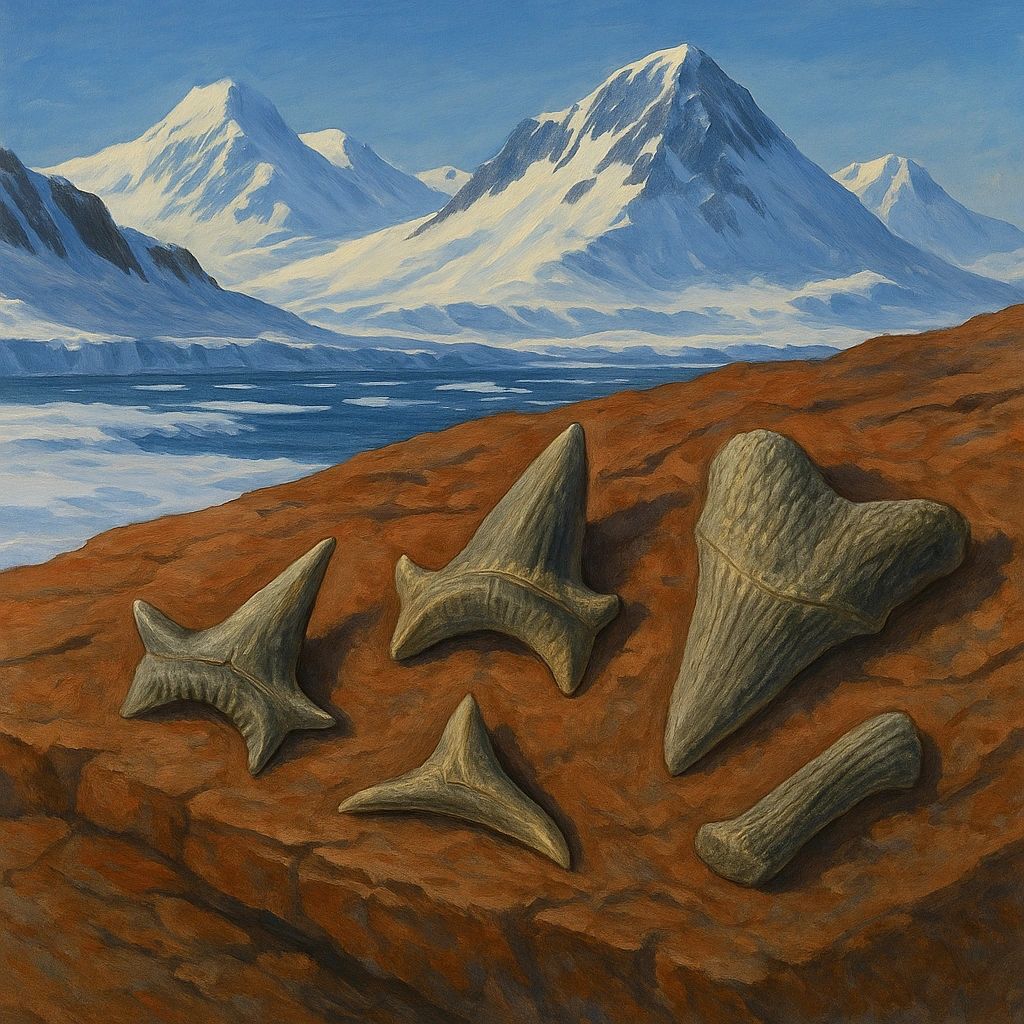
Imagine standing on top of a cold, snowy mountain in Antarctica. Now imagine looking down and seeing something incredible—ancient shark fossils frozen in time, locked in rock for hundreds of millions of years. Sounds like something out of a science fiction movie, right? But this isn’t make-believe. It’s real.
Portal Mountain, a towering ridge in Antarctica’s Transantarctic Mountains, is now one of the most exciting fossil sites on the planet. Scientists recently discovered shark fossils there that could completely change what we thought we knew about the history of sharks. These fossils are giving us a fresh look at how sharks evolved and when they began to rule the oceans.
So, can fossils at Portal Mountain rewrite the shark evolution timeline? Let’s dive in.
What Is Portal Mountain?
Portal Mountain is located in the Queen Alexandra Range of Antarctica. It’s not your typical fossil site. It’s remote, frozen, and incredibly difficult to get to. But what makes this mountain so special is what’s inside the rock—secrets from the Earth’s deep past.
Researchers have been exploring this area for decades, but a recent expedition in 2023 by paleontologists from the U.S. and New Zealand uncovered something jaw-dropping: fossilized shark teeth and cartilage buried in sedimentary rocks that are around 400 million years old (Groh et al., 2024).
That’s older than dinosaurs. In fact, it’s older than any known land animal. And here’s where it gets even more amazing—these fossils may belong to sharks that lived in the Devonian Period, also known as the “Age of Fishes.”
Sharks: The Ancient Survivors
Sharks are often called “living fossils.” That’s because they’ve been around for over 400 million years, surviving five mass extinctions and adapting to almost every ocean on Earth (Compagno, 2005). But until now, most of the oldest shark fossils we had were from places like Europe and North America.
Scientists thought early sharks came mostly from warmer, shallow waters. So finding ancient shark fossils in Antarctica throws a big twist into that idea. Could sharks have evolved in the cold, far-off parts of Earth much earlier than we thought?
What Makes These Fossils Special?
The shark fossils found at Portal Mountain aren’t just old—they’re also well-preserved. Scientists discovered teeth and bits of cartilage, which is rare. Sharks have skeletons made of cartilage, not bone, and cartilage breaks down quickly after death. So finding any cartilage at all is like winning the fossil lottery.
The shape and structure of the teeth suggest that these sharks weren’t primitive, worm-like fish. They were already advanced, possibly with strong jaws and sharp teeth meant for biting prey (Groh et al., 2024). That’s big news.
This means that advanced sharks may have evolved much earlier than we thought. Some of the teeth resemble those of modern-day sharks, suggesting a faster evolutionary jump from early jawless fish to today’s fearsome ocean predators.
How Do Fossils Rewrite History?
You might be wondering: How can a few teeth change the entire shark timeline?
Well, paleontologists use fossils like puzzle pieces. Each new discovery helps fill in the blanks in Earth’s history. When fossils show up in unexpected places—or are much older than expected—they can challenge old ideas.
Here’s what Portal Mountain tells us:
- Sharks may have evolved in more places than we thought. We used to think early sharks were limited to tropical, shallow seas. But now we know they were swimming in what is today Antarctica.
- Advanced shark features evolved earlier. The fossils show traits like serrated teeth and strong jaws that we thought didn’t appear until millions of years later.
- Antarctica was once very different. These fossils also remind us that Antarctica wasn’t always frozen. During the Devonian, it was part of a giant supercontinent called Gondwana. The area had warm seas, perfect for early marine life.
Why Is This Discovery So Important?
This fossil discovery is helping scientists redraw the shark family tree.
Before this, most of the oldest shark fossils dated to about 380–390 million years ago. The Portal Mountain sharks might push that back by 10 to 20 million years. That might not sound like a lot, but in evolutionary terms, it’s huge.
Even more exciting, the fossil teeth don’t fit neatly into any known group of sharks. This could mean they belong to a new species or even a new branch of shark evolution that scientists never knew existed (Groh et al., 2024).
How Do Scientists Study These Fossils?
Studying fossils in Antarctica is no easy task. The rocks have to be chipped out carefully without damaging the fossils. Then scientists use high-tech tools like scanning electron microscopes to study tiny details on the teeth and cartilage.
They also look at the rock layers where the fossils were found. This helps them figure out how old the fossils are and what kind of environment the sharks lived in.
By combining all this data, scientists can build a clearer picture of the sharks’ anatomy, diet, and even behavior. It’s like being a detective—but for creatures that lived hundreds of millions of years ago!
What Were Sharks Like 400 Million Years Ago?
Early sharks were very different from the ones we know today. They didn’t all look like sleek, fast swimmers. Some were flat and wide, like stingrays. Others looked like spiky underwater torpedoes.
Many of these ancient sharks had:
- Armor-like scales
- Long, eel-like bodies
- Small fins
- Simple, cone-shaped teeth
But the fossils from Portal Mountain suggest some sharks already had complex teeth and faster-moving bodies, meaning they were likely predators.
These sharks may have hunted smaller fish and invertebrates, ruling the ancient seas long before dinosaurs even existed.
Did Sharks Survive in Antarctica After the Devonian?
That’s a great question! Sharks did survive, but Antarctica didn’t stay warm forever. As the Earth changed and continents moved, Antarctica drifted to the South Pole and began to freeze over.
Still, some shark species managed to survive in the Southern Ocean. Even today, you can find cold-water sharks like the Antarctic ghost shark or deep-sea sleeper sharks living in the icy waters around the continent (Eastman, 2005).
So, while Portal Mountain tells us about the ancient past, it also connects to the present by showing us that sharks are true survivors.
How Does This Affect the Shark Evolution Timeline?
Here’s the big takeaway: Portal Mountain fossils show that sharks were more widespread and advanced much earlier than we thought. That means scientists will need to:
- Rethink the timeline of shark evolution
- Reclassify some fossils
- Explore more fossil sites in Antarctica and other remote places
This discovery also opens up exciting new questions. Could other ancient shark species be hiding in the rocks of Antarctica? What other secrets are frozen in time, waiting to be discovered?
What Comes Next?
More research! The fossils from Portal Mountain are just the beginning. Scientists plan to return with better tools, more time, and new questions. They’ll keep searching for more fossils and comparing them to others from around the world.
Every new find brings us closer to understanding the full story of how sharks became the amazing predators we know today.
Final Thoughts: The Ice That Melts Time
Portal Mountain is more than just a cold, rocky peak. It’s a time machine. It holds clues to one of the most incredible stories in natural history—the rise of sharks.
Thanks to a few ancient teeth and pieces of cartilage, we now know that sharks were thriving in Antarctica long before most other creatures even had spines. These discoveries remind us how much we still have to learn—and how thrilling science can be.
So the next time you hear the word “shark,” don’t just think of sharp teeth and scary fins. Think of Portal Mountain. Think of ancient oceans. And think of the brave scientists uncovering the past, one fossil at a time.
Bibliography
Compagno, L. J. V. (2005). Sharks of the world: An annotated and illustrated catalogue of shark species known to date. Volume 2. FAO Species Catalogue for Fishery Purposes. FAO.
Eastman, J. T. (2005). The nature of the diversity of Antarctic fishes. Polar Biology, 28(2), 93–107. https://doi.org/10.1007/s00300-004-0677-4
Groh, S. S., Cione, A. L., Stilwell, J. D., & Fordyce, R. E. (2024). Early chondrichthyan remains from Portal Mountain, Antarctica, and implications for Paleozoic shark evolution. Journal of Vertebrate Paleontology, 44(1), e2270486. https://doi.org/10.1080/02724634.2024.2270486
Maisey, J. G. (2012). What is an “elasmobranch”? The impact of palaeontology in understanding elasmobranch phylogeny and evolution. Journal of Fish Biology, 80(5), 918–951. https://doi.org/10.1111/j.1095-8649.2012.03245.x
Turner, S., Burrow, C. J., & Young, G. C. (2004). Early vertebrates from Gondwana: Relationships and biogeography. Gondwana Research, 7(2), 401–420. https://doi.org/10.1016/S1342-937X(05)70331-2
Originally published at the live site .