
Maritime ·
How Sharks Became the First Predators
When most people think of predators, they picture lions stalking the savanna or wolves chasing prey through the snow. But long before those animals ever existed—long before there were dinosaurs, forests, or even land ani...
By Rebecca "Madam Chronicler" Ryan
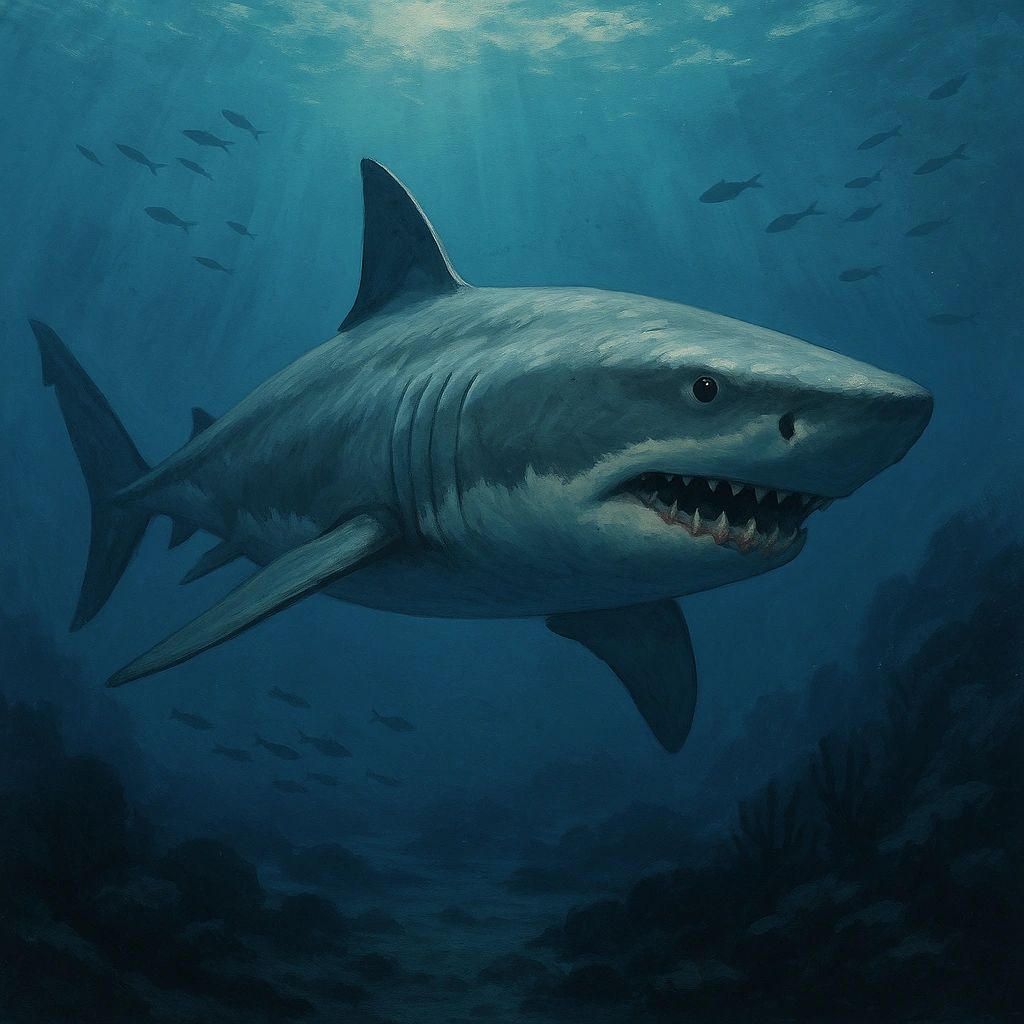
When most people think of predators, they picture lions stalking the savanna or wolves chasing prey through the snow. But long before those animals ever existed—long before there were dinosaurs, forests, or even land animals at all—there were sharks. These ancient hunters ruled the seas more than 400 million years ago, making them some of the first vertebrate predators on Earth.
To understand how sharks became the planet’s earliest apex predators, we need to travel back to a time when life was still finding its place in the oceans and the rules of survival were just being written.
The World Before Sharks
Picture Earth during the Late Silurian period, about 420 million years ago. The continents were barren, with only small plants growing along shorelines. Most life existed in the oceans. These seas were filled with trilobites, mollusks, early fish with heavy bony plates, and strange, jawless creatures.
Back then, there weren’t many fast swimmers or animals capable of powerful bites. Most marine life fed by filtering tiny particles from the water or slowly scavenging dead material. Predation—active hunting—was still in its infancy. The first jawless fish, called agnathans, were common, but they weren’t built for chasing down prey.
Then something revolutionary evolved: jaws. This single evolutionary innovation transformed ocean ecosystems forever.
The Power of the Jaw
Jaws first appeared in ancient fish called placoderms, heavily armored creatures with bony plates covering their heads and bodies. While placoderms were impressive, they were bulky and not very fast. The real game-changer came when a different group of early fish—ancestors of modern sharks—developed jaws paired with lightweight, cartilaginous skeletons.
This combination gave these early sharks incredible speed and agility compared to their armored cousins. They could now snap up prey with precision and tear it apart with rows of sharp teeth. These adaptations made them some of the first true predators in the animal kingdom.
Fossils of early shark-like species, such as Cladoselache, show streamlined bodies, forked tails, and mouths filled with sharp, replaceable teeth. They could swim faster than most of their prey, strike quickly, and swallow meals whole.
The First Sharks
Sharks’ earliest known ancestors lived during the Late Silurian and Early Devonian periods. Fossil evidence is scarce because cartilage doesn’t preserve as well as bone, but researchers have found teeth and scales that date back over 400 million years.
One of the earliest recognizable sharks was Doliodus, a small fish with spines on its fins and a mouthful of sharp teeth. It likely hunted smaller fish and soft-bodied animals. By the Devonian period—often called the “Age of Fishes”—sharks were already spreading into different ecological roles. Some species specialized in chasing swift prey, while others were bottom-dwellers, ambushing animals from the seafloor.
This versatility was one of sharks’ greatest strengths. They weren’t locked into a single hunting style—they could adapt to changing seas and different prey types.
Perfecting the Hunter’s Body
Over millions of years, sharks developed the traits that still make them top predators today:
- Streamlined bodies for efficient, fast swimming.
- Cartilaginous skeletons that are lighter than bone, allowing quick bursts of speed.
- Multiple rows of replaceable teeth, ensuring they always had sharp tools for catching and tearing prey.
- Electroreception—special sensing organs called the ampullae of Lorenzini that detect the faint electric signals given off by living organisms.
- Highly developed smell that allows them to detect tiny amounts of blood or other scents from miles away.
By the Carboniferous period (about 359–299 million years ago), sharks were thriving. Some, like Stethacanthus, had bizarre dorsal fin shapes. Others, like Hybodus, had teeth for both crushing shells and slicing flesh, making them generalist hunters.
Surviving Mass Extinctions
Sharks’ history isn’t just about becoming great hunters—it’s also about surviving Earth’s most catastrophic events. In the past 400 million years, life on our planet has been nearly wiped out multiple times by mass extinctions. Each time, sharks pulled through.
For example, around 252 million years ago during the Permian-Triassic extinction event, over 90% of marine species disappeared. Many shark species went extinct, but some lineages survived, ready to repopulate the oceans. Their adaptability in diet, body size, and habitat helped them recover faster than many other marine animals.
When the dinosaurs were wiped out 66 million years ago in the Cretaceous-Paleogene extinction, sharks again survived. Fossil studies show that while many large marine reptiles vanished, shark species adapted by shifting to different prey sources, allowing them to maintain their role as top predators.
The Rise of Modern Sharks
The sharks we see today began taking shape in the Jurassic period, around 200 million years ago. This was when the order Lamniformes (which includes great white sharks) and Carcharhiniformes (including tiger and bull sharks) started to appear.
By the time early whales evolved about 50 million years ago, sharks had already been perfecting their hunting skills for hundreds of millions of years. Some, like the giant Megalodon, grew to lengths of over 50 feet, preying on large marine mammals. Others specialized in smaller fish, squid, and crustaceans.
What’s remarkable is that the basic shark body plan hasn’t changed much in hundreds of millions of years. Their design was so effective early on that only fine-tuning was needed. In evolutionary terms, sharks hit on the “perfect predator” blueprint very quickly.
Why Sharks Were the First Apex Predators
So why do scientists consider sharks among the first apex predators? The answer comes down to timing and ecological dominance.
When sharks first appeared, there were few other animals that could match their speed, sensory abilities, and offensive weaponry. They weren’t just another part of the food chain—they were at the very top of it.
They hunted actively, controlled the populations of other species, and shaped entire ecosystems. This role is exactly what defines an apex predator: an animal that has no natural predators of its own and plays a crucial role in balancing the ecosystem.
Lessons from the Fossil Record
Fossil evidence gives us clues about how sharks shaped early marine ecosystems. For example, bite marks on fossilized bones and shells show that sharks attacked a wide variety of prey. Some tooth shapes are specialized for slicing through flesh, while others are better for crushing shells—evidence of their diverse feeding strategies.
Studies of ancient shark teeth also reveal changes in size and shape after major extinction events. This suggests that sharks adapted their hunting styles to fit the prey available in the post-extinction world, further cementing their role as survivors and top hunters.
Sharks’ Place in the Evolutionary Tree
Modern sharks belong to a group called elasmobranchs, which also includes rays and skates. All elasmobranchs share a cartilaginous skeleton and similar sensory systems. Genetic studies show that sharks branched off early from other jawed vertebrates, making them one of the most ancient lineages still alive today.
This means that every time we see a shark gliding through the water, we’re looking at a living connection to the earliest days of vertebrate predation.
Sharks Today: Still Apex Predators
Even after hundreds of millions of years, sharks remain top predators in oceans worldwide. Great whites, tiger sharks, hammerheads, and many others use the same basic hunting strategies their ancestors developed long ago.
Today, their role is more important than ever. Healthy shark populations keep marine ecosystems balanced. By preying on sick or weak animals and controlling mid-level predator populations, sharks help maintain biodiversity and ocean health.
Unfortunately, many shark species now face threats from overfishing, habitat loss, and climate change. The same evolutionary tools that once made them invincible can’t protect them from human impacts. Scientists warn that losing sharks could destabilize entire marine ecosystems.
The Legacy of the First Predators
Sharks’ story is more than just an origin tale—it’s a lesson in the power of adaptation. From their first appearance in the fossil record to their reign as modern apex predators, sharks have thrived by being flexible, efficient, and highly specialized hunters.
They were among the first creatures to truly master the art of active predation, and their survival through multiple global catastrophes shows just how successful that blueprint has been.
When you see a shark today, you’re witnessing the latest chapter in a story that began over 400 million years ago—a story that helped shape life on Earth as we know it.
Conclusion
Sharks became the first predators by evolving at the right time with the right tools: jaws, speed, keen senses, and adaptability. They entered the oceans when prey was abundant and competition was low, and they quickly took the top spot in the marine food web. Over the ages, they fine-tuned their bodies and hunting strategies to survive everything from shifting continents to mass extinctions.
Their history is one of innovation and resilience. And while they face modern challenges, their legacy as Earth’s earliest apex predators remains unmatched.
References
Bazzi, M., Kear, B. P., Blom, H., Ahlberg, P. E., & Einarsson, E. (2021). Dental morphology and feeding ecology of sharks across the end-Cretaceous mass extinction. PLOS Biology, 19(11), e3001108. https://doi.org/10.1371/journal.pbio.3001108
Bazzi, M., Kear, B. P., & Einarsson, E. (2021). Evolutionary shifts in feeding ecology shaped modern shark diversity. Current Biology, 31(22), 4921-4929.e2. https://doi.org/10.1016/j.cub.2021.08.065
Coates, M. I., Gess, R. W., Finarelli, J. A., Criswell, K. E., & Tietjen, K. (2018). A symmoriiform chondrichthyan braincase and the origin of chimaeroid fishes. Nature, 560(7719), 360–364. https://doi.org/10.1038/s41586-018-0394-y
Friedman, M., & Sallan, L. C. (2012). Five hundred million years of extinction and recovery: A Phanerozoic survey of large-scale diversity patterns in fishes. Paleontology, 55(4), 707–742. https://doi.org/10.1111/j.1475-4983.2012.01165.x
Sallan, L., & Coates, M. I. (2010). End-Devonian extinction and a bottleneck in the early evolution of modern jawed vertebrates. Proceedings of the National Academy of Sciences, 107(22), 10131–10135. https://doi.org/10.1073/pnas.0914000107
Shimada, K., Becker, M. A., & Griffiths, M. L. (2021). Taxonomic and morphological diversity of Paleozoic chondrichthyans: Past progress and future challenges. Frontiers in Ecology and Evolution, 9, 671313. https://doi.org/10.3389/fevo.2021.671313
Originally published at the live site .