
Rivers ·
Invaders Below the Surface: Invasive Fish in the Mississippi.
The Mississippi River is more than just a long ribbon of water cutting through the heart of the United States. It is a living, breathing ecosystem filled with ancient catfish, native sunfish, bass, paddlefish, and countl...
By Rebecca "Madam Chronicler" Ryan
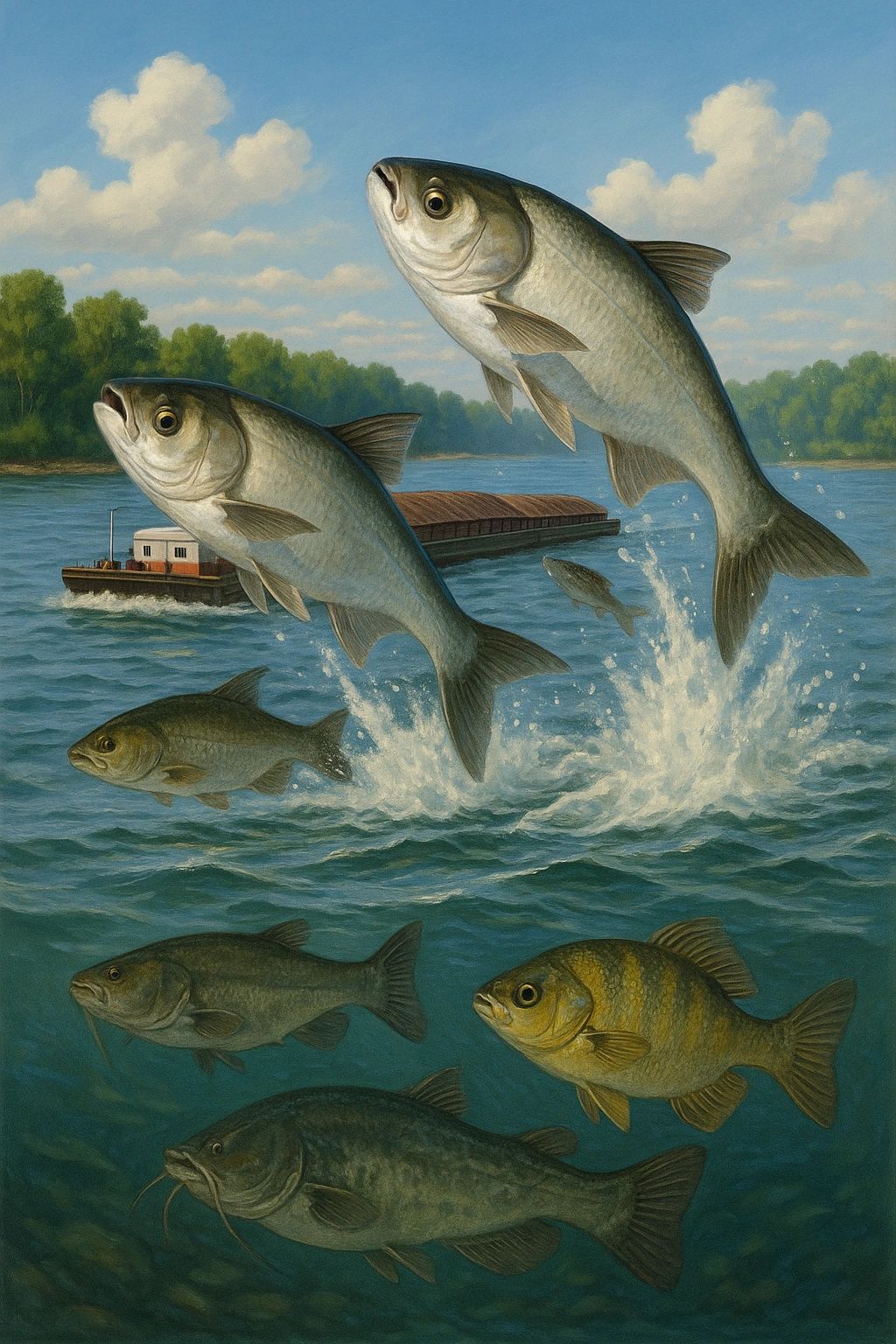
The Mississippi River is more than just a long ribbon of water cutting through the heart of the United States. It is a living, breathing ecosystem filled with ancient catfish, native sunfish, bass, paddlefish, and countless other species that have called it home for thousands of years. But over the past century, new arrivals have entered this system—fish that don’t belong. These invasive species have reshaped food webs, pushed native fish into decline, and even threatened the livelihoods of communities that depend on the river.
In this blog, we’ll dive deep into the story of invasive fish in the Mississippi River. We’ll explore how they got here, the damage they cause, what scientists are doing about them, and why protecting native fish matters.
What Makes a Fish “Invasive”?
Before we look at the Mississippi itself, it’s important to understand what makes a species “invasive.” Not every non-native fish automatically becomes invasive. For a fish to earn that label, it must meet three conditions:
- It’s not native to the ecosystem.
- It spreads and reproduces quickly.
- It harms native wildlife, habitats, or human activity.
Invasive species compete for food, eat native fish eggs, spread diseases, and sometimes even alter the physical environment. Because they often lack natural predators in their new homes, invasive fish can thrive unchecked and outcompete the locals .
The Mississippi River: A Highway for Fish
The Mississippi River stretches about 2,350 miles from Minnesota down to the Gulf of Mexico. It crosses or borders 10 states, feeding countless tributaries and bayous along the way. That sheer size makes it one of the most important aquatic highways in the United States. Unfortunately, this also makes it an open door for invasive fish.
Over time, dams, canals, and human shipping activity have created new pathways that connect waters once separated. Barges moving up and down the river can carry fish eggs stuck to their hulls, while bait bucket releases and fish farming accidents have introduced non-native fish directly .
The Big Four Invasive Fish in the Mississippi
While several species are considered invasive in the Mississippi River, four stand out as the most destructive: bighead carp, silver carp, common carp, and round goby. Let’s meet these aquatic troublemakers.
1. Bighead Carp (Hypophthalmichthys nobilis)
Originally from China, bighead carp were imported to the United States in the 1970s to help clean fish farm ponds. But floods and poor containment allowed them to escape into rivers like the Mississippi.
Bighead carp eat massive amounts of plankton—tiny plants and animals that form the base of the aquatic food chain. Because young native fish and mussels rely on plankton, bighead carp rob them of their food supply. Studies show that dense populations of bighead carp can reduce plankton levels by as much as 70% . This leads to stunted growth and poor survival rates for native species.
2. Silver Carp (Hypophthalmichthys molitrix)
Silver carp are the notorious “jumping fish” that have become infamous in the Mississippi. Like their bighead cousins, they were imported for aquaculture but escaped into the wild.
Silver carp can leap 10 feet out of the water when startled by boat motors, creating hazards for boaters and anglers. Beyond their dangerous behavior, they also feed heavily on plankton, competing with everything from paddlefish to smallmouth buffalo. Scientists warn that if silver carp establish themselves too far north in the river system, they could invade the Great Lakes and disrupt fisheries worth billions of dollars .
3. Common Carp (Cyprinus carpio)
Common carp have been in North America much longer, first introduced in the late 1800s as a food fish. But their feeding habits make them especially destructive.
By rooting around in the mud for food, common carp stir up sediments, making the water cloudy and uprooting aquatic plants. This reduces water quality, kills off vegetation needed by native fish, and alters entire habitats. In some areas of the Mississippi River Basin, they make up more than 90% of the fish biomass .
4. Round Goby (Neogobius melanostomus)
The round goby is a small bottom-dwelling fish from Eastern Europe that first arrived in U.S. waters through ballast water from ships in the Great Lakes during the 1990s. Since then, it has spread into the Mississippi River system.
Although small, round gobies pack a punch. They eat the eggs of native fish, outcompete other bottom dwellers for food, and can tolerate polluted waters that would kill many native species. Worse, they serve as hosts for parasites that harm larger game fish .
Other Invasive Fish on the Move
Besides the “big four,” other invaders are slowly expanding their reach. Black carp (Mylopharyngodon piceus), another Asian species, prey heavily on native mussels and snails, many of which are already endangered. Grass carp (Ctenopharyngodon idella) threaten aquatic plants. Meanwhile, goldfish (Carassius auratus), often released by pet owners, have been found surviving in backwaters of the Mississippi Basin.
Ecological Impacts
The damage caused by invasive fish in the Mississippi River can’t be overstated. Let’s break down their major impacts:
- Competition for Food Plankton-feeding carp reduce the base of the food web. Native species like paddlefish and gizzard shad are especially vulnerable .
- Predation on Eggs and Juveniles Gobies and carp eat the eggs of valuable species like walleye, bass, and sunfish, decreasing recruitment.
- Habitat Destruction Common carp uproot plants and stir sediments, leading to murky water that disrupts spawning grounds.
- Spread of Disease and Parasites Some invasive fish carry pathogens that infect native fish populations .
- Danger to Humans Silver carp are notorious for injuring boaters by leaping into the air when startled.
Economic Impacts
The Mississippi River is not just an ecosystem—it’s also an economic powerhouse. Fisheries, recreation, and tourism all depend on healthy waters. Invasive fish disrupt these activities:
- Fisheries: Invasive carp reduce populations of valuable native fish, hurting both commercial and recreational fisheries.
- Tourism: Silver carp jumping incidents discourage boating and water sports.
- Management Costs: Millions of dollars are spent annually on monitoring, barriers, and research .
One study estimated that if Asian carp spread into the Great Lakes through the Mississippi system, it could cost the economy up to $7 billion annually .
How Did They Get Here?
In most cases, invasive fish arrived in the Mississippi through human activity. Some were intentionally introduced as food sources or for aquaculture. Others arrived accidentally in ballast water discharged from ships or escaped from flooded ponds. Once in the river, their rapid reproduction and adaptability made them nearly impossible to eradicate.
Management and Control Efforts
Stopping invasive fish is a massive challenge, but scientists, wildlife managers, and policymakers are trying multiple strategies.
1. Physical Barriers
The most famous example is the electric barrier near Chicago, designed to prevent carp from entering the Great Lakes. These barriers use pulsing electric currents to deter fish movement without harming boats .
2. Commercial Harvest
Programs encourage commercial fishermen to target invasive carp for food products, fertilizers, and even pet food. This helps reduce their populations while creating economic opportunities.
3. Biological Control
Researchers are exploring natural predators and diseases that might help reduce invasive populations without harming natives.
4. Public Education
Anglers are urged not to release bait fish, while aquarists are taught not to dump unwanted pets into local waters. “Don’t Let It Loose” campaigns have spread awareness about the dangers of invasive species.
5. Research and Monitoring
Ongoing studies track carp movements with acoustic tags, monitor egg hatching rates, and test new technologies like “bubble curtains” and sound deterrents .
Hope for the Future
The fight against invasive species in the Mississippi River is far from over, but there are reasons for hope. Commercial harvesting of Asian carp has shown promising results in reducing biomass in some stretches of the river. Community partnerships, stronger regulations on aquaculture, and advances in barrier technologies are helping slow their spread.
At the same time, greater public awareness means more people are becoming allies in the fight. Every angler who properly disposes of bait fish or every boater who cleans their hull before moving to a new waterway plays a role in protecting the Mississippi’s native fish.
Why It Matters
The Mississippi River is a symbol of America’s natural heritage. Its fish are more than just food or sport—they’re threads in a vast, ancient web of life. Protecting them means protecting clean water, vibrant ecosystems, and cultural traditions that have lasted generations.
Invasive species remind us that ecosystems are fragile, and human actions—both good and bad—shape the future of rivers. By taking responsibility, supporting conservation, and respecting the balance of nature, we can help ensure that the Mississippi remains a river where native fish thrive for centuries to come.
Conclusion
Invasive fish in the Mississippi River are a story of unintended consequences. What began as well-meaning introductions or accidental escapes has snowballed into one of the greatest ecological challenges facing America’s waterways. But with science, cooperation, and public action, there is still time to turn the tide.
If we succeed, the Mississippi will continue to be a river of abundance, home to catfish as long as a man, sunfish flashing in the shallows, and paddlefish sweeping their rostrums through rich, plankton-filled waters—just as it has been for thousands of years.
Bibliography
- Corkum, L. D., Sapota, M. R., & Skóra, K. E. (2004). The round goby, Neogobius melanostomus, a fish invader on both sides of the Atlantic Ocean. Biological Invasions, 6(2), 173–181. https://doi.org/10.1023/B:BINV.0000022136.43502.db
- Dettmers, J. M., Boisvert, B. A., Barkley, T., & Blodgett, K. D. (2005). Potential impact of Asian carp on the Great Lakes food web. Fisheries, 30(11), 17–24. https://doi.org/10.1577/1548-8446(2005)30[17:PIOACO]2.0.CO;2
- Irons, K. S., Sass, G. G., McClelland, M. A., & Stafford, J. D. (2007). Reduced condition factor of two native fish species coincident with invasion of non-native Asian carps in the Illinois River, USA. Isr. J. Aquac., 59(3), 1–9.
- Kolar, C. S., Chapman, D. C., Courtenay, W. R., Housel, C. M., Williams, J. D., & Jennings, D. P. (2007). Bigheaded carps: A biological synopsis and environmental risk assessment. American Fisheries Society Special Publication 33.
- Phelps, Q. E., Tripp, S. J., Garvey, J. E., Herzog, D. P., Ostendorf, D. E., Ridings, J. W., & Colombo, R. E. (2017). Biology and impacts of invasive Asian carps in North American aquatic ecosystems: A synthesis. Transactions of the American Fisheries Society, 146(6), 1042–1059. https://doi.org/10.1080/00028487.2017.1344039
- Sampson, S. J., Chick, J. H., & Pegg, M. A. (2009). Diet overlap among two Asian carp and three native fishes in backwater lakes on the Illinois and Mississippi rivers. Biological Invasions, 11(3), 483–496. https://doi.org/10.1007/s10530-008-9265-7
- Weber, M. J., & Brown, M. L. (2009). Effects of common carp on aquatic ecosystems 80 years after “Carp as a dominant”: Ecological insights for fisheries management. Reviews in Fisheries Science, 17(4), 524–537. https://doi.org/10.1080/10641260903171843
Originally published at the live site .