
Maritime ·
The Second Largest Hammerhead Shark Caught in Texas
When Texas Fishing Made History
By Rebecca "Madam Chronicler" Ryan
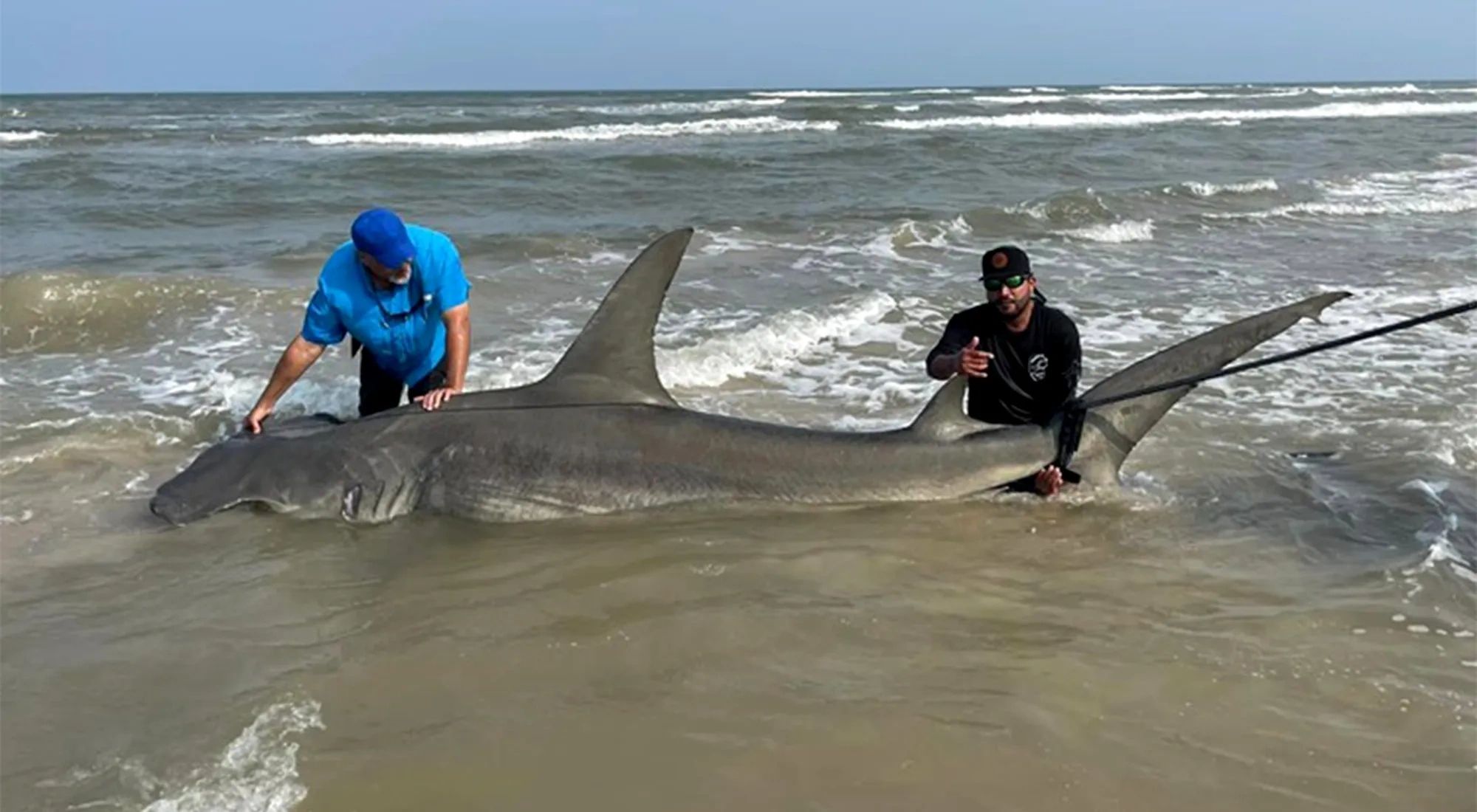
When Texas Fishing Made History
The Texas coast has a long history of producing big fishing stories, but few can match the excitement of July 2017. That summer, during a local fishing tournament, angler Timothy W. McClellen made the catch of a lifetime — a 1,033-pound, 14.4-foot great hammerhead shark.
This wasn’t just a big fish. It was one of the largest hammerheads ever recorded in Texas waters and set a new state record for the species. Even today, this incredible catch is remembered not just for its size, but for the sheer challenge it posed and the way it spotlighted one of the ocean’s most fascinating predators.
The Day of the Catch
The catch happened during the 55th Annual Texas City Jaycees Tackle Time Fishing Tournament, an event that draws skilled anglers from all over the state. McClellen, like the others, had his eyes set on a prize-worthy catch, but nothing could have prepared him for what was about to happen.
Far offshore from Texas City, McClellen hooked something massive. At first, it was just a heavy pull on the line, but soon, the power behind it became obvious. This was no ordinary fish — it was a battle between human and shark, each testing the other’s limits.
The fight lasted well over an hour. Every time McClellen reeled in a little line, the shark would run again, stripping it away with raw power. By the time the fish was close enough to see, the crowd realized they were witnessing something extraordinary.
On shore, the weigh-in confirmed it: 1,033 pounds, 173.25 inches from nose to tail. The great hammerhead’s massive head and wide dorsal fin towered over the dockside crowd.
Why It’s the “Second Largest”
McClellen’s shark holds the Texas record for the great hammerhead species, but it’s ranked as the second largest hammerhead caught in Texas history. This is because “largest” can refer to any hammerhead species, and in Texas, there has been at least one slightly larger hammerhead of another type recorded.
However, in terms of great hammerheads — the biggest of the hammerhead family — this was an exceptional specimen, nearly matching the size of the world record great hammerhead, a 1,280-pounder caught off Florida.
Meet the Great Hammerhead
The great hammerhead shark (Sphyrna mokarran) is the heavyweight champion of the hammerhead family. While the average adult measures around 11 to 13 feet and weighs between 300 and 500 pounds, the largest individuals can reach lengths of 20 feet and exceed 1,000 pounds.
Their distinctive T-shaped head, called a cephalofoil, serves multiple purposes:
- It increases their field of vision.
- It houses more sensory organs for detecting prey.
- It helps them pin down stingrays — one of their favorite meals.
Great hammerheads are found in tropical and warm temperate waters around the world, including the Gulf of Mexico. In Texas, they’re often spotted during the warmer months, patrolling nearshore reefs, sandbars, and deeper waters.
The Battle to Land a Giant
Hooking a shark this size is one thing; landing it is another. The fight can be exhausting, physically and mentally. It demands strong fishing gear, skillful handling, and plenty of patience.
McClellen’s fight likely involved:
- Long, powerful runs from the shark that stripped line from the reel.
- High-tension strain on the rod that could snap if handled incorrectly.
- Strategic adjustments to tire the shark without losing it.
When the shark was finally secured, it marked the end of a rare and grueling encounter — the kind of battle most anglers will never experience in their lifetime.
The Scene on Shore
News travels fast at fishing tournaments, and by the time McClellen’s hammerhead was hoisted for the official weigh-in, a crowd had gathered.
People took photos, marveled at the size, and congratulated the angler. It wasn’t just another big catch; it was the kind of shark people talk about for years afterward. In the Texas fishing community, this was instantly a “legendary” moment.
How It Compares to Other Big Sharks
To really appreciate this catch, here’s how it stacks up:
- Largest shark ever caught in Texas: A 1,129-pound tiger shark.
- World record great hammerhead: 1,280 pounds, caught in Florida.
- McClellen’s hammerhead: 1,033 pounds, making it one of the largest great hammerheads ever documented in the Gulf of Mexico.
Most hammerheads caught in Texas weigh less than half that, making this a truly rare find.
The Conservation Perspective
As thrilling as big shark catches are, they bring attention to an important issue: the great hammerhead is critically endangered. Its population has dropped significantly in recent decades due to overfishing, habitat loss, and the global demand for shark fins.
In the Gulf of Mexico, great hammerheads are particularly vulnerable because:
- They grow slowly and mature late.
- They have relatively few offspring.
- They often get caught as bycatch in commercial fishing.
Events like this tournament catch can inspire awe, but they also remind us that each large hammerhead is an important part of the population. Many conservationists push for more catch-and-release policies, especially for large, breeding-age females.
Hammerheads in Texas Waters
The Texas coast is a seasonal home for hammerheads. They move into nearshore waters in warmer months to feed and sometimes to give birth. Their diet includes stingrays, groupers, jacks, and even other sharks.
Hammerheads are not considered a serious threat to humans, but their size and strength demand respect. When seen in the wild, they often swim calmly, their wide heads scanning the seafloor for prey.
Why This Catch Still Matters
Years later, McClellen’s catch is still talked about because it represents the perfect combination of skill, luck, and natural wonder.
For anglers, it’s an example of the “fish of a lifetime.” For Texans, it’s part of the state’s fishing heritage. For conservationists, it’s a conversation starter about protecting apex predators.
Lessons from the Catch
McClellen’s record-breaking hammerhead offers a few takeaways:
- The Gulf still holds surprises. Even in fished waters, giants roam.
- Skill and patience matter. Landing a fish this size isn’t about brute force alone.
- Conservation is crucial. Protecting species like the great hammerhead ensures these giants will be around for future generations.
The Future of Great Hammerheads in Texas
Sustaining great hammerhead populations will require:
- Stronger fishing regulations.
- Education about shark conservation.
- Expanded marine protected areas.
Tagging and research programs already underway in the Gulf are helping scientists learn more about hammerhead migration patterns and breeding habits. This information is critical to designing better protections.
Closing Thoughts
The second-largest hammerhead ever caught in Texas is more than a record; it’s a reminder of what makes the ocean so captivating. It’s a story of determination, respect for nature, and the thrill of encountering something truly wild.
When Timothy W. McClellen hauled that 1,033-pound shark onto the dock in 2017, he not only secured his place in Texas fishing history but also gave the world another reason to marvel at the great hammerhead.
These apex predators are more than trophies. They are vital to the balance of marine ecosystems, and with the right protections, they’ll continue to inspire awe for generations to come.
Bibliography
Aiken, H. M., & Purser, J. (2019). Movement patterns of great hammerhead sharks (Sphyrna mokarran) in the Gulf of Mexico. Marine Biology, 166(5), 62. https://doi.org/10.1007/s00227-019-3519-3
Gallagher, A. J., Hammerschlag, N., Shiffman, D. S., & Giery, S. T. (2014). Evolved for extinction: The life history of hammerhead sharks explains their vulnerability to overexploitation. Journal of Fish Biology, 85(2), 472–490. https://doi.org/10.1111/jfb.12400
National Marine Fisheries Service. (2014). Status review report: Great hammerhead shark (Sphyrna mokarran). U.S. Department of Commerce, NOAA Technical Memorandum NMFS-SEFSC-642.
Rigby, C. L., et al. (2019). Sphyrna mokarran. The IUCN Red List of Threatened Species 2019: e.T39386A2918526. https://doi.org/10.2305/IUCN.UK.2019-3.RLTS.T39386A2918526.en
Texas Parks and Wildlife Department. (2017). Texas saltwater fishing records. Retrieved from https://tpwd.texas.gov
Originally published at the live site .