
Maritime ·
Shark Week May Be Over—But Shark Season Never Ends
Every summer, millions of viewers tune in for Shark Week, a weeklong television celebration of Earth’s most iconic predators. There are jaw-dropping breaching scenes, close calls with divers, and deep dives into the myst...
By Rebecca "Madam Chronicler" Ryan
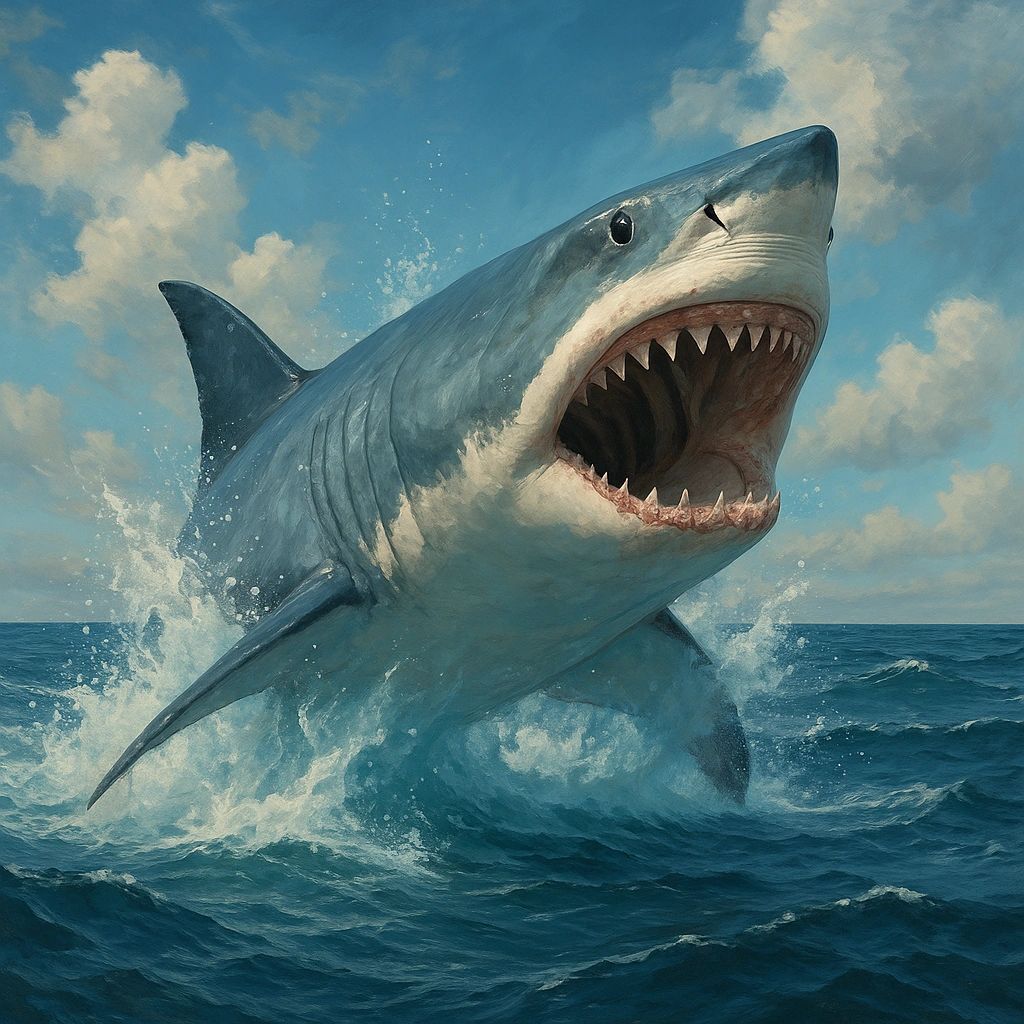
Every summer, millions of viewers tune in for Shark Week, a weeklong television celebration of Earth’s most iconic predators. There are jaw-dropping breaching scenes, close calls with divers, and deep dives into the mysterious lives of great whites, hammerheads, and tiger sharks. But once the credits roll and the shark-themed commercials fade, the ocean doesn’t suddenly become a safer or quieter place. Shark Week might be over—but shark season never ends.
That’s right—sharks don’t follow our calendars. In fact, they’re always on the move, always on the hunt, and always playing their vital role in the ecosystem, whether we’re watching or not. Let’s dive into why shark season is a year-round reality, and what that means for science, safety, conservation, and the future of our oceans.
Sharks Never Take a Break
Sharks aren’t actors performing once a year for the camera. They’re ancient, powerful, and always active. Most shark species travel incredible distances throughout the year—often following prey, chasing warm waters, or even migrating for reproduction.
For example, the great white shark (Carcharodon carcharias) doesn’t just live near the coasts of California or South Africa. These apex predators can travel thousands of miles across entire ocean basins. One tagged great white nicknamed Nicole swam over 12,000 miles from South Africa to Australia and back in under nine months (Bonfil et al., 2005).
Mako sharks, the fastest sharks in the ocean, migrate in seasonal patterns from warm tropical waters to cooler temperate zones. And whale sharks, the gentle giants, are known to gather in specific regions based on plankton blooms, moving with the rhythms of the sea year-round (Sequeira et al., 2013).
When Is Shark Season?
“Shark season” depends on where you live, what species you’re talking about, and what activity you’re referring to (feeding, mating, pupping, etc.).
In places like Florida, the world’s shark bite capital, shark season never really ends—but it does have peak periods, especially during spring and summer when humans and sharks are both more active near shore (Naylor et al., 2021).
In Cape Cod, Massachusetts, great whites follow seal populations from July through October. In Australia, shark activity can peak in different regions during their warmer months, from November to April. In Hawaii, tiger sharks are most active in the fall, especially in September and October (Meyer et al., 2009).
So, yes—there are certain times and places when you’re more likely to spot or encounter sharks. But that doesn’t mean they’re gone the rest of the year. They’re just changing zones, diving deeper, or moving elsewhere in the ocean.
Why Sharks Matter All Year Long
Sharks aren’t just scary silhouettes in the waves. They’re keystone species that help keep the entire ocean in balance. By preying on the weak, sick, and injured, sharks help maintain healthy populations of fish, sea turtles, rays, and even marine mammals.
Without sharks, ecosystems can fall apart. Coral reefs can suffer. Fish populations can explode in destructive ways. And over time, the health of the ocean declines—a serious problem for humans, considering billions rely on marine resources for food, income, and oxygen (Ferretti et al., 2010).
When sharks are removed from the ecosystem, prey species like stingrays and sea turtles can overgraze seagrass beds, destroying nursery habitats for young fish. And that’s just one example. So even when it’s not Shark Week, every day matters for sharks and the balance they bring.
The Real Shark Threats Are Year-Round
Here’s a twist: Sharks aren’t a danger to us—we’re a danger to them.
Each year, 100 million sharks are killed by humans—mostly due to overfishing, shark finning, bycatch, and habitat destruction (Worm et al., 2013). Many species, like the scalloped hammerhead and oceanic whitetip, are now endangered or critically endangered due to relentless human pressure.
Even though sharks have survived five mass extinction events over 400 million years, they’re now facing their biggest challenge ever—us.
And that danger doesn’t take a break when the cameras stop rolling. Long after Shark Week ends, gillnets, longlines, and illegal fisheries continue to remove sharks from the seas. Conservation isn’t seasonal—it’s constant.
Shark Tagging Never Stops
Behind the scenes, scientists are working hard all year long to understand shark behavior and help protect them. Shark research doesn’t end with Shark Week—it’s only just beginning.
Tagging programs from organizations like OCEARCH, Bimini Shark Lab, and NOAA are always collecting real-time data on shark movements. These satellite and acoustic tags tell us where sharks go, when they mate, how deep they dive, and how changing water temperatures affect them.
This data helps scientists create protected areas, predict shark-human interactions, and track climate impacts on migration patterns. With each ping, we learn more about the secret lives of sharks—and how to coexist with them.
One example? The great hammerhead shark named Zipper who was tagged in Florida and tracked swimming throughout the Gulf of Mexico. Her journey didn’t make headlines during Shark Week—but it was incredibly important for science and conservation.
Shark Tourism Happens Year-Round
Want to see a shark up close? You don’t have to wait until summer.
Shark diving, snorkeling, and eco-tourism operate year-round in places like the Bahamas, the Galápagos, Fiji, and South Africa. These experiences connect people with sharks in safe, sustainable ways—and they help communities earn income without harming marine life.
A live tiger shark in the Bahamas is worth far more alive than dead. In fact, a single shark can generate hundreds of thousands of dollars over its lifetime through eco-tourism (Gallagher & Hammerschlag, 2011).
And when tourists become witnesses to these graceful animals, they often become advocates too. Education is the antidote to fear. Seeing a shark in the wild is a reminder that they aren’t monsters—they’re majestic.
Shark Science Is Heating Up
While Shark Week brings flashy footage, shark science brings the facts. And it doesn’t stop when the cameras do.
In recent years, scientists have made some wild discoveries:
- New shark species are still being found—including the 38th species of guitarfish just discovered in 2024!
- Greenland sharks may live up to 500 years, making them the longest-living vertebrates on Earth (Nielsen et al., 2016).
- Sharks may use the Earth’s magnetic fields to navigate long migrations like GPS (Keller et al., 2021).
- Climate change is shifting shark ranges, bringing warm-water sharks farther north than ever before (Rosa et al., 2014).
These discoveries aren’t made during Shark Week—they’re made by teams in boats, labs, and remote islands every single day of the year. Shark season is discovery season.
Shark** Safety **Is a 365-Day Task
When shark sightings make the news, it can cause fear or panic—but the truth is, shark encounters are very rare. You’re more likely to be struck by lightning, bitten by a dog, or injured by your toaster.
Still, as sharks come closer to shore in search of food, and as more people enter the ocean each year, it’s important to stay shark-smart all year long:
- Avoid swimming at dawn or dusk, when sharks are most active.
- Don’t wear shiny jewelry, which can resemble fish scales.
- Stay in groups—sharks are more likely to approach lone individuals.
- Respect shark signs and lifeguard warnings at the beach.
- Know the season and location—some areas see more shark activity at certain times.
Most importantly, remember that the ocean is their home. If you see a shark, it’s not a reason to panic. It’s a chance to witness one of nature’s greatest creatures doing what it does best.
Every Day Is a Chance to Protect Sharks
If you love sharks, don’t just celebrate them for one week. Support them all year long.
Here’s how:
- Support shark conservation groups like Shark Trust, Oceana, and WildAid.
- Avoid shark fin soup and products made from shark cartilage or liver oil.
- Reduce single-use plastics that pollute oceans and harm marine life.
- Choose sustainable seafood and look for labels like MSC-certified.
- Educate others—the more people know, the more they’ll care.
Even small actions ripple outward. Every choice you make in daily life can help keep the ocean—and its top predators—healthy for generations to come.
Shark Week May End—But the Story Doesn’t
Shark Week is fun, exciting, and full of splashy drama—but it’s just a drop in the ocean.
Real sharks are swimming beneath the surface right now. They’re hunting, migrating, mating, giving birth, and surviving in an ever-changing world. Their story continues whether or not we’re watching.
So let’s keep the spotlight on sharks—not just for a week, but for the whole year. Because when we protect sharks, we protect the entire ocean.
And that’s a show worth tuning into every single day.
Bibliography
Bonfil, R., Meyer, M., Scholl, M. C., Johnson, R., O’Brien, S., Oosthuizen, H., … & Paterson, M. (2005). Transoceanic migration, spatial dynamics, and population linkages of white sharks. Science, 310(5745), 100-103. https://doi.org/10.1126/science.1114898
Ferretti, F., Worm, B., Britten, G. L., Heithaus, M. R., & Lotze, H. K. (2010). Patterns and ecosystem consequences of shark declines in the ocean. Ecology Letters, 13(8), 1055-1071. https://doi.org/10.1111/j.1461-0248.2010.01489.x
Gallagher, A. J., & Hammerschlag, N. (2011). Global shark currency: The distribution, frequency, and economic value of shark ecotourism. Current Issues in Tourism, 14(8), 797–812. https://doi.org/10.1080/13683500.2011.585227
Keller, B. A., Putman, N. F., Grubbs, R. D., Portnoy, D. S., & Crocker, D. E. (2021). Evidence for geomagnetic navigation by a pelagic shark. Current Biology, 31(13), 2881-2885.e2. https://doi.org/10.1016/j.cub.2021.04.070
Meyer, C. G., Dale, J. J., Papastamatiou, Y. P., Whitney, N. M., & Holland, K. N. (2009). Seasonal cycles and long‐term trends in abundance and species composition of sharks associated with cage diving ecotourism activities in Hawaii. Environmental Conservation, 36(2), 104-111. https://doi.org/10.1017/S0376892909990011
Naylor, G. J. P., et al. (2021). The International Shark Attack File: A global database of shark attacks from 1580 to present. Florida Museum of Natural History. https://www.floridamuseum.ufl.edu/shark-attacks/
Nielsen, J., Hedeholm, R. B., Heinemeier, J., Bushnell, P. G., Christiansen, J. S., Olsen, J., … & Steffensen, J. F. (2016). Eye lens radiocarbon reveals centuries of longevity in the Greenland shark (Somniosus microcephalus). Science, 353(6300), 702-704. https://doi.org/10.1126/science.aaf1703
Rosa, R., Rummer, J. L., Munday, P. L., & Pörtner, H. O. (2014). Biological responses of sharks to ocean acidification. Climate Change Responses, 1(1), 3. https://doi.org/10.1186/s40665-014-0003-2
Sequeira, A. M. M., Mellin, C., Rowat, D., Meekan, M. G., & Bradshaw, C. J. A. (2013). Ocean-scale prediction of whale shark distribution. Diversity and Distributions, 18(5), 504–518. https://doi.org/10.1111/j.1472-4642.2011.00853.x
Worm, B., Davis, B., Kettemer, L., Ward-Paige, C. A., Chapman, D., Heithaus, M. R., … & Gruber, S. H. (2013). Global catches, exploitation rates, and rebuilding options for sharks. Marine Policy, 40, 194-204. https://doi.org/10.1016/j.marpol.2012.12.034
Originally published at the live site .